
Last updated November 2, 2026
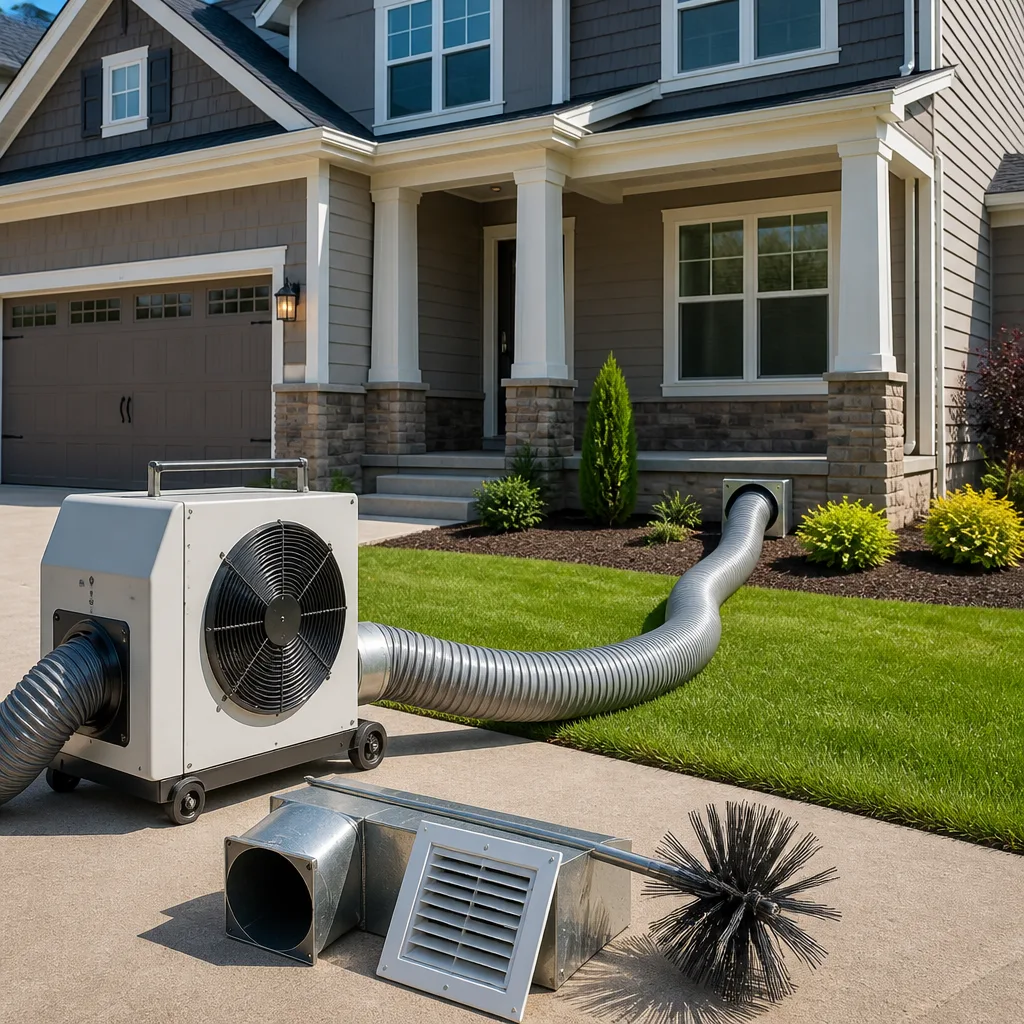 Whole-home duct cleaning
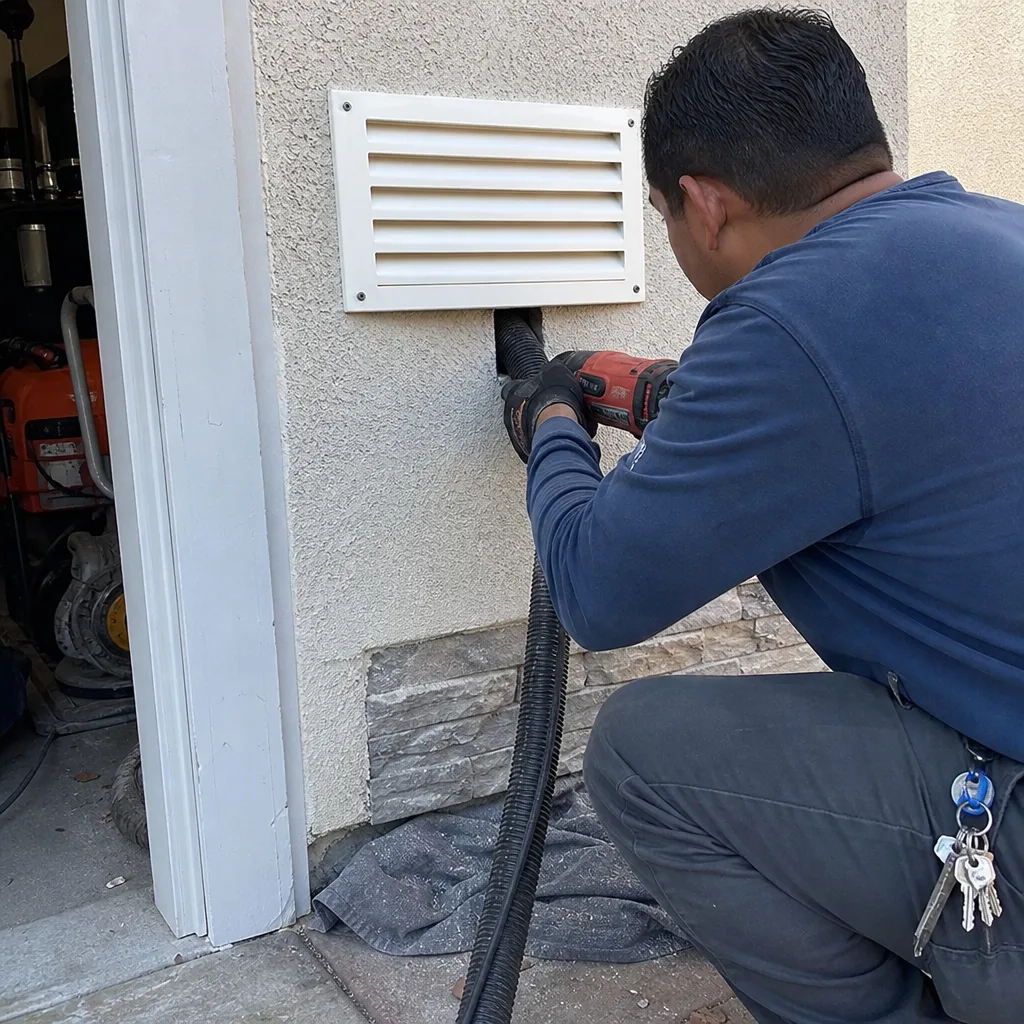
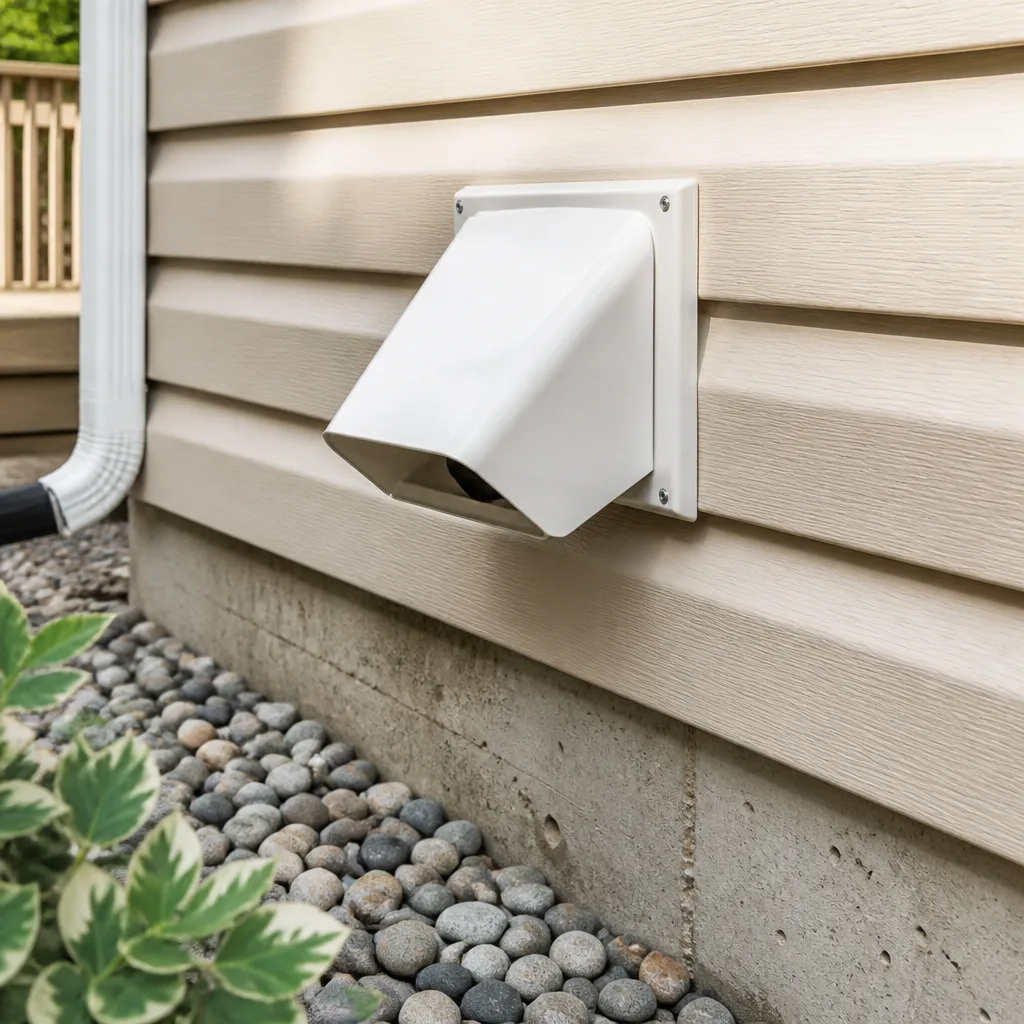 Dryer vent cleaning
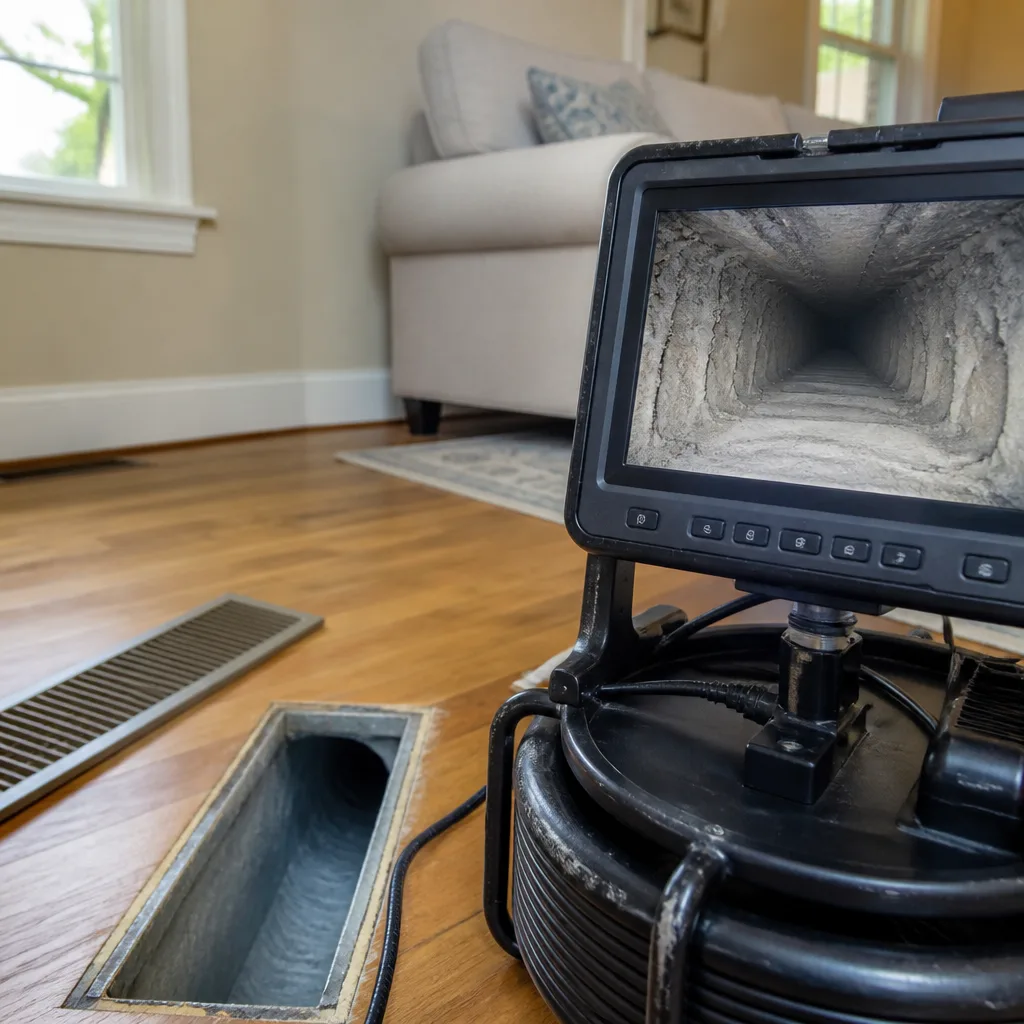 Camera inspection
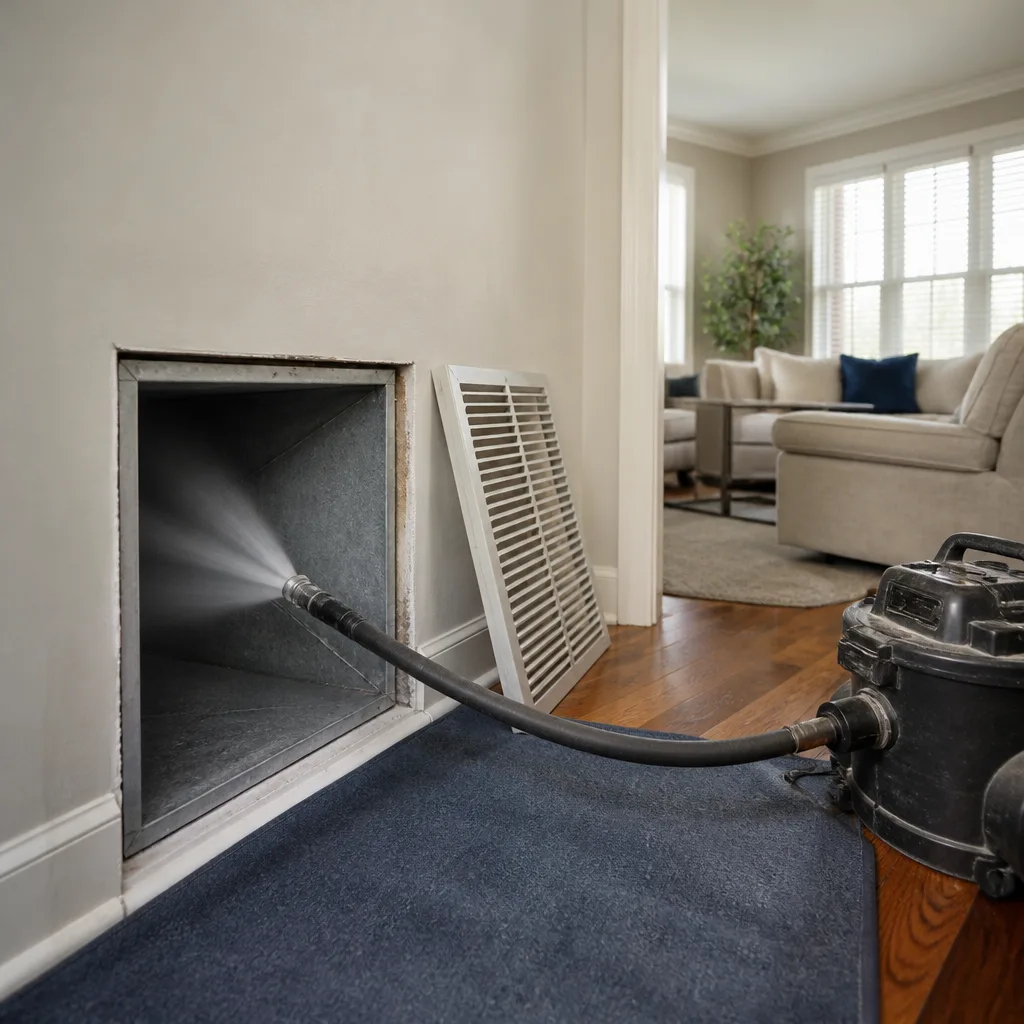 Sanitizing & deodorizing
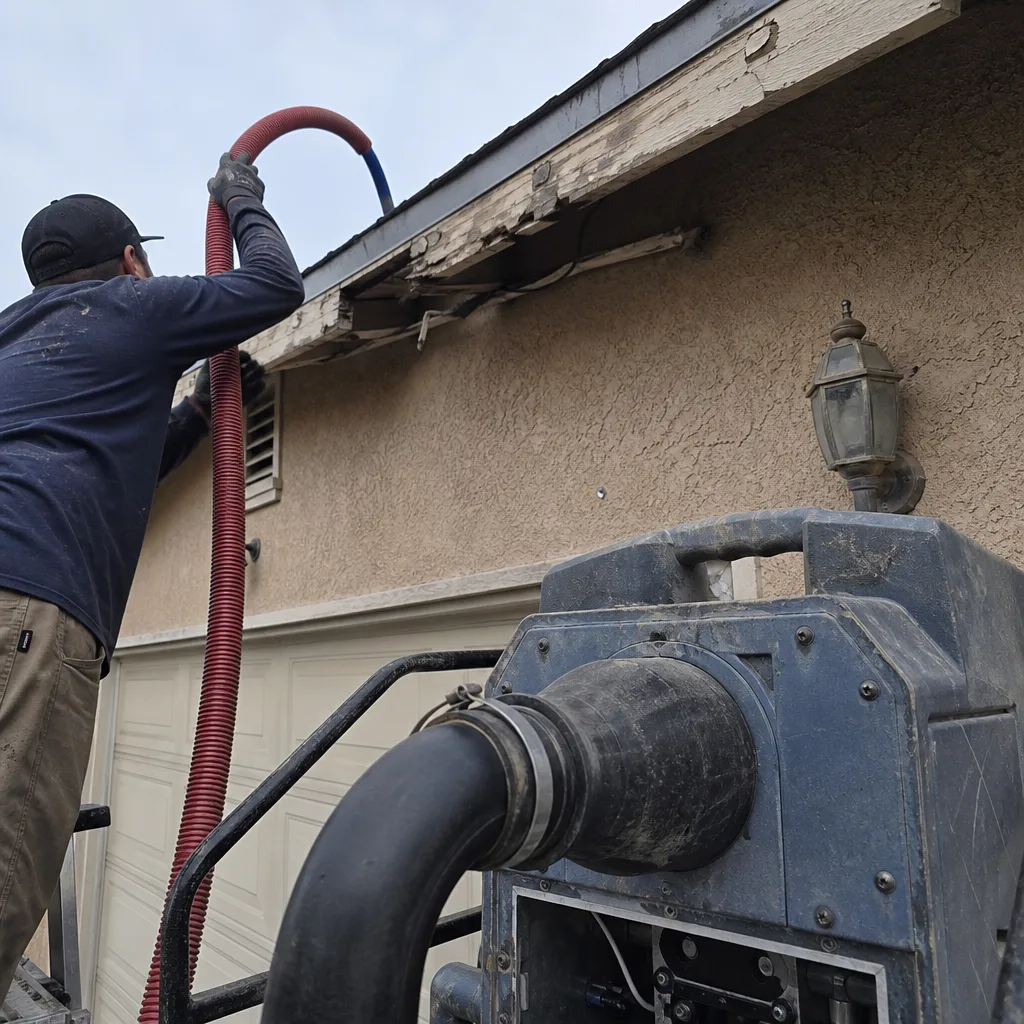
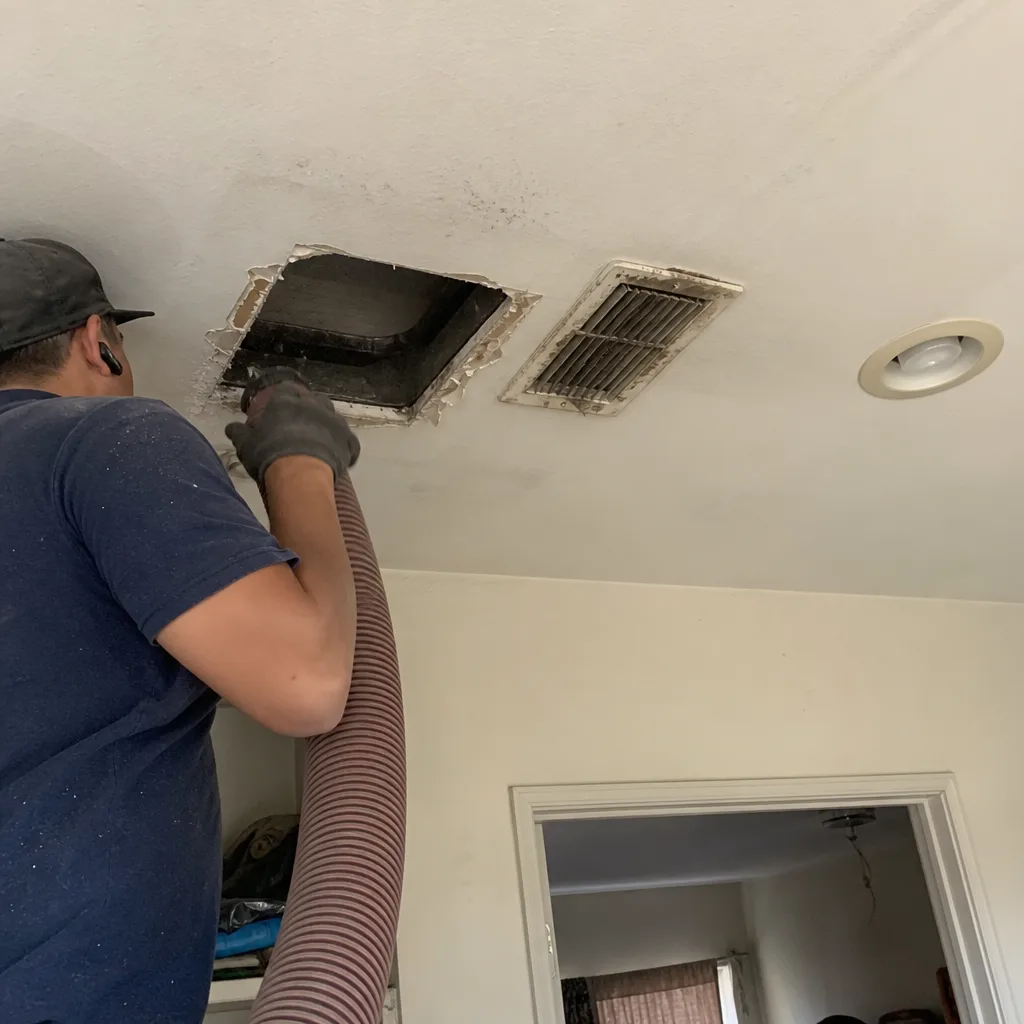
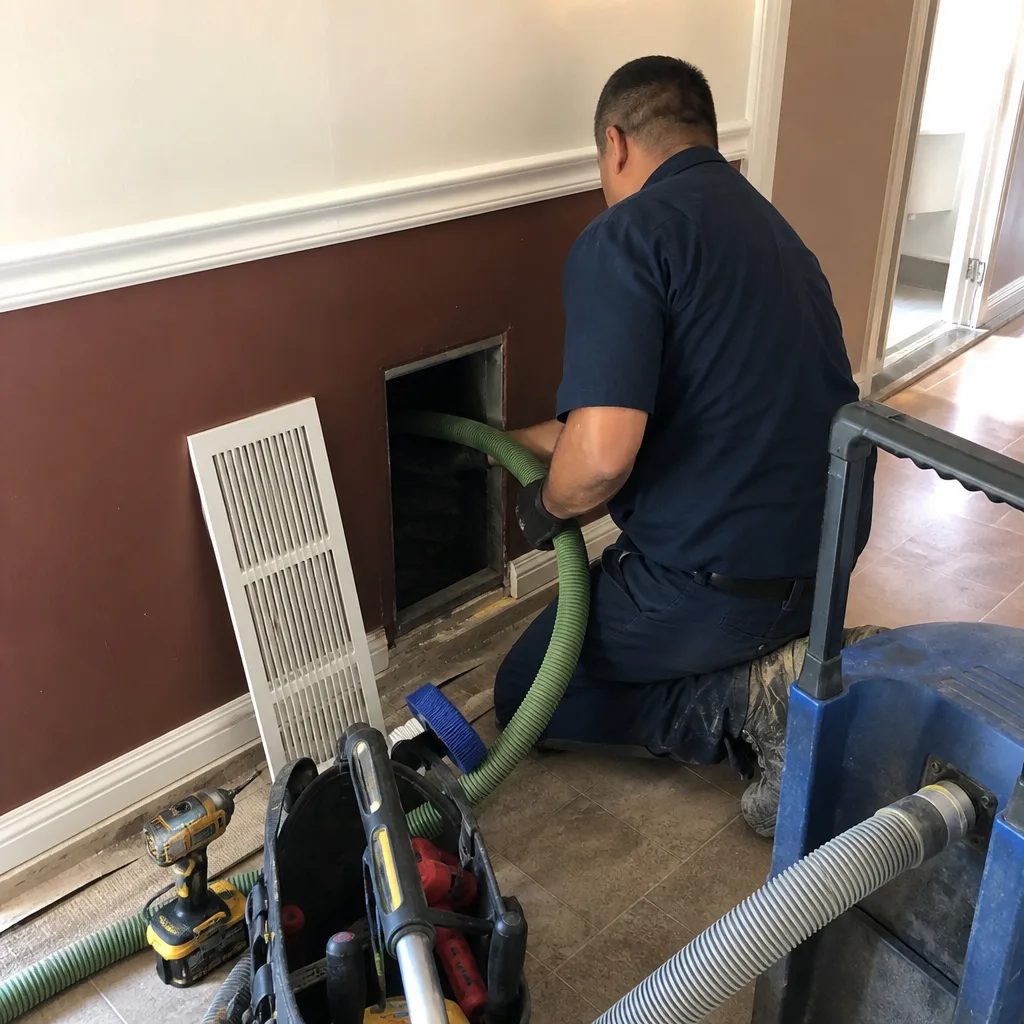
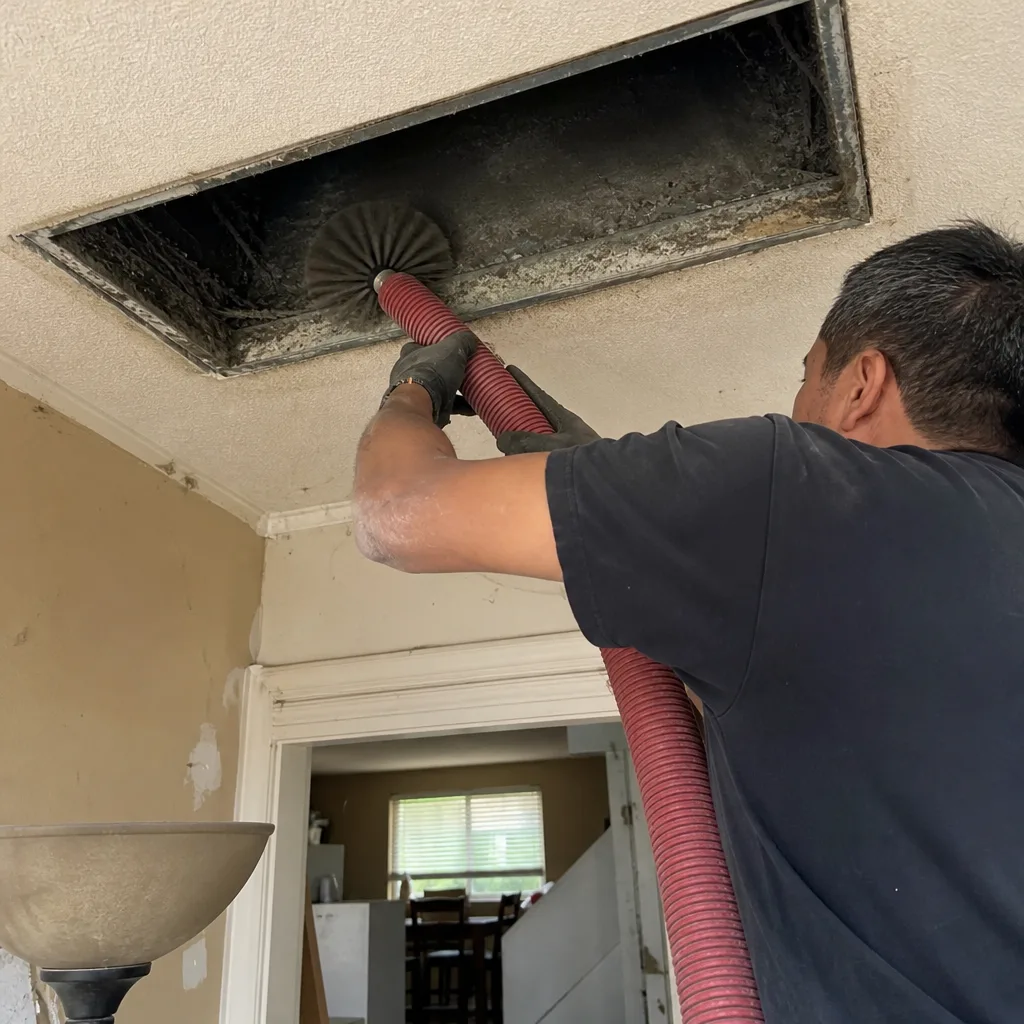
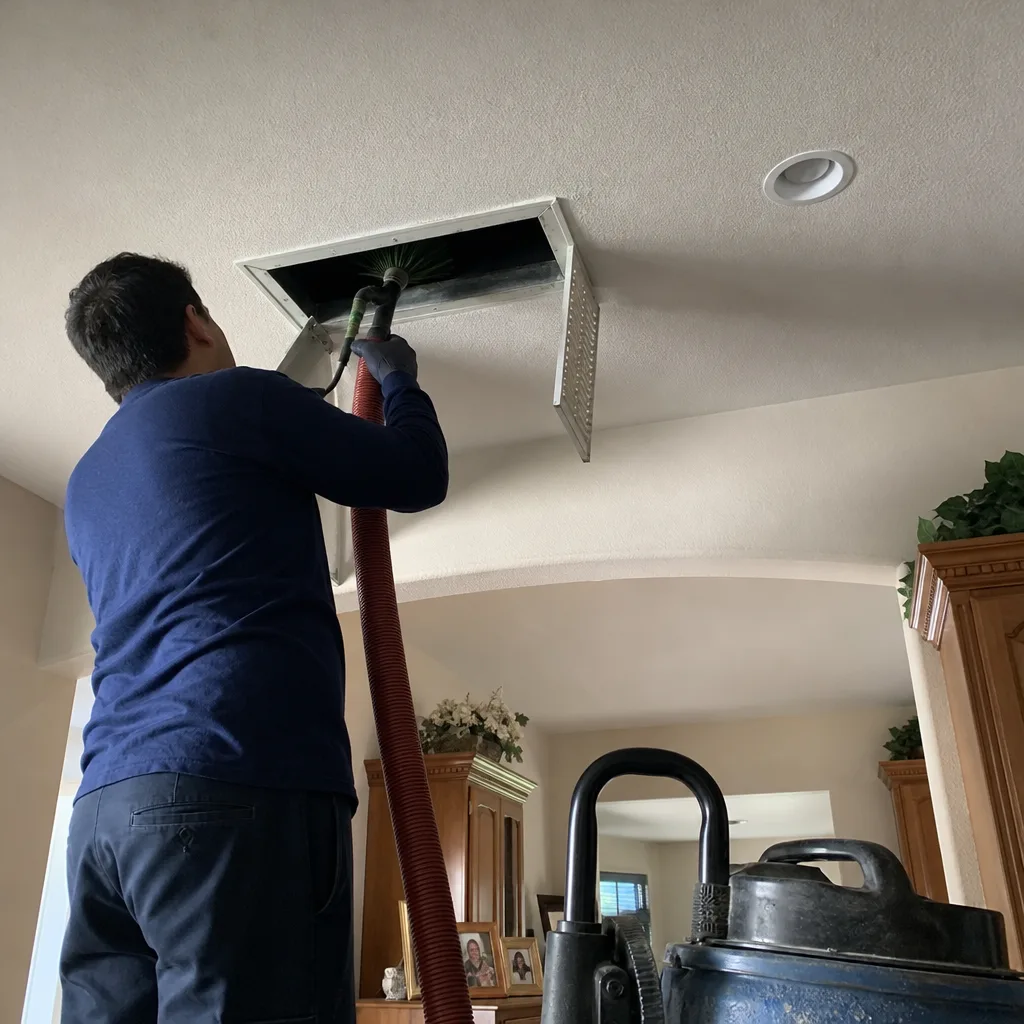
Whole-system duct and dryer vent check with before-and-after photos - you see exactly what came out of your vents
That "$99 whole-house special" is a bait ad - the real number appears once they are in your hallway, or the "clean" is a shop-vac at the register. We photograph the inside of your ducts before and after instead.
Air Duct Cleaning Emergency Preparedness Guide for Perris Homes
During the 2020 Valley Fire, something strange happened across Perris. Homes miles from any flame, homes that never saw a single ember, ended up with HVAC systems that smelled like a campfire for weeks. The cause wasn’t mysterious. Furnaces and air handlers that ran during peak AQI hours pulled smoke particulate straight into the return registers, coated the duct walls with it, and then faithfully redistributed that particulate through every room, every time the system cycled on. No fire touched those homes. The ductwork became the contamination vector. This guide covers what Perris homeowners need to know before, during, and after wildfire smoke, Santa Ana wind damage, and earthquake-shifted duct systems compromise indoor air. You’ll learn what to do in the first 24 hours, what never to do, how to document damage for insurance, and when a professional inspection is genuinely warranted.
Quick Answer
After a wildfire smoke event in Perris, shut your HVAC system off immediately, seal return registers with plastic sheeting and painter’s tape, and schedule Air Duct Cleaning before running the system again. Post-Santa Ana or post-earthquake, visually inspect exterior vent caps and accessible duct connections first, then have a contractor assess whether contamination or displacement occurred. Documentation for insurance should include dated photos, a log of when the system ran during the event, and a written contractor assessment.
Styles & brands we work with
- Whole-home duct cleaning
- Dryer vent cleaning
- Camera inspection
- Sanitizing & deodorizing
Table of Contents
- The First 24 Hours After Wildfire Smoke: A Step-by-Step Protocol
- Santa Ana Wind Damage: Duct Penetration Inspection Checklist
- Earthquake Response: What Shifts, What Separates, and What to Check
- Documenting Duct Contamination for Insurance Claims
- What to Ask Any Contractor Responding to an Emergency Call
- Why Equipment Matters in Post-Event Duct Cleaning
- Preventive Hardening: Reducing Duct-System Risk Before the Next Event
- Common Mistakes to Avoid
- When to Call a Professional
- Frequently Asked Questions
The First 24 Hours After Wildfire Smoke: A Step-by-Step Protocol
Wildfire smoke in Perris is not a hypothetical. The region sees smoke events nearly every fire season, and the particulate matter that matters most is not the visible ash on your car windshield. It’s the sub-3-micron fraction that behaves like a gas. It follows airflow. Your HVAC system, if running, is the most powerful air-mover in the house. Every minute it operates during a smoke event, it’s pulling that particulate through the filter, past the blower, and into the supply runs. Some of it deposits on duct walls. Some of it passes through and lands on your furniture, your clothes, in your lungs. What you do in the first day after the smoke clears determines whether that particulate stays in the ducts or gets baked in over weeks of thermal cycling.
Step 1: Shut the System Off at the Thermostat
Not cool. Not heat. Not auto. Off. This is the single most important action, and it’s the one most Perris homeowners skip. The instinct to “run the fan to clear the air” is exactly wrong. A furnace fan in fan-only mode does not bring in outside air. It recirculates the smoke-laden air already inside the ducts. It stirs the settled particulate off the duct walls and pushes it back through the living space. Shut it off at the thermostat and, if you can reach it safely, at the breaker or service switch on the air handler.
Step 2: Seal Return Registers Temporarily
Return registers are the intake points where room air enters the duct system. After a smoke event, any dust circulating in the room gets pulled into the returns whenever the system runs or when pressure differences occur. A cheap roll of plastic sheeting and blue painter’s tape can cover each return register in under two minutes. This is a temporary measure, not a solution. It prevents further contamination from entering the duct system while you arrange for inspection and cleaning. Do not seal supply registers. Sealing returns only.
Step 3: Change the HVAC Filter, Then Evaluate
A filter that ran during a smoke event is loaded with particulate. Change it. Take a photo of the old one before you throw it away. The color and deposit pattern on a filter is a strong piece of evidence for an insurance claim, and it gives a technician a quick read on how much smoke moved through the system. Use a filter with a MERV 11 or higher rating if your system can tolerate the static pressure drop. Lower MERV filters catch less of the fine fraction that causes odor and respiratory irritation.
Step 4: Open Windows Only When Outdoor AQI Improves
Ventilating the house makes sense, but only when outdoor air is actually cleaner than indoor air. Check the Perris AQI reading. If outdoor air has recovered to Good or Moderate, open windows and use box fans to purge the building envelope. If outdoor air is still Unhealthy, keep the house closed and run a standalone HEPA air purifier in the occupied rooms. Do not run the central HVAC system, even with windows open. The point of ventilation is to dilute indoor contamination, not to defeat the purpose by recirculating duct contamination back in.
Step 5: Do Not Run the System Until It’s Been Inspected
This is the step people resist. The house smells like smoke, the filter’s been changed, and it seems logical to run the system and “flush it out.” That logic fails for one reason: once smoke particulate deposits on duct walls and gets exposed to the slight heat and moisture of a running HVAC system, it binds more tightly. What might have been removable with mechanical agitation becomes a semi-cured film. The longer you run a contaminated system, the harder the cleaning job becomes. Wait for the inspection.
In our experience working with Perris homes after smoke events, the ones that stay livable fastest are the ones where the system is shut down on day one, sealed at the returns, and inspected before the end of the week. The homes that run their systems for two weeks post-smoke are the ones that spend six months fighting a smoke smell that keeps coming back. The Air Duct Cleaning in Perris process exists precisely for this scenario: mechanical agitation of the duct walls to break the particulate bond, followed by HEPA-rated extraction to remove it from the house entirely.
Santa Ana Wind Damage: Duct Penetration Inspection Checklist
Santa Ana winds come off the desert, dry and fast, and Perris gets them with full force. The wind itself doesn’t damage ducts. What damages ducts is what the wind carries: sand, grit, roofing granules, fiberglass fragments, and physical debris. The points of entry are the exterior penetrations, the places where the duct system meets the outside world and where wind-blown material can enter if a cap, screen, or seal has been damaged or blown away. After a strong Santa Ana event, a twenty-minute visual inspection can tell you whether you have a pending air quality problem.
Exterior Duct Penetration Checklist
- Roof jack caps: Walk to a point where you can see the roof clearly or check from a ladder at the eave line. Roof jacks are the metal covers over duct risers, often for bathroom fans, kitchen vents, or dryer vents that exit through the roof. A missing or bent roof jack cap allows direct entry of wind-blown grit and roof debris into the duct line.
- Wall vent caps: Sidewall vents on Perris homes commonly serve kitchen exhaust, bath fans, and occasionally dryer lines. Look for a missing or cracked vent hood, a missing bird screen, or visible debris accumulation around the exterior opening. A vent cap blown off leaves a four-inch hole into your duct system.
- Attic access points: The attic breathes through soffit vents and ridge vents. During strong winds, fine dust and grit get forced into the attic space. If any duct connections in the attic are loose, or if a flexible duct has been pulled off a fitting, that wind-blown attic dust gets drawn into the return side of the system every time it runs.
- Crawlspace vents: Many Perris homes have crawlspace foundation vents. Open foundation vents during a wind event admit dust and sand beneath the house. If duct runs are located in the crawlspace, any disconnected fitting is now exposed to that abrasive dust load.
- Condenser coil fins on the outdoor unit: Not a duct component, but sand-blasted coil fins reduce system efficiency and increase run times, which increases the quantity of air pulled through the ducts. If the fins look heavily packed with grit after a Santa Ana event, have the coil cleaned.
One thing to understand about Perris specifically: the soil here is decomposed granite and sandy loam. When Santa Ana winds hit sustained speeds above 30 mph, the airborne grit is not just dust; it’s an abrasive. It sand-blasts soft aluminum vent caps, cuts through foam gaskets, and works its way past loose-fitting duct connections. What starts as a cosmetic exterior issue turns into a slow-burn indoor air quality problem within a few weeks of regular system operation.
If you find any of the above damage, do not simply cover the opening and forget it. The material that entered during the wind event is now inside the duct run. It needs to come out. A professional inspection can attach a borescope to the duct and tell you exactly how much material accumulated and how deep it traveled. From there, the scope of work is either a targeted cleaning of the affected run or a full-system cleaning if the material has circulated through the supply side.
Earthquake Response: What Shifts, What Separates, and What to Check
Perris sits in Riverside County, close enough to the San Jacinto fault zone that significant shaking is a known risk. What an earthquake does to a duct system is mechanical: it shifts things that were not designed to resist lateral force. Duct systems are assembled from segments, connected with fittings, and secured with straps. Shaking loosens straps, separates fittings, and can pull flexible duct off of hard-pipe connections entirely. The result is not always a visible failure. Sometimes the separation is partial, a half-inch gap that opens and closes with system pressure. Sometimes a panned floor joist, a common construction in older Perris homes, shifts enough that the pan pulls away from the framing, leaving a gap that draws dust and insulation fibers into the return path.
What to Check Before Running the System After a Quake
- Walk the accessible attic or crawlspace: If your home has an accessible attic or crawlspace, do a visual pass with a headlamp. Look for duct runs that have dropped from their hangers, flex duct that has pulled away from a hard-pipe collar, or straps that are dangling loose. This is a check you can do safely if the space has a floor or solid crawl surface. If you’re not comfortable in those spaces, skip to the next step.
- Check all supply and return registers for airflow consistency: Have a helper turn the system on for five minutes while you move from room to room. Is every register delivering air at roughly the same velocity as before the quake? A room that suddenly feels weak, combined with a room that feels stronger, suggests a separated fitting somewhere in the run.
- Look at the exposed filter slot: If your filter is housed in a slot adjacent to the air handler, grab it and wiggle it gently. A filter that sits loose or rattles where it used to be snug can indicate that the return plenum shifted relative to the air handler cabinet.
- Listen for air movement noises after shutdown: Run the system for five minutes, then shut it down and stand still in each room. A hissing or faint whistle for a few seconds after shutdown, especially near walls or in closets, can indicate a gap that is only open when the metal cools or the pressure equalizes.
- Check for new dust accumulation: One of the clearest signs of a compromised duct system is fresh dust accumulation on surfaces within days of the event. If you clean a room and the dust returns quickly, especially if it’s pink or yellow fiberglass dust, there’s a breach somewhere in the system.
The duct types most prone to seismic displacement in Perris homes are flex duct at flex-to-hard connections, which rely on draw bands or zip ties that can loosen over years and snap under shaking; panned floor joist returns in older homes, where the sheet metal pan is nailed to framing and can pull away when the framing moves; and riser ducts in vertical chases, which can shift and separate at the floor or ceiling transition. If any of these issues are suspected, have a professional inspect the full system before running the HVAC. Running a system with a separated fitting pulls unfiltered air from unconditioned spaces directly into the living area, and that air is often heavy with insulation fibers, rodent debris, or crawlspace dust.
For structural duct damage, cleaning alone doesn’t solve the problem. A complete solution requires Air Duct Repair in Perris to restore the connection integrity first, then a cleaning to address the accumulated contamination. The order matters: repair first, then clean. Cleaning a disconnected system just stirs the contamination around.
Documenting Duct Contamination for Insurance Claims
After a qualifying event such as wildfire smoke infiltration or wind-driven debris entry, the duct system can be part of an insurance claim. Insurers in California handle these claims inconsistently. Some adjusters approve duct cleaning as part of smoke-damage remediation. Others treat it as maintenance and deny it. The difference often comes down to documentation: what you recorded, when you recorded it, and what a professional inspection found. For Air Duct Cleaning Permits, Codes & Inspections in CA: What You Need to Know, here’s what insurers actually want, based on what we’ve seen work in Perris claims.
Documentation Checklist for Duct-System Claims
- Date-stamped photos of the old filter: Before you throw out a smoke-loaded filter, photograph it in place, then photograph it against a white sheet of paper to show the color contrast. Date and time should be in the image metadata or visible in the photo.
- A written log of system operation during the event: Write down the date, approximate time, and duration that the HVAC system ran during the smoke or wind event. Include the outdoor AQI reading if you have it. This establishes that the system was active during the contamination window.
- Photos of all return registers before sealing: If you sealed returns after a smoke event, photograph the registers first. Accumulated dust on the register face and inside the register throat shows what was entering the return path.
- Before-and-after photos of the duct interior: During a professional inspection, ask the technician to take borescope photos or videos of the duct interior before and after cleaning. Still frames from a borescope feed are the single most compelling piece of evidence an adjuster sees, because they show the actual condition of the duct wall, not just a filter.
- A written contractor assessment: Insurers want a written statement from a professional that describes the contamination observed, the likely source, and the recommended scope of work. A one-line “ducts need cleaning” won’t carry weight. A paragraph that says “duplicate testing and visual inspection confirmed smoke particulate deposition throughout the supply runs, consistent with the reported wildfire smoke event on [date]” is far stronger.
- Particle counts if available: Some restoration companies and a few duct cleaning firms can run a quick particle counter before and after cleaning. The before-reading establishes that indoor particulate is elevated. The after-reading shows that the cleaning achieved a real reduction. This is optional, but it converts a subjective claim into a measurable one.
When the claim involves earthquake-shifted ducts, the documentation is different. Photograph the separated fitting as found, before any repair work is done. Photograph the gap, the loose strap, the pulled-back flex. Have the contractor write a note stating the damage is consistent with the seismic event date and describe the connection type and location. Insurers in earthquake-adjacent claims often want to see that the failure is not a pre-existing condition, so any evidence of clean metal at the separation point (meaning it was connected until recently) is useful.
We encourage homeowners to photograph the filter and registers on day one, before any cleaning or repair happens. Once the system is cleaned, the visual evidence is gone. What you capture in the first 48 hours is often what determines whether the claim gets approved.
What to Ask Any Contractor Responding to an Emergency Call
Disaster-driven demand attracts a specific type of contractor: the one who knows that homeowners are stressed, under time pressure, and motivated to solve the problem quickly. Price gouging after wildfire and wind events is a documented problem in Southern California. The way to protect yourself is not just to get three quotes. It’s to ask questions that force the contractor to explain how they work. The answers, not the price, tell you who you’re dealing with.
Questions That Separate Process-Driven Contractors from Price-Gougers
- “What equipment do you use for agitation and extraction?” A legitimate post-event duct cleaning requires mechanical agitation of the duct walls, not just vacuum. If the answer is “a truck-mounted vacuum” with no mention of brush agitation or rotary tooling, the particulate that has adhered to the duct walls is likely to stay there, and the smoke odor will return within weeks. Look for a contractor that names their equipment. This is a strong signal of a professional operator.
- “Do you run negative-air containment while you work?” In a post-event home, the ducts are loaded with fine particulate. If the cleaning process does not put the system under continuous negative pressure with HEPA-rated extraction, that particulate gets pushed into negative pressure zones, blown around the house, and reintroduced into living spaces. A contractor who doesn’t mention containment or negative-air methodology is using a process that can make things worse, not better.
- “Is sanitizing actually warranted here, or is mechanical cleaning and HEPA extraction enough?” Watch how they answer. A contractor who immediately recommends fogging or a sanitizer upcharge without first assessing the contamination type may be adding cost without adding value. Smoke particulate after a wildfire is primarily carbon-based soot. It’s a mechanical removal problem, not a biological growth problem. Unless there is a confirmed biological contaminant, mechanical cleaning with HEPA extraction is the appropriate first approach. Some contractors push sanitizing for every job because it’s a high-margin add-on. Ask them to explain why it’s needed in your specific situation.
- “Will you give me a written scope with a flat price before work starts?” The flat-price commitment matters. Some operators quote a low per-vent price and then discover “additional contamination” once they’re on site. A written scope that specifies the system, the number of supply and return runs, and the total price protects you from bait-and-switch. If the contractor won’t put it in writing, walk away.
- “What does the post-work verification look like?” You want before-and-after photos of your actual duct interior, not stock photos. Ask whether the contractor uses a borescope and will show you the feed live or provide photo documentation. A contractor who has real equipment can show real results. A contractor who can’t show you what they did in your ducts is relying on your trust rather than evidence.
- “How long will this take, and how long should I stay out of the house?” A full Rotobrush and HEPA extraction process in a typical Perris home takes several hours. If a contractor says they can do the whole system in 45 minutes, they’re not doing a real cleaning. You don’t necessarily need to leave the house, but you should understand the time commitment and the process steps before they arrive.
After a smoke event, we also recommend asking whether the contractor will inspect the Dryer Vent Cleaning in Perris needs in the same visit. A smoke event does not directly contaminate a dryer vent, but if you’re already addressing the HVAC duct system, the dryer vent is the other air path in the home that accumulates combustible lint and can be compromised after a wind event. Checking it while the technician is already on site is efficient.
Why Equipment Matters in Post-Event Duct Cleaning
Here’s the uncomfortable truth about duct cleaning as an industry: the barrier to entry is low. A box-store vacuum, a drill attachment, and a website is all someone needs to call themselves a duct cleaner. What this means for a Perris homeowner after a smoke event is that the quality of the result depends almost entirely on the quality of the equipment used, and the equipment determines whether the particulate actually leaves the house or just gets stirred around and resettled.
Mechanical agitation matters because post-event particulate, especially smoke soot, does not sit on the duct wall as a loose powder. It deposits as a film. Heat from the furnace, the slight moisture from air movement, and the natural static charge on metal surfaces all contribute to that film bonding to the wall. A vacuum alone cannot lift it. The film needs to be broken up mechanically. That’s the difference between a rotary brush system like the Rotobrush, which physically scrubs the duct wall, and a vacuum-only approach, which removes loose debris but leaves the bonded film in place.
HEPA extraction matters even more. What you dislodge has to be captured at the point of collection, not exhausted out the neighbor’s front door and not recirculated through the living space. Nikro HEPA systems filter to 99.97 percent at 0.3 microns, which is smaller than the fine fraction of wildfire smoke that causes most odor and respiratory issues. Post-event cleaning without HEPA extraction is a net negative: it liberates settled particulate from the duct walls and pushes it into the air you breathe.
Containment equipment, the kind Abatement Technologies supplies for professional remediation environments, is the step that separates a thorough cleanup from a calculated risk. Running negative air, sealing off work areas, and controlling pressure boundaries during cleaning prevents what we call “collateral contamination”: giving every other room in the house a fine coat of the stuff you were trying to remove from the ducts. In a Perris home after a smoke event, where the goal is a clean-and-forget result, containment is not optional.
For homeowners who are also interested in improving what the system captures going forward, adding a Honeywell or Aprilaire whole-home air cleaner at the equipment level is a meaningful upgrade. A 1-inch fiberglass filter captures bigger particles. A media-style or electronic air cleaner from those manufacturers captures a significantly higher fraction of fine particulate, which directly affects how well your ducts stay clean in future events.
You can learn more about the full service process on the Duct Cleaning Perris home page, where we outline how the equipment and process work together.
Preventive Hardening: Reducing Duct-System Risk Before the Next Event
Every Perris homeowner who has been through a smoke event, a Santa Ana damaging wind, or a notable earthquake learns the same lesson: the cost of preparation is a fraction of the cost of remediation. Preventive work on duct systems is unglamorous. It doesn’t show on the house. But it’s the difference between a two-week inconvenience and a six-month struggle with recurring odors and dust. Here’s what actually makes a difference.
Mechanical Hardening
- Replace missing or damaged exterior vent caps before wind season: Roof jacks and wall caps cost little. A missing cap invites abrasive desert grit into the duct system every time the wind blows. Check them in October, before Santa Ana season peaks.
- Have flexible duct connections inspected and re-secured: The draw bands on flex-to-hard connections loosen over time. A routine inspection can catch loose connections before an earthquake turns a loose band into a separated fitting.
- Seal panned floor joist returns in older homes: Panned returns are common in Perris homes built in the 1970s and 1980s. They rely on the joist cavity itself as the return path, and they leak at the edges. Sealing the pan edges with mastic eliminates the dust and insulation fibers that leak into the return stream.
- Upgrade the filter situation: A 1-inch filter in a filter grille is common, but a deeper media cabinet with a MERV 11 or MERV 13 filter at the air handler captures far more of the fine particulate that causes post-event problems. The key is confirming your system can handle the static pressure drop. A good HVAC technician can check this.
Operational Hardening
- Have the system inspected and cleaned on a regular schedule: The National Air Duct Cleaners Association recommends cleaning every three to five years for most homes. Homes with pets, smokers, or occupants with respiratory conditions benefit from more frequent service. A scheduled cleaning removes the old particle load before an event adds a new layer.
- Keep a roll of plastic sheeting and painter’s tape in the house: The same materials used to seal returns after a smoke event cost a few dollars and store indefinitely. Having them on hand, along with printed instructions, means you can seal the returns within minutes of an event rather than waiting until the next day to go to a store.
- Know where your system’s service switch is: The service switch or disconnect near the air handler is the fastest way to fully power down the system. Label it now, before an emergency. A Sharpie and a minute of your time.
- Pre-position a box fan with a furnace filter taped to it: A cheap box fan with a decent 1-inch filter taped to the intake side can serve as a temporary room air cleaner during the window between sealing the returns and professional duct cleaning. It’s not a replacement for proper filtration, but it’s better than doing nothing while you wait.
We mention all of this not to create work, but to reduce the panic that follows the work. Perris homes that have been through an event with a hardened system, sealed returns, and a current filter are the homes where the answer to “what do we do now?” is simple: call the professional, get the inspection, run the system with confidence. The homes without preparation are the ones where every small decision in the first 24 hours feels like it might be making things worse.
Common Mistakes to Avoid
- Running the HVAC system on fan-only after a smoke event: Fan-only mode recirculates the air already inside the duct system. It stirs settled particulate and redistributes it through the house. Shut the system off, not to fan-on, but to off.
- Waiting to seal returns “until the air clears”: The contamination window is when the house air is still full of suspended particulate. Sealing returns on day one prevents settled and suspended particulate from entering the duct system. Waiting until the house air clears means the ducts have already captured a significant load.
- Hiring the cheapest emergency responder without asking process questions: Post-disaster demand attracts operators who quote low and deliver vacuum-only “cleanings” that leave bonded smoke film on the duct walls. A low price with no equipment name behind it is not a deal; it’s a re-clean waiting to happen.
- Trying to clean ducts yourself with a shop vac and a drill brush: Consumer-grade tools cannot achieve the negative-air extraction required to remove fine particulate from a full duct system. DIY duct cleaning removes what’s reachable and stirs the rest into the air. For post-event contamination, this makes the problem worse, not better.
- Skipping the visual inspection after a quake because “the system seems fine”: A partially separated fitting does not announce itself with a bang. It leaks slowly, month after month, pulling attic or crawlspace air into the living space. The only way to confirm system integrity after shaking is to look at the connections.
- Throwing away a smoke-loaded filter without photographing it: The filter is your primary piece of physical evidence for an insurance claim. Throw it away without documentation and you’ve thrown away the proof.
- Assuming the smoke smell will eventually go away on its own: Smoke particulate that has deposited on duct walls will continue to off-gas slowly for months. The smell will fade and return with every cycle of heat and moisture. It doesn’t go away on its own because the source is still in the system.
When to Call a Professional
After any wildfire smoke event in Perris where the system ran during peak AQI hours, a professional duct inspection is warranted before you run the HVAC again. The same applies after a Santa Ana event that damaged an exterior cap or screen, after an earthquake that you could feel, and any time you see fresh insulation dust appearing on surfaces within days of an event. If you smell smoke when the system runs, if rooms are dustier than they were a month ago, or if a visual check shows separated fittings or dropped hangers, do not run the system. Call for an inspection. Duct Cleaning Perris offers free estimates in Perris. Call (844) 728-0966 and describe what happened; we’ll tell you what we’d check first and whether a site visit makes sense before you spend a dollar.
Frequently Asked Questions
Post-event duct cleaning in Perris typically runs $350 to $800 for a single-family home, depending on the size of the system, the number of supply and return runs, and the extent of contamination. Air duct repair, if needed, is additional and priced by the scope of work. Call (844) 728-0966 for an exact quote. Estimates are free.
Within the first week, ideally, but only after the outdoor air quality has recovered enough that you’re not re-contaminating the ducts with open-window ventilation during cleaning. The longer smoke particulate sits on duct walls, the more it bonds and the harder it is to remove.
No. Your HVAC system’s filter captures only a fraction of the fine particulate in smoke, and running the system during or after a smoke event pulls particulate into the duct system and deposits it on the walls. Running fan-only afterward recirculates that trapped particulate into your living space.
Usually not. Smoke soot is carbon-based particulate that responds to mechanical agitation and HEPA extraction, not to antimicrobial fogging. Sanitizing is warranted only when there’s a confirmed biological contaminant. If a contractor pushes sanitizing as standard after a smoke event, ask them to explain what biological growth they’ve documented.
The dryer vent is an exhaust-only line, so it doesn’t draw house air into the system. However, a dryer vent that’s already full of lint is a fire risk, and combining a dryer vent cleaning with a duct cleaning is efficient. If you can’t remember when it was last cleaned, it’s worth addressing.
Shut your system off, know where the service switch is, keep plastic sheeting and painter’s tape on hand, and have your ducts inspected before the next event season. A system that’s clean, connected, and capped is far easier to protect than one that’s starting from a compromised baseline.
The Bottom Line
Perris homes face specific challenges: wildfire smoke that infiltrates duct systems and bonds to the walls, Santa Ana winds that drive abrasive grit through damaged exterior penetrations, and earthquakes that shift and separate duct connections. In each case, the first 24 hours determine whether the problem stays manageable or becomes a long-term air quality issue. Shut the system off, seal the returns, document everything, and let a professional assess before you run system again. Equipment matters: mechanical agitation, HEPA extraction, and proper containment make the difference between a real clean and a recirculated dust storm. Duct Cleaning Perris serves Perris homes with the same professional-grade equipment and process described in this guide. Call (844) 728-0966 for a free estimate.
Written by the team at Duct Cleaning Perris, serving Perris since 2014. Explore more guides & resources.
See the difference
 Before
 After
 Before
 After
 Before
 After