
Last updated November 2, 2026
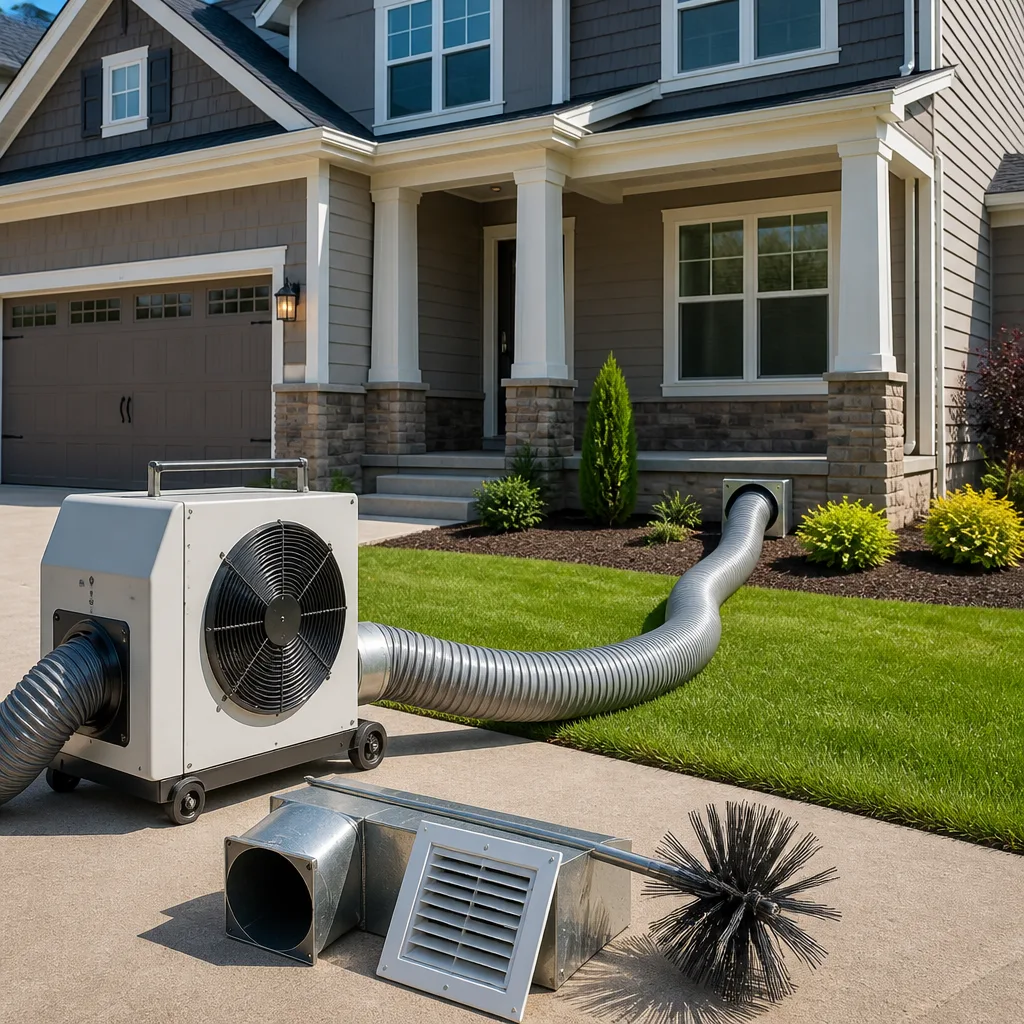 Whole-home duct cleaning
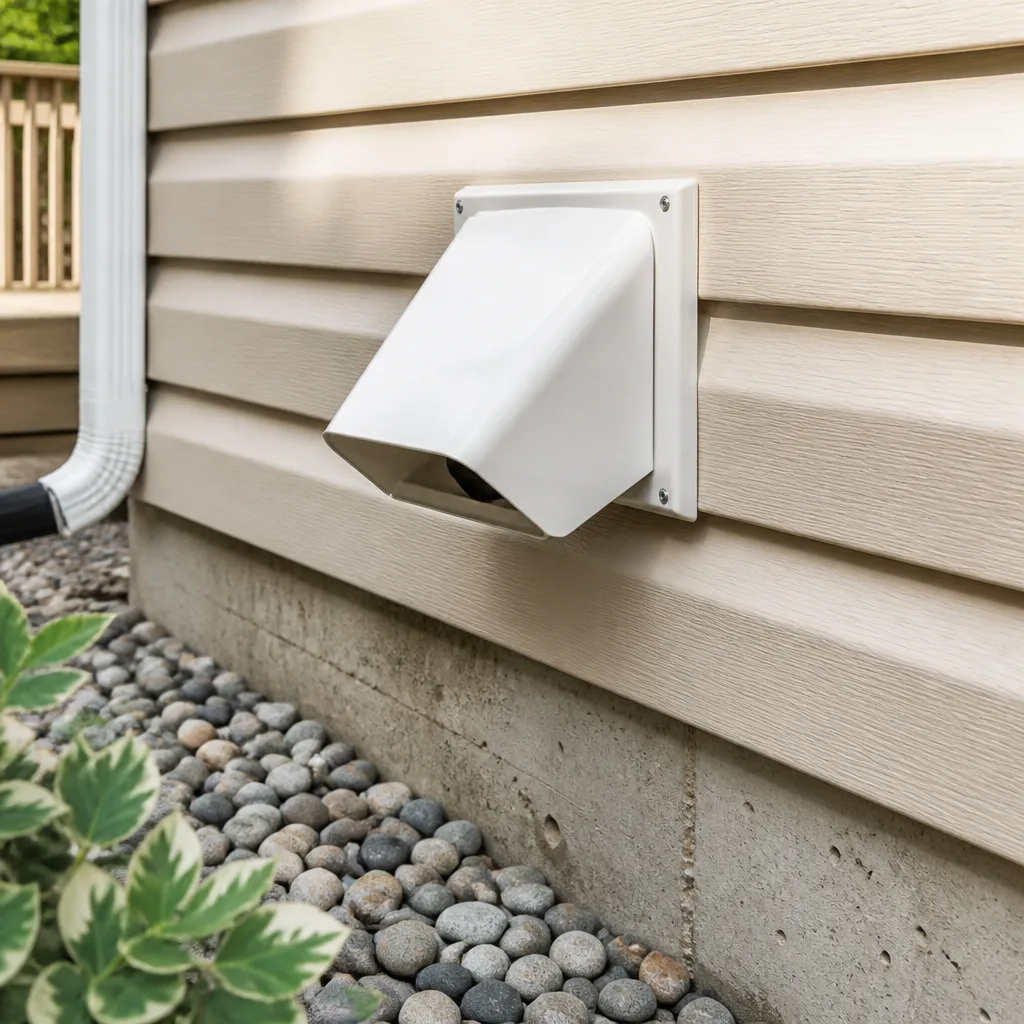 Dryer vent cleaning
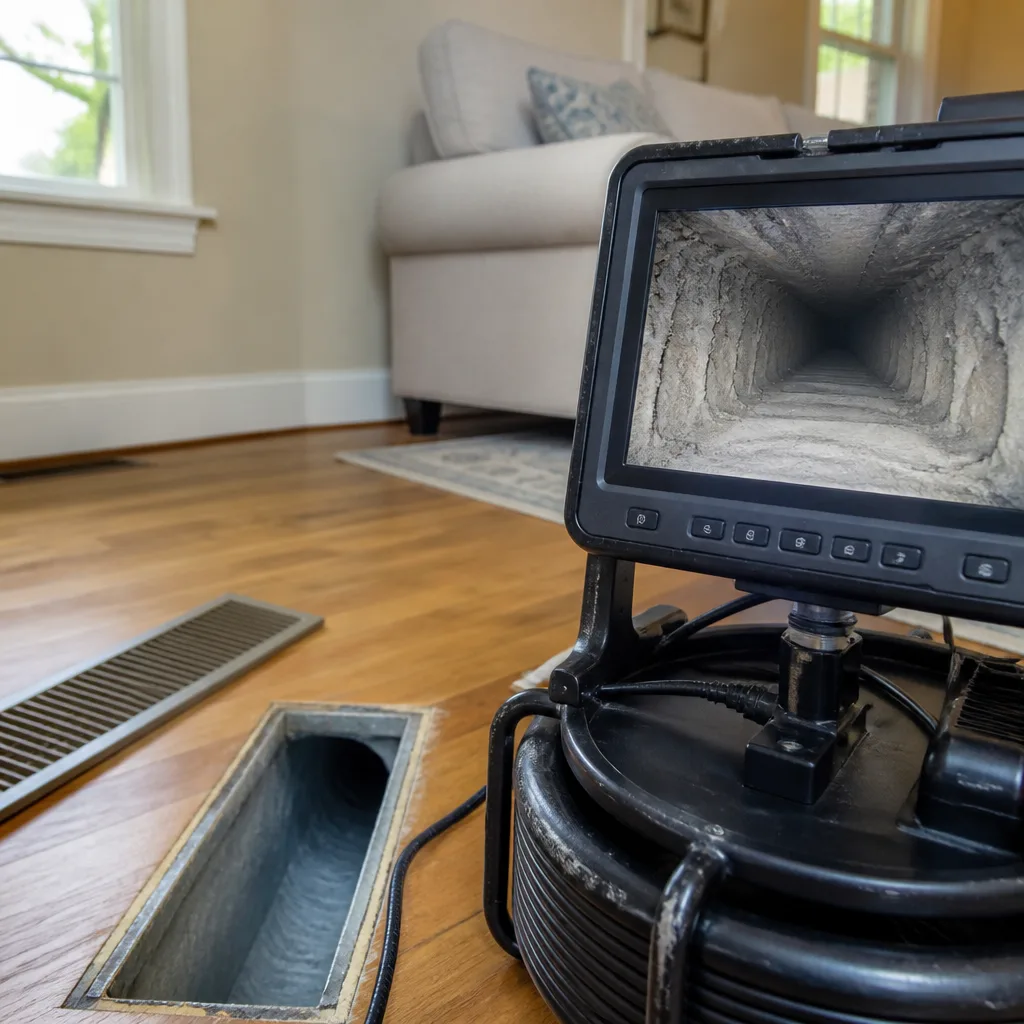 Camera inspection
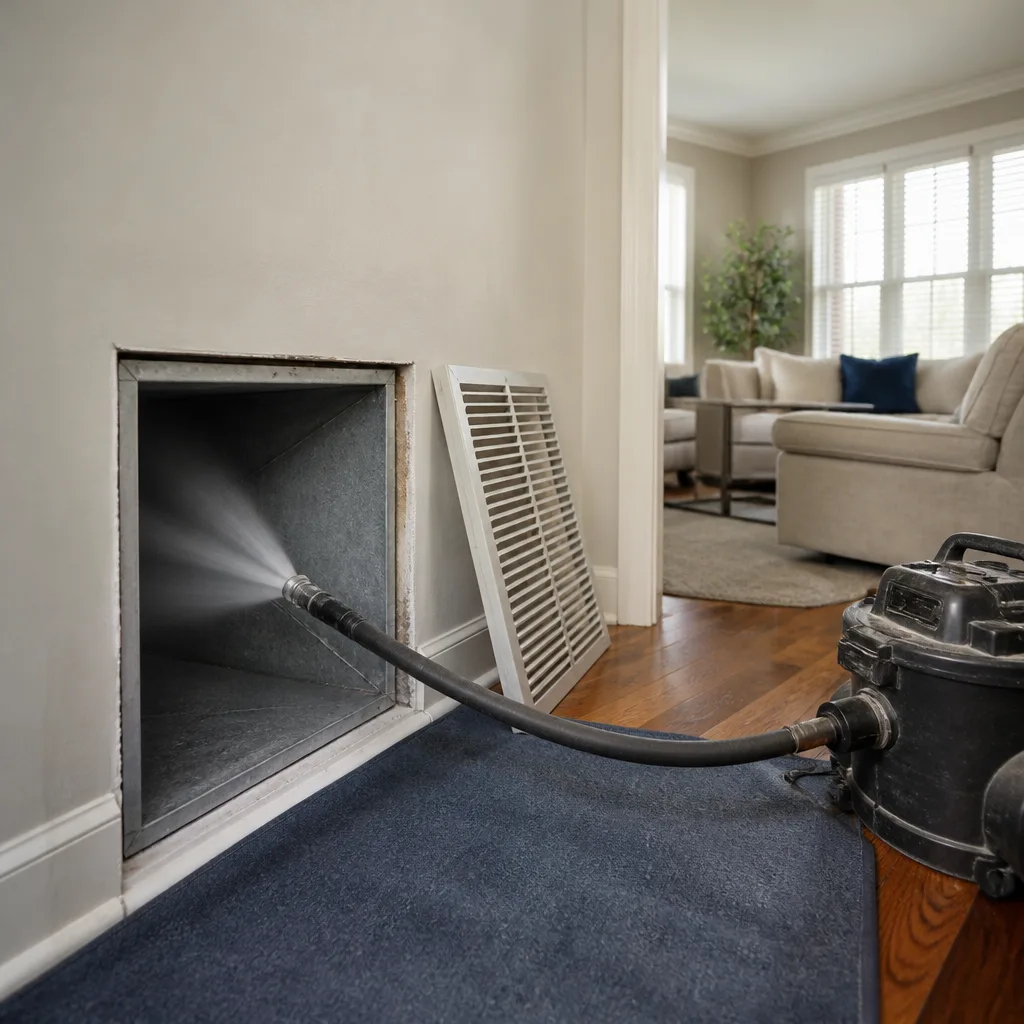 Sanitizing & deodorizing
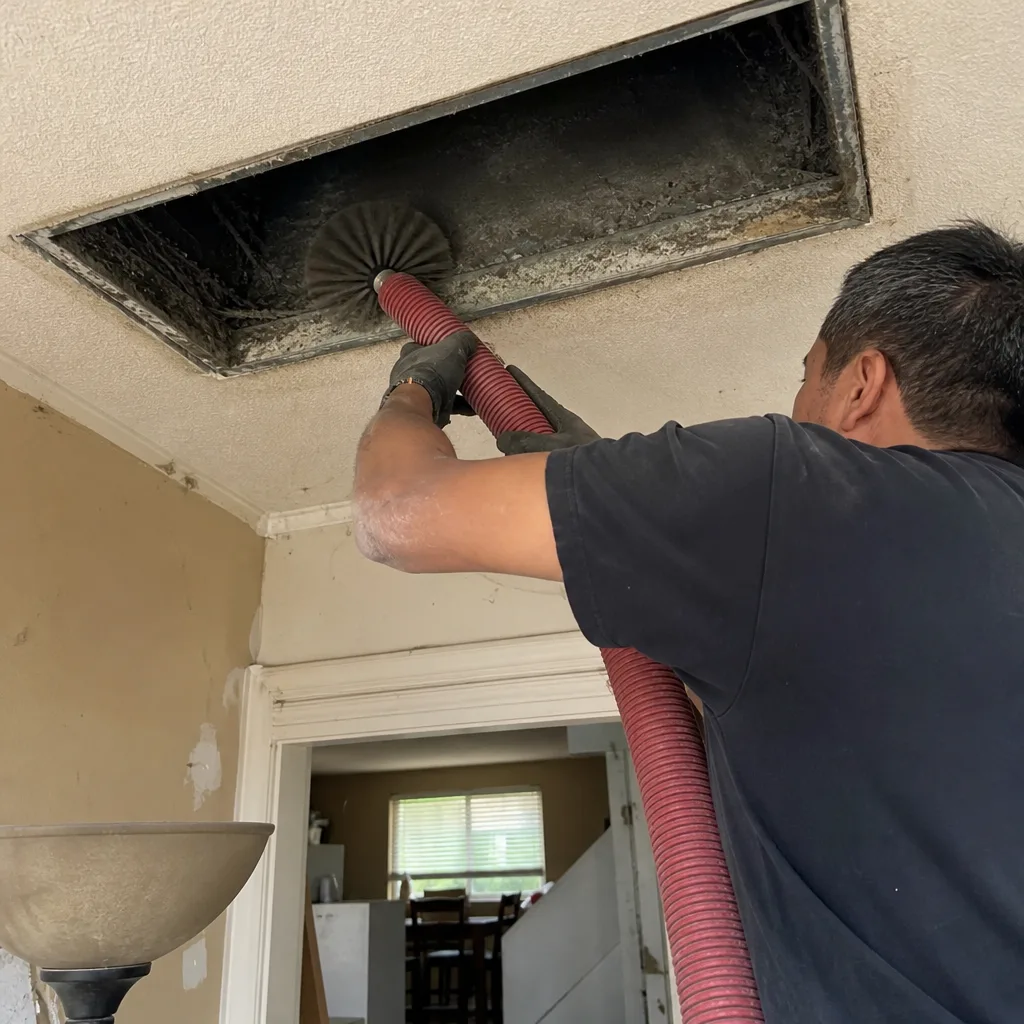
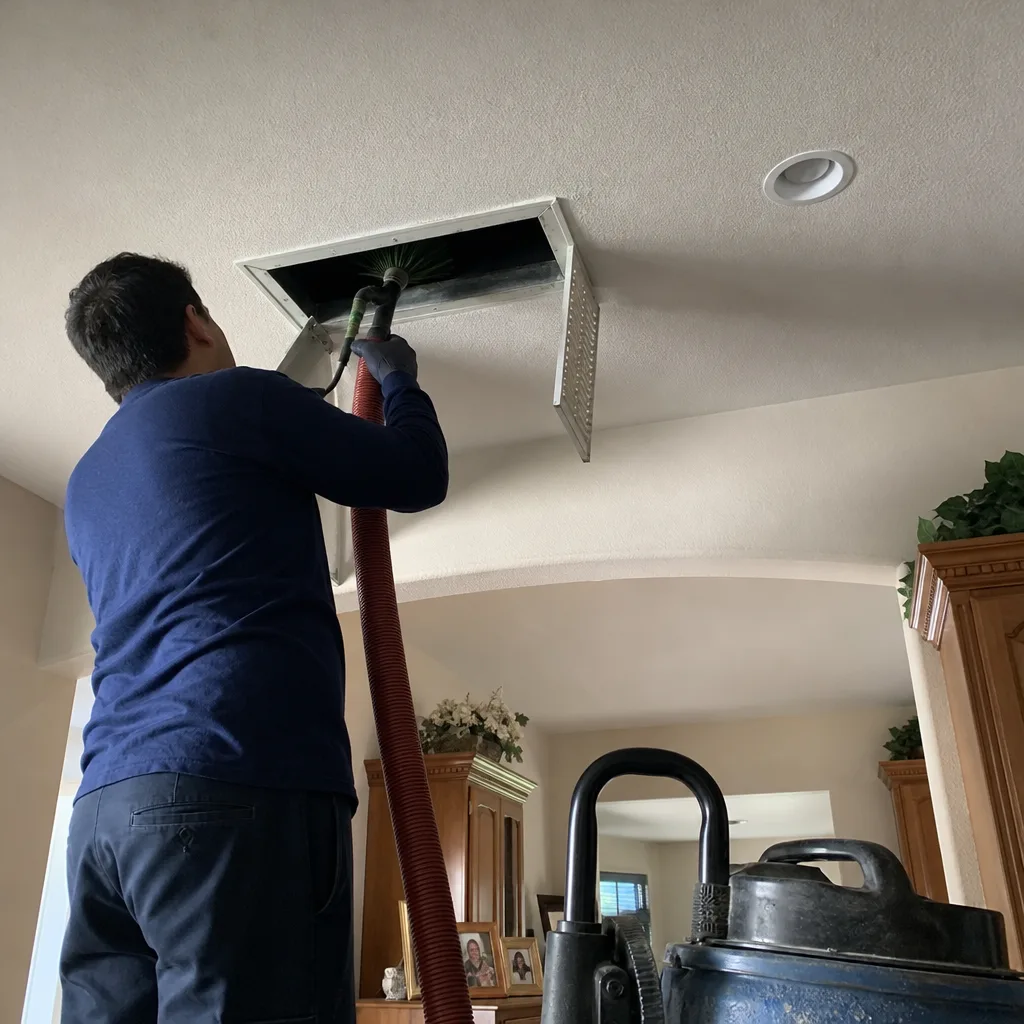
Whole-system duct and dryer vent check with before-and-after photos - you see exactly what came out of your vents
That "$99 whole-house special" is a bait ad - the real number appears once they are in your hallway, or the "clean" is a shop-vac at the register. We photograph the inside of your ducts before and after instead.
Air Duct Cleaning Cost Breakdown: The Perris Homeowner’s Reference for 2026
The $149 whole-house duct cleaning ad isn’t a deal. It’s a door-opener, and it’s designed to get a van into your driveway where the real invoice gets written. By the time the “required” add-ons are applied on-site, most Perris homeowners who called on that coupon price end up paying somewhere between $400 and $700. This guide breaks down exactly why that happens, what a fair price actually looks like in Perris for 2026, and how to read a duct cleaning quote so you know what you’re paying for before anyone shows up.
Styles & brands we work with
- Whole-home duct cleaning
- Dryer vent cleaning
- Camera inspection
- Sanitizing & deodorizing
Quick Answer
Air duct cleaning in Perris, CA costs between $350 and $650 for most single-family homes in 2026, with larger two-story homes running $500 to $900. The biggest price variables are system size (register count and linear duct footage), duct material, access difficulty, and contamination level found during inspection. A legitimate quote will always be scoped in writing before work begins, with the total price confirmed, not estimated.
Table of Contents
- The Real Cost Drivers: What Actually Moves the Price
- 2026 Perris Pricing by Home Type
- Add-Ons: Separating Necessity from Upsell
- How to Get a Binding Quote, Not an Estimate
- One-Time Cleaning vs. a Service Agreement: The Math
- Signs You’re Being Taken for a Ride
- Common Mistakes to Avoid
- When to Call a Professional
- Frequently Asked Questions
- The Bottom Line
The Real Cost Drivers: What Actually Moves the Price
Duct cleaning pricing looks random from the outside because most companies won’t tell you what’s actually in the number. In our experience running air duct cleaning in Perris for years, there are five variables that legitimately move the price, and none of them are arbitrary.
1. Register Count and Linear Duct Footage
The single largest cost driver is how much ductwork the technician has to clean. A typical Perris single-story home has 10 to 14 supply registers and 2 to 3 return grilles. Each register represents a branch line that runs from the main trunk to a room. More registers means more branch lines, more linear footage, and more time with the agitation tool inside each run. A 1,200-square-foot home with 10 registers will take roughly 2 to 3 hours. A 2,800-square-foot two-story with 18 registers and a long return chase can take 5 to 6 hours. Labor is the dominant cost, so system size drives the invoice.
2. Duct Material: Flex, Sheet Metal, or Ductboard
Perris homes built in the last 25 years typically use flexible duct (flex) for branch runs, often paired with a sheet metal main trunk or a ductboard plenum. Flex duct requires lower air pressure and gentler agitation to avoid tearing the inner liner. Sheet metal can handle more aggressive brush contact. Ductboard, common in older Perris tracts built in the 1980s and early 1990s, is essentially fiberglass board with a foil face, and it requires careful handling because the interior surface can shed fibers if over-agitated. A technician who knows what they’re looking at will price these differently, and a technician who doesn’t mention duct material at all is probably not actually inspecting before quoting.
3. Access Points
Some duct systems are easier to get into than others. A home with a dedicated access panel cut into the main supply plenum is straightforward. A home where the only access is through a 10-inch register boot in a hallway ceiling is not. Two-story Perris homes built in developments like May Ranch or Monument Park often have the furnace in a garage or attic with tight clearance, and the return plenum may require cutting a new access opening, which should be sealed and patched afterward. That’s legitimate additional labor, but it should be disclosed before the work starts, not discovered mid-job and added to the bill.
4. Contamination Level Found During Inspection
A duct system that has never been cleaned in a 25-year-old home will have a different contamination profile than one cleaned three years ago. Construction debris, drywall dust, pet hair, and in Perris specifically, a fine layer of desert dust that gets pulled into return plenums during the dry season, all add time. If the technician finds evidence of rodent activity or confirmed mold growth, the scope changes, and so does the price. This is where a pre-work inspection with photos matters. You should know what was found and what it costs to address it before any cleaning begins.
5. Equipment Type
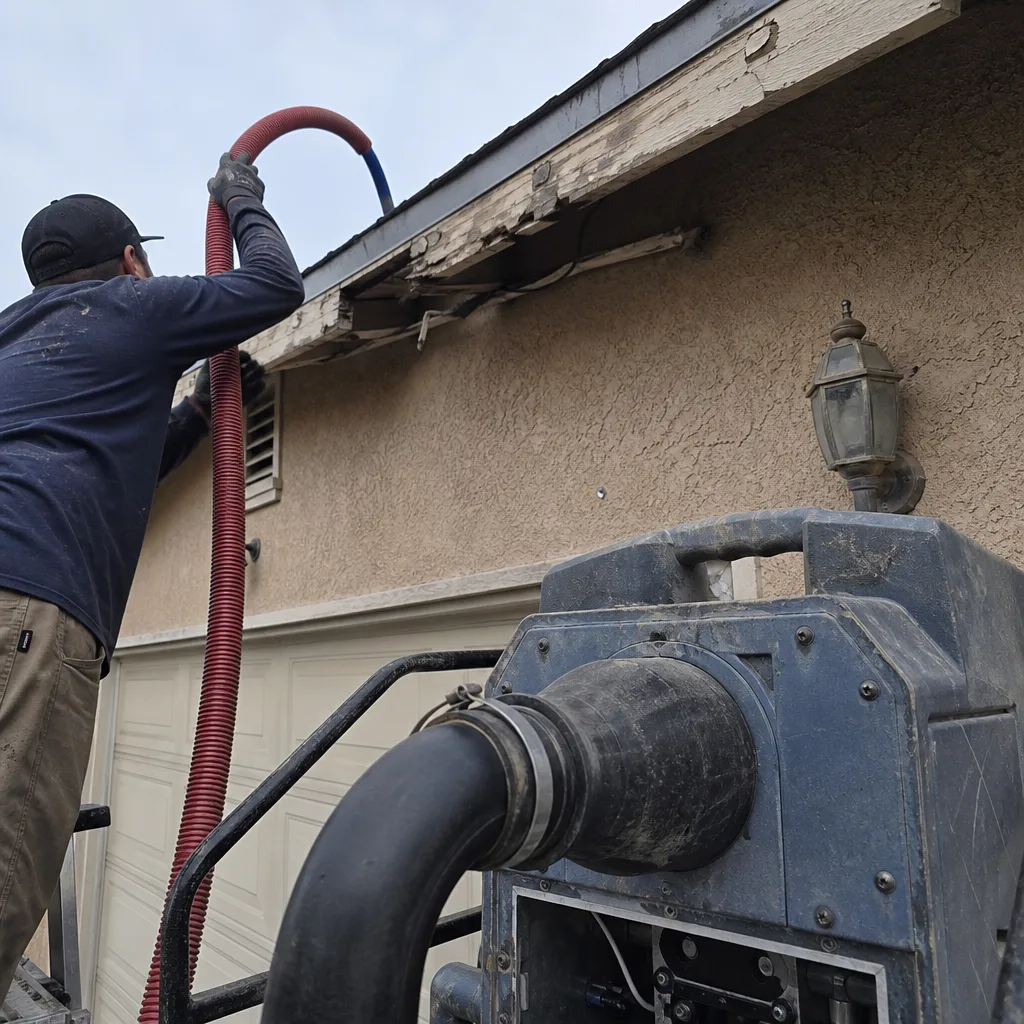
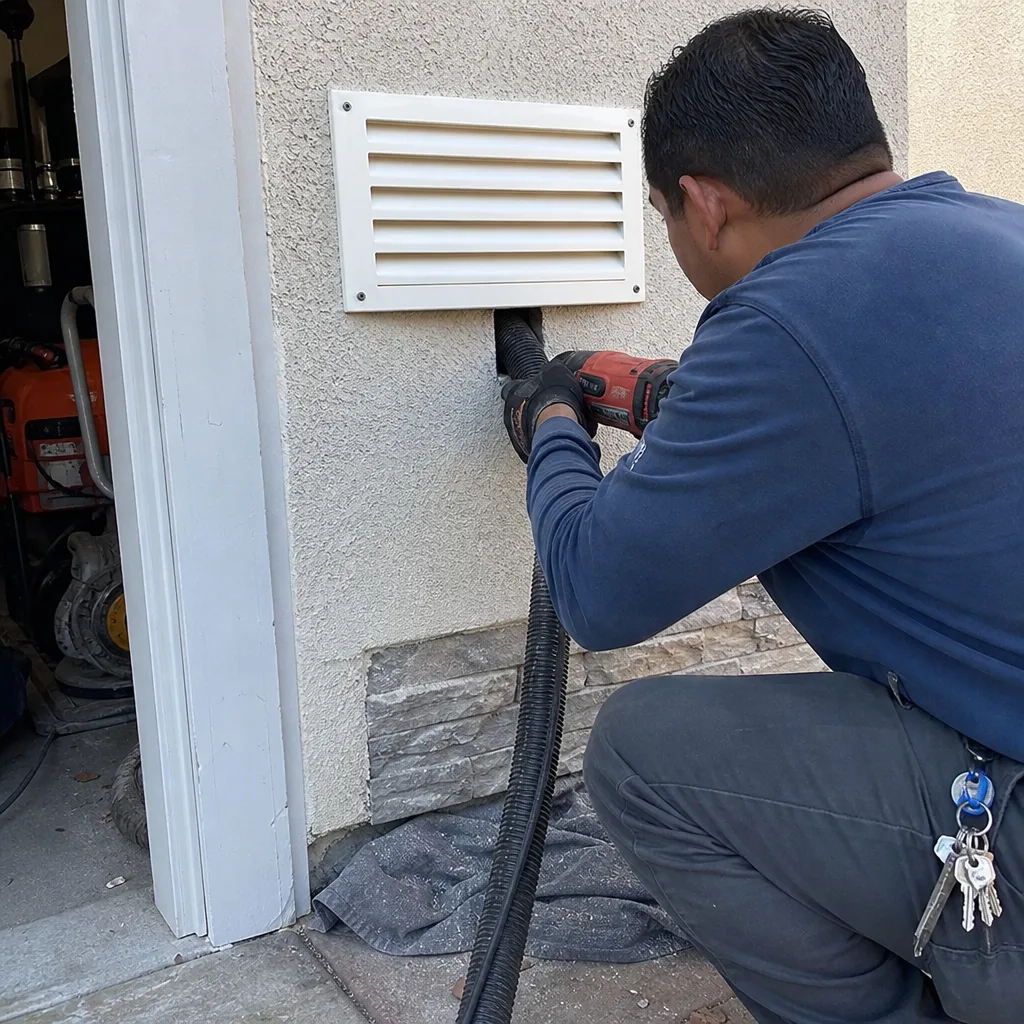
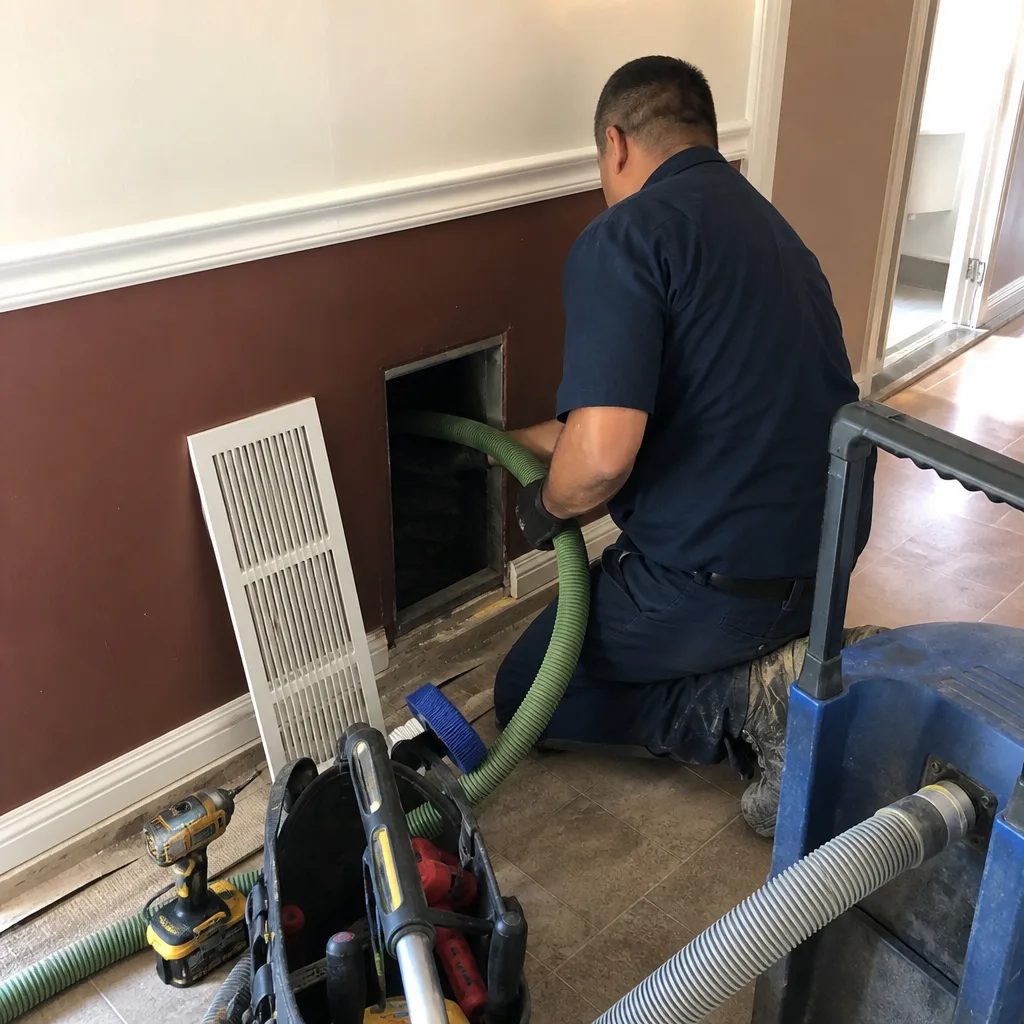
This is the cost driver most homeowners never see, and it’s the reason two companies can quote $299 and $599 for the same house and both be telling the truth about their price. Consumer-grade equipment, or truck-mount vacuums without proper agitation, moves air but doesn’t dislodge the debris bonded to duct walls. The brush does the work. We run Rotobrush rotary brush systems paired with Nikro HEPA extraction because mechanical agitation is what actually removes the adhered dust layer. That equipment costs real money to own and maintain, and it’s slower than a blow-and-go job. A company using professional-grade brush agitation and true HEPA filtration will never be the cheapest bid, and that’s not a coincidence.
2026 Perris Pricing by Home Type
Here’s what we see in the Perris market for 2026, broken down by common home configurations. These are whole-system prices that include supply and return runs, the main trunk line, and the air handler cabinet where accessible.
- Single-story slab home, 1,200 to 1,600 sq ft, 10 to 14 registers: $350 to $550. Most common configuration in older Perris tracts near the 215 and 74 corridors. Access is usually straightforward through a hallway ceiling or garage-mounted furnace.
- Two-story home, 2,200 to 3,000 sq ft, 14 to 18 registers, return plenum access issue: $550 to $850. Common in newer Perris developments and along Lake Perris. The return chase often runs through a wall cavity and requires additional access work.
- Manufactured home with flex duct throughout, 8 to 10 registers: $300 to $450. Flex duct systems are shorter runs with fewer registers, but they need lower-pressure cleaning to avoid liner damage. Faster job, lower labor cost.
- Older home with ductboard plenum and partial sheet metal, 10 to 14 registers: $400 to $600. The ductboard requires careful handling, and older systems often have never been cleaned, so contamination levels are higher.
These ranges assume normal contamination levels. If the system hasn’t been opened in 15 years, or if there’s been a remodel with drywall dust throughout the return side, the price moves toward the top of the range or slightly beyond. The honest way to handle that is a pre-work inspection with photos, not a surprise line item after the fact.
Add-Ons: Separating Necessity from Upsell
The gap between a $149 door-opener and a $600 final invoice is almost always built from add-ons. Some are legitimate. Some are margin padding. Here’s how to tell the difference.
Sometimes Genuinely Necessary
- Sanitizing after confirmed mold: If inspection shows visible microbial growth inside the ductwork, sanitizing is not optional. But it should only be sold after you’ve seen the evidence. A photo of the affected area, not a generic scare line about “bacteria in every home.”
- Evaporator coil cleaning: If the coil is visibly caked with dust and pet hair, it’s restricting airflow and reducing system efficiency. Cleaning it is legitimate, but the technician should show you the coil before and after. If they can’t show it, the work may not have been done.
- Return plenum access panel installation: If the original system lacks a proper access point, cutting one and sealing it afterward is a real improvement that makes future cleaning and inspection possible. This is a one-time cost, not a recurring upsell.
Pure Upsells, Usually
- Deodorizer sprays: A scented spray applied after cleaning masks odors for a few days. It doesn’t address the source of any odor, and if the system was actually cleaned, the odor source should be gone. If a deodorizer is being pushed hard, ask what specifically it’s fixing.
- UV light sales: UV systems can be legitimate in specific scenarios, like a coil with recurring microbial growth in a humid climate. But Perris is not humid. A UV light sold as a standard duct-cleaning add-on to a homeowner in a dry climate is margin padding. If a UV system is genuinely appropriate for your home, it should be a separate conversation about air quality equipment, not a line item on a cleaning invoice. Duct Cleaning Perris does install and service Honeywell and Aprilaire air-quality products, including UV systems, but only when the specific home warrants it.
- Vague “bio-treatment” or “anti-microbial fogging”: If the salesperson can’t name the specific product, the specific pathogen it targets, and the specific test that showed it was needed, decline. Fogging a duct system with an unnamed chemical is not air quality improvement.
- Duct sealing that wasn’t inspected: Some companies will sell aerosol duct sealing based on a generic “all ducts leak” pitch. Duct leakage is real, especially in older Perris homes, but sealing should be based on a leakage test and a specific list of leak sites, not a fear-based estimate.
How to Get a Binding Quote, Not an Estimate
An estimate is a guess. A binding quote is a contractual commitment. The difference is the language on the page, and getting the right language in writing before the technician arrives is the single most effective thing you can do to protect yourself from bait-and-switch pricing.
- Require a written scope of work before any cleaning begins. The scope should list the number of registers, the type of duct material, the access points to be used or created, the equipment being used, and the total price. If the company won’t put this in writing before starting, walk away.
- Ask whether the price is “per system” or “per vent.” Per-vent pricing is the classic way to make a job sound cheap ($19 per vent!) while the final invoice multiplies out to far more than a flat whole-system price. A legitimate company prices the system as a system because that’s how the work is actually performed.
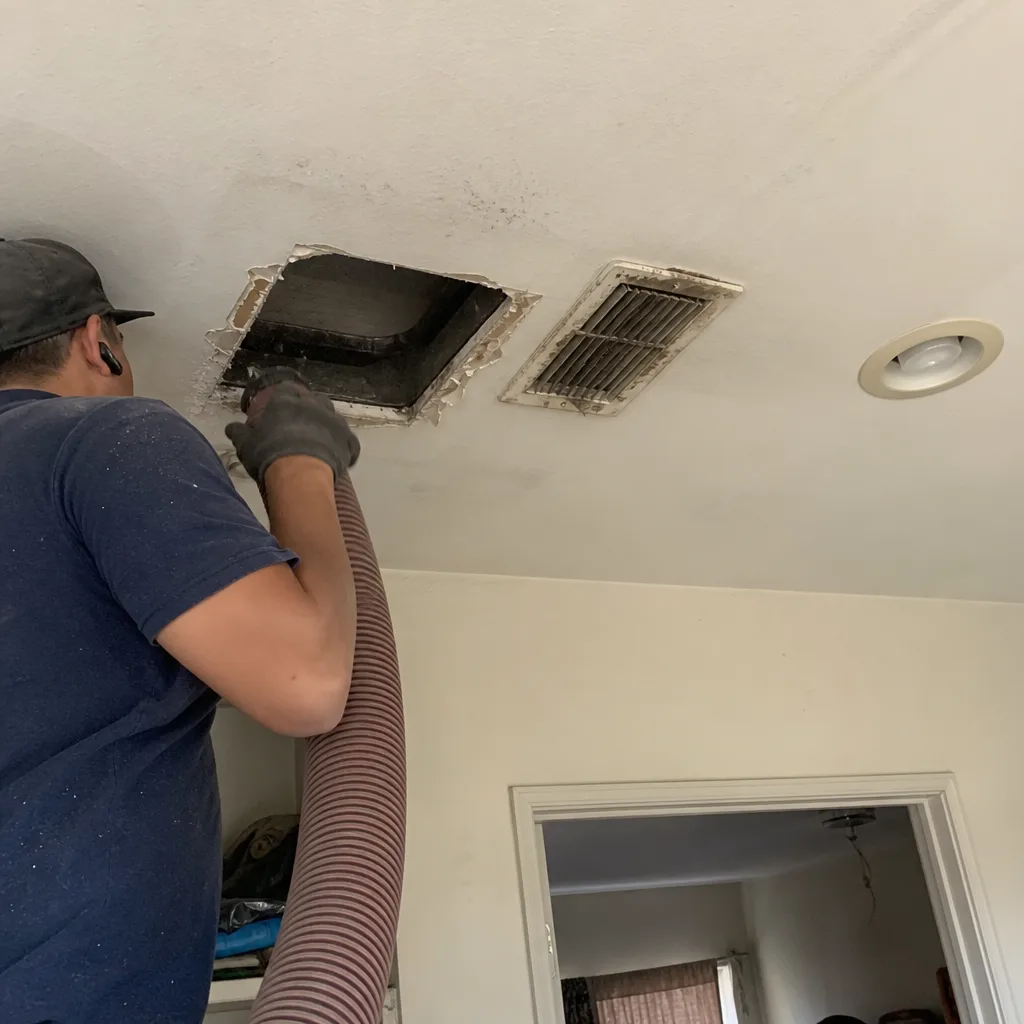
- Require photo documentation. The scope should state that before and after photos of the duct interior will be provided. You should see the duct walls before cleaning, the debris being extracted, and the same duct walls after. If a company can’t or won’t provide this, you can’t verify the work was done. We use Abatement Technologies containment and filtration gear, and we photograph every job because if we can’t show you the inside of your ducts, we haven’t done our job.
- Get the “what happens if” language in writing. What happens if additional contamination is found? What happens if an access panel needs to be cut? The quote should state that any scope change requires your written approval before additional charges apply. This one sentence prevents the on-site upsell spiral.
- Confirm who does the work. The quote should name the technician or the crew who will perform the cleaning. Subcontracting is common in this industry, and a company that subcontracts has less control over equipment quality and scope discipline. If the person in your home isn’t the company you hired, ask why.
One-Time Cleaning vs. a Service Agreement: The Math
Some companies will push a service agreement: clean now, and re-clean every 2 to 3 years at a discounted rate. In some situations the math works. In others, it’s a financing plan for work you don’t need yet.
For a typical Perris household without unusual air quality issues, the National Air Duct Cleaners Association guideline of cleaning every 3 to 5 years is reasonable. The desert dust load in Perris is a real factor, especially for homes near open land or unpaved roads in areas like Gavilan Hills or along the Perris Valley. Those homes may justify cleaning every 3 years. A home in a developed tract with landscaping and paved streets may go 5 years or more between cleanings.
Here’s the math on a service agreement: if a single cleaning costs $450, and the agreement locks in a $325 re-clean every 3 years with an annual inspection included, the agreement pays for itself if you were going to clean every 3 years anyway. The inspection is the real value, because it catches contamination early and catches duct damage before it becomes a repair. We offer air duct repair in Perris as part of our scope, and a small tear in a flex run caught during an inspection is a $150 repair. That same tear left for three years becomes a $400 repair with reduced system performance in the meantime.
But if a company is pushing a service agreement hard before they’ve even inspected your ducts, that’s a red flag. A legitimate agreement is offered after the inspection shows what your system actually needs, not before anyone has looked at it.
Signs You’re Being Taken for a Ride
Here’s how the bait-and-switch actually plays out in Perris, step by step.
- The coupon price is for “up to 10 vents” and your home has 14. Each additional vent is $25 to $45. The $149 special is now $249 before anyone has touched a tool.
- The technician “discovers” that the main trunk line requires “deep cleaning” not covered by the base package. This is $150 to $250 extra. But the main trunk is the largest air passage in the system. A duct cleaning that doesn’t include the trunk line isn’t a duct cleaning.
- The technician recommends sanitizing because “all homes have mold.” No photo evidence is shown. This is $200 to $400 extra. Perris is a dry climate. Mold in ducts here is rare and usually indicates a moisture problem that sanitizing won’t fix.
- The technician recommends a UV light because Perris has “high dust levels.” A UV light addresses microbial growth, not dust. This pitch is either ignorance or manipulation. Either way, decline.
- The final invoice is presented before any before-and-after photos are shown. You should be able to see what your ducts looked like and what they look like now. If you can’t, you can’t verify the work.
Common Mistakes to Avoid
- Calling the cheapest number on the search results. The cheapest advertised price in a market where professional equipment costs real money is almost always a door-opener, not a final price. If the number on the ad is less than the cost of properly doing the job, the job described in the ad is not the job you’ll be billed for.
- Not asking what equipment will be used. A truck-mount-only vacuum without brush agitation is a blow-and-go. It moves air through the ducts and leaves the adhered debris layer in place. The equipment matters because the outcome depends on it. Your ducts are only as clean as the equipment cleaning them.
- Accepting a quote over the phone without an inspection. No one can accurately price your duct system without seeing it: the register count, the duct material, the access points, the contamination level. A phone quote is a sales tool, not a real price. A legitimate company will inspect first and quote second.
- Paying for sanitizing without seeing photo evidence of what it’s treating. Sanitizing should be sold based on a specific finding, documented with a photo, not a generic claim. If they can’t show you the problem, they haven’t found one.
- Skipping dryer vent cleaning because the ducts were cleaned. The dryer vent is a separate exhaust line, not part of the HVAC duct system. Dryer vent cleaning in Perris is a distinct service for a distinct reason: lint accumulation is the leading cause of residential dryer fires. A dryer vent isn’t a minor add-on. It’s a fire-hazard service.
- Not asking who will show up to do the work. Subcontracting is rampant in this industry. The company you call may not be the company in your home. Ask before you book.
- Accepting a quote with ambiguous scope language. If the quote says “cleaning as needed” or “system cleaning,” ask for specifics. Register count, duct material, access points, total price. If they won’t put it in writing, the ambiguity is intentional.
When to Call a Professional
Some situations are obvious: visible dust blowing from registers when the system kicks on, a musty odor that persists through filter changes, or a home that’s just been through a remodel with drywall dust throughout. Other situations are less obvious. If your energy bills have been climbing without a corresponding change in usage, restricted airflow from a dirty evaporator coil or a clogged return plenum may be the cause. If allergy symptoms spike when the system runs, the issue is likely particulates circulating through contaminated ducts. And if you’ve lived in your Perris home for five years or more and can’t remember the last time the ducts were cleaned, it’s time for an inspection. Duct Cleaning Perris offers free estimates in Perris, so the cost to find out is nothing. Call (844) 728-0966 to schedule an inspection and get a written quote before any work begins.
Frequently Asked Questions
For most Perris single-family homes, air duct cleaning costs between $350 and $650 in 2026, with larger two-story homes running $500 to $900. The price depends on register count, linear duct footage, duct material, access difficulty, and contamination level found during inspection. Call (844) 728-0966 for a written quote specific to your home.
Cheaper quotes almost always reflect cheaper equipment and less thorough work. A truck-mount vacuum without brush agitation moves air but doesn’t remove the adhered dust layer from duct walls. Professional-grade equipment like the Rotobrush rotary brush and Nikro HEPA extraction systems costs more to own and operate, and the work takes longer. A quote far below the market range in Perris is usually a door-opener, not a final price.
Require before-and-after photo documentation of the duct interior. The photos should show the same duct runs before cleaning and after, so you can see the difference. A company that can’t or won’t provide this can’t verify the work. Ask about photo documentation before you book, and require it in the written scope of work.
For most Perris homes, every 3 to 5 years is the right interval. Homes near open land or unpaved roads in areas like Gavilan Hills may need cleaning closer to every 3 years due to higher dust load. Homes with good filtration and no unusual air quality issues may go 5 years. The honest answer depends on your home’s specific conditions, which an inspection can determine.
Mold in ductwork is less common in Perris than in humid climates, because the visible growth requires sustained moisture. When mold does appear, it usually indicates a moisture problem like a leaking evaporator coil or a crawlspace humidity issue. Sanitizing should only be sold after photo evidence of visible microbial growth inside the ducts has been documented. If a company claims “all homes have mold” without showing you the evidence, treat it as a sales pitch, not a finding.
For homeowners with dust or pollen allergies, duct cleaning can reduce the particulate load circulating through the HVAC system, especially if the ducts haven’t been cleaned in years. The benefit is most noticeable when the cleaning is paired with proper filtration. If you have allergy concerns, ask about a whole-home media filter installation. We install and service Honeywell and Aprilaire air-quality products as part of our scope, and a proper media filter catches far more allergens than a standard 1-inch fiberglass filter. Call (844) 728-0966 to discuss what’s actually going on with your system’s air quality.
It can, when done with the wrong equipment or by an inexperienced technician. Flex duct is vulnerable to tearing if agitated too aggressively. Ductboard can shed fibers if over-brushed. A proper cleaning uses equipment matched to the duct material, and a reputable company will flag any existing damage before they start. We inspect first, document the condition of the ducts, and note any damage we find before cleaning begins. That’s also why we repair air ducts in Perris as part of our service: clean, inspect, repair, one visit, one contractor.
The Bottom Line
Air duct cleaning in Perris costs between $350 and $650 for most homes in 2026, and the work is worth doing when it’s done correctly with professional-grade equipment and documented results. The key takeaways: insist on a written scope of work with a binding total price, require before-and-after photo documentation, understand which add-ons are legitimate and which are margin padding, and remember that a $149 whole-house special is a door-opener, not a final price. If you want your ducts cleaned once, correctly, with equipment that actually removes the debris layer and photos that prove it, Duct Cleaning Perris offers free estimates. Call (844) 728-0966.
Written by the team at Duct Cleaning Perris, serving Perris since 2014.
See the difference
 Before
 After
 Before
 After
 Before
 After