
Last updated November 2, 2026
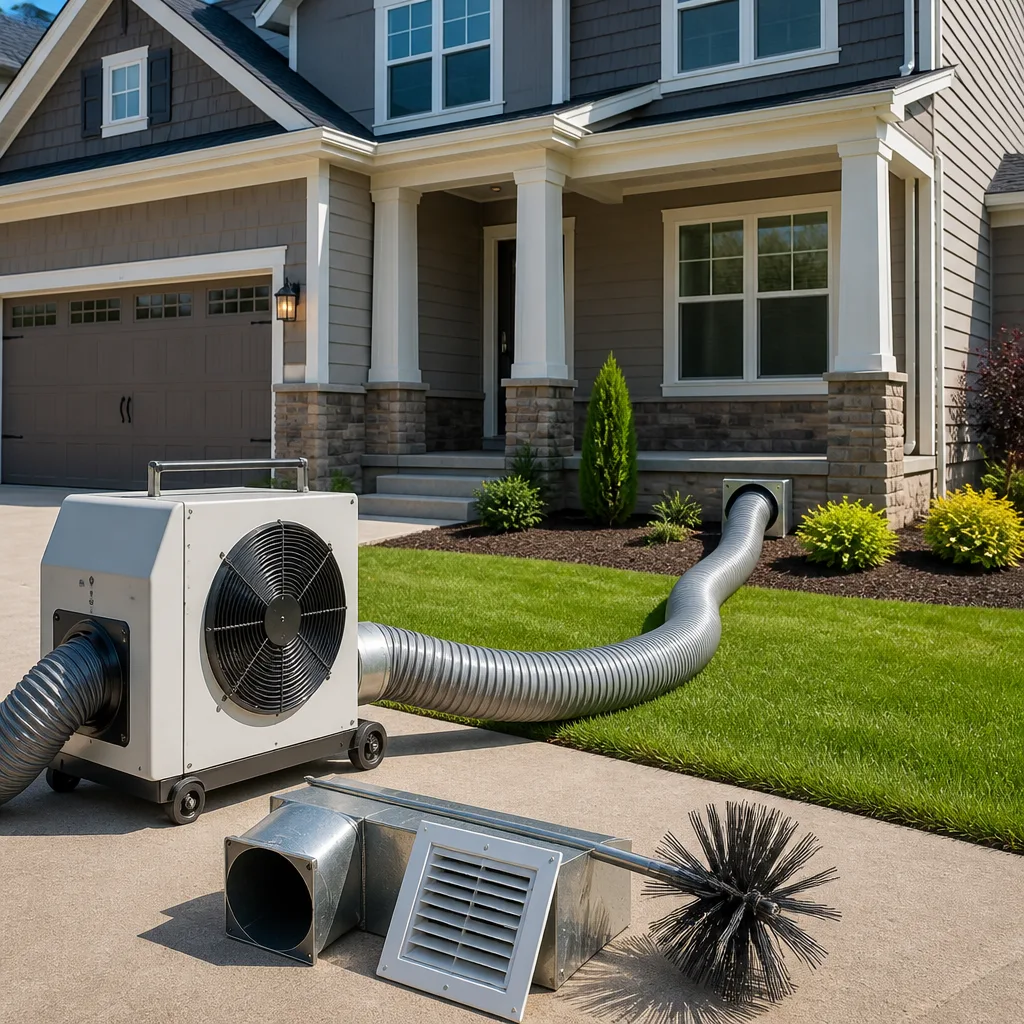 Whole-home duct cleaning
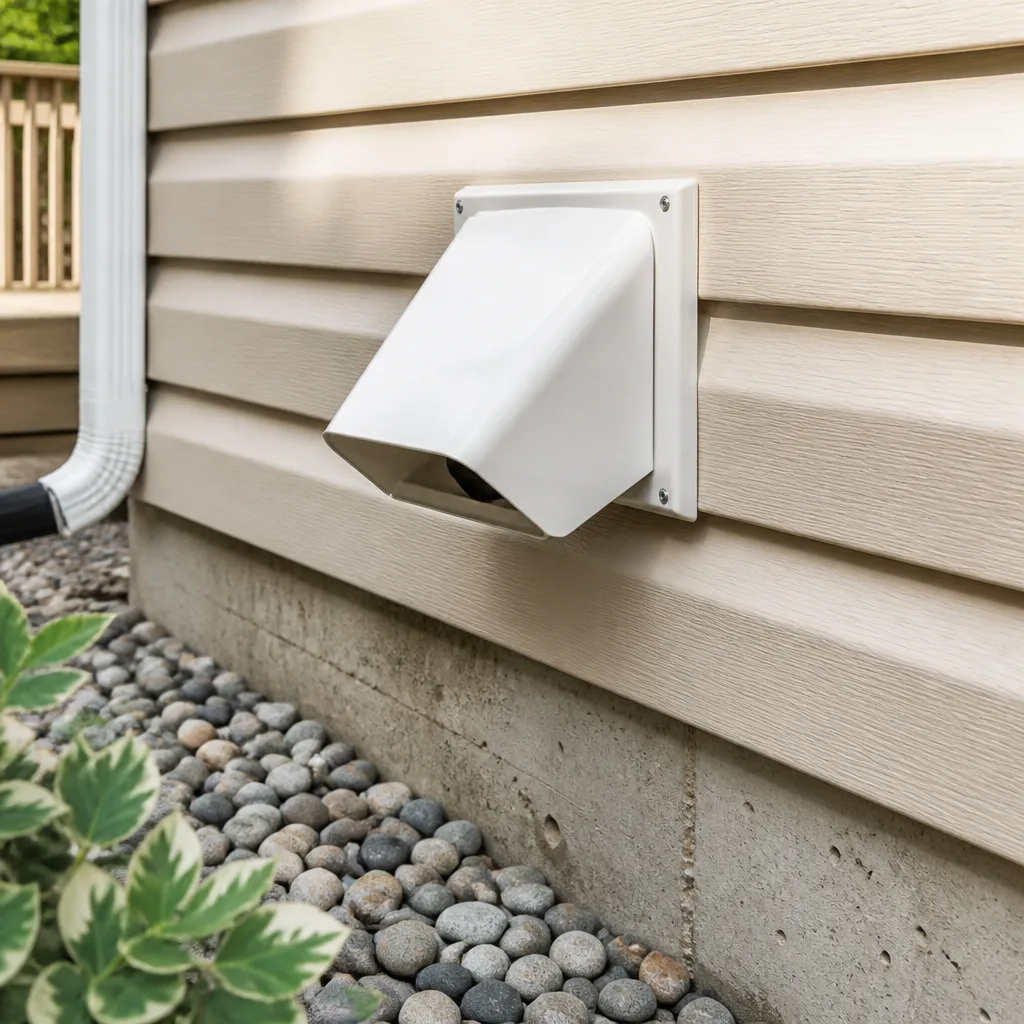 Dryer vent cleaning
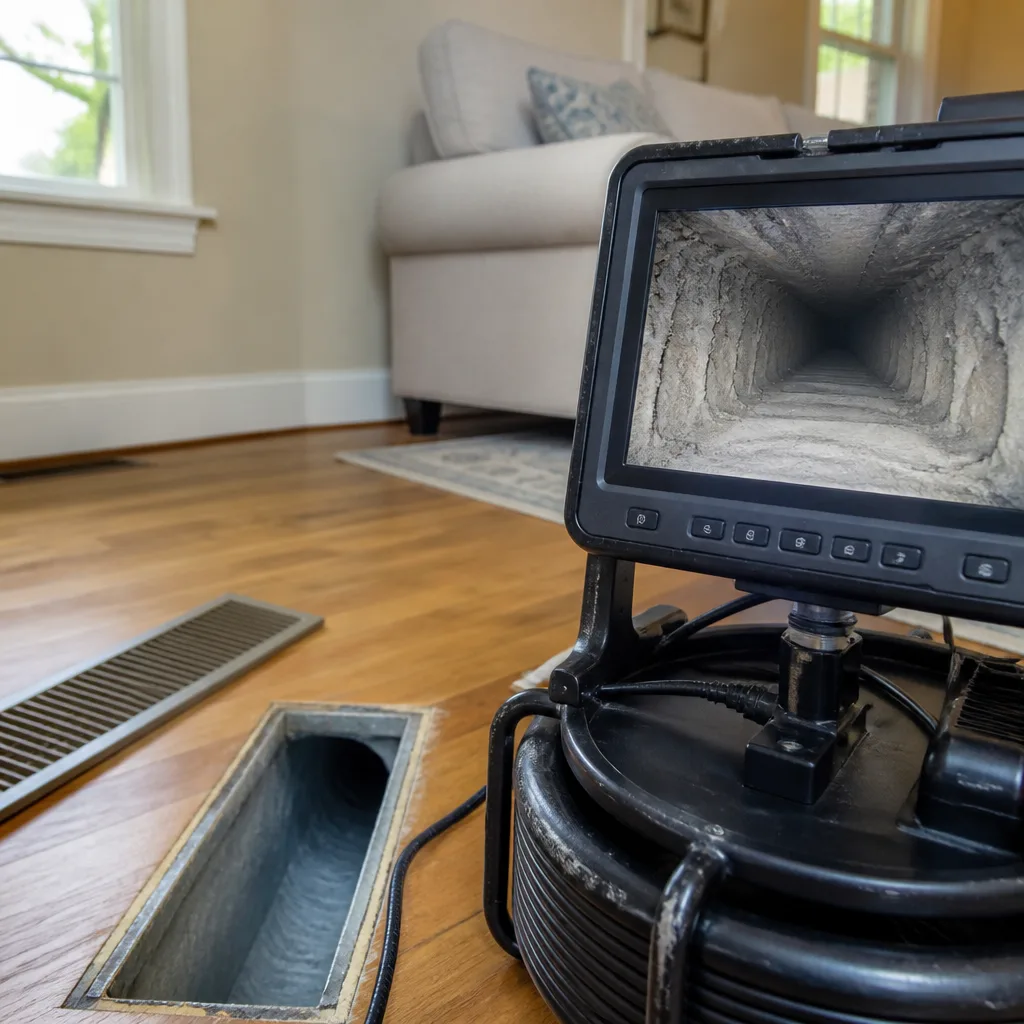 Camera inspection
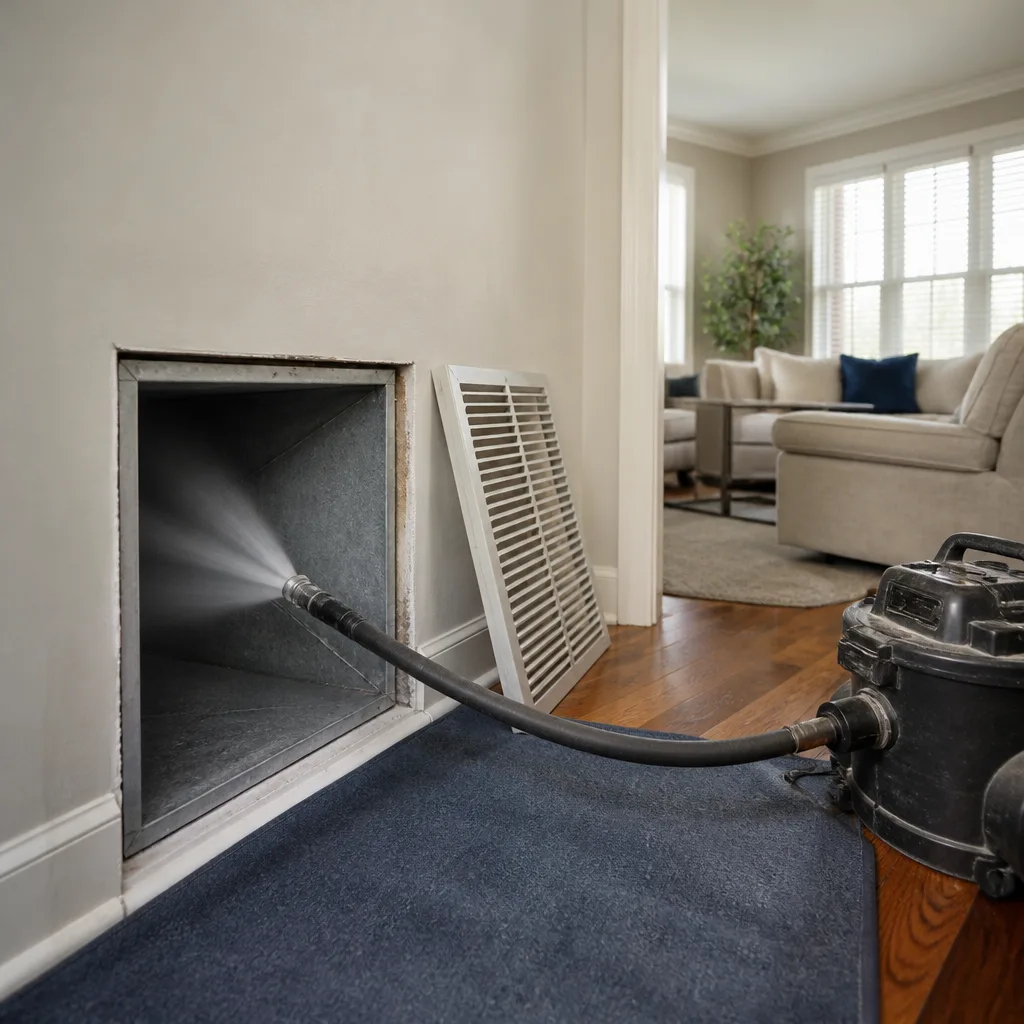 Sanitizing & deodorizing
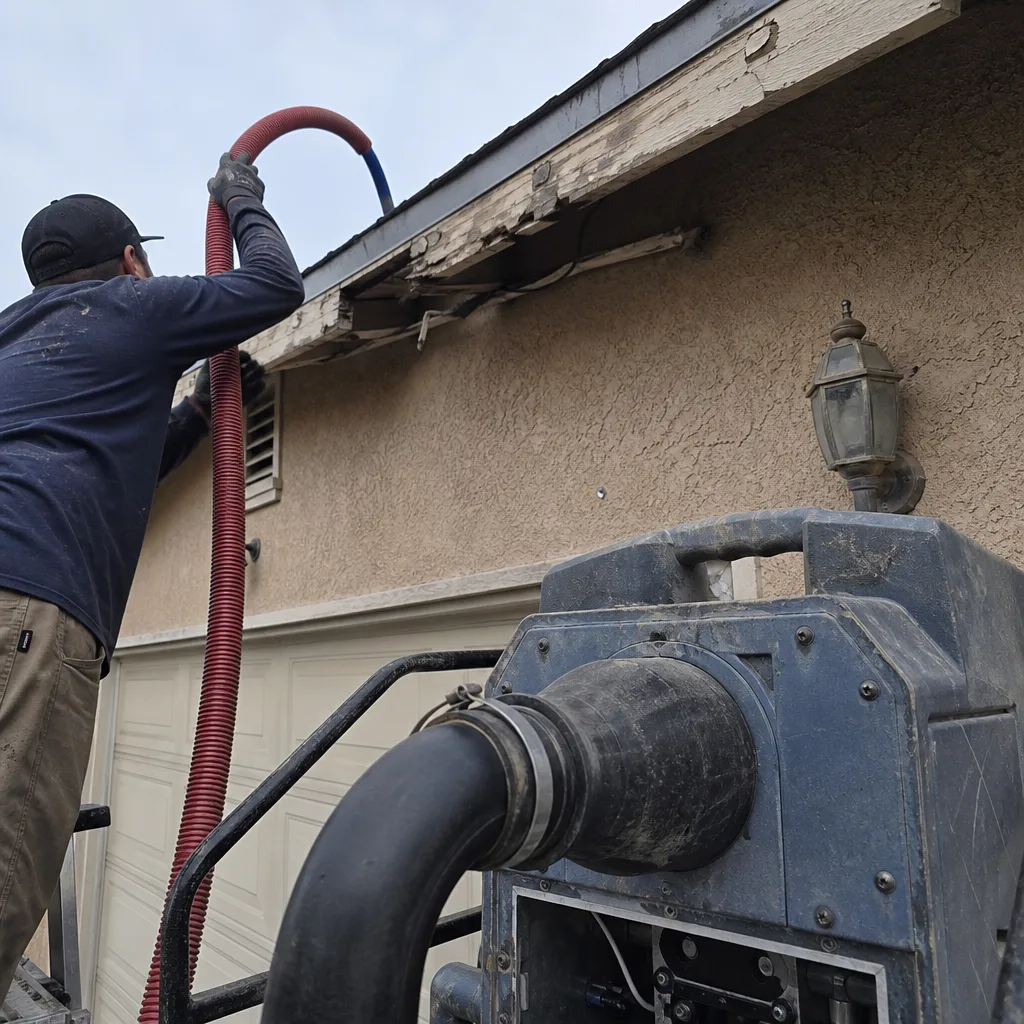
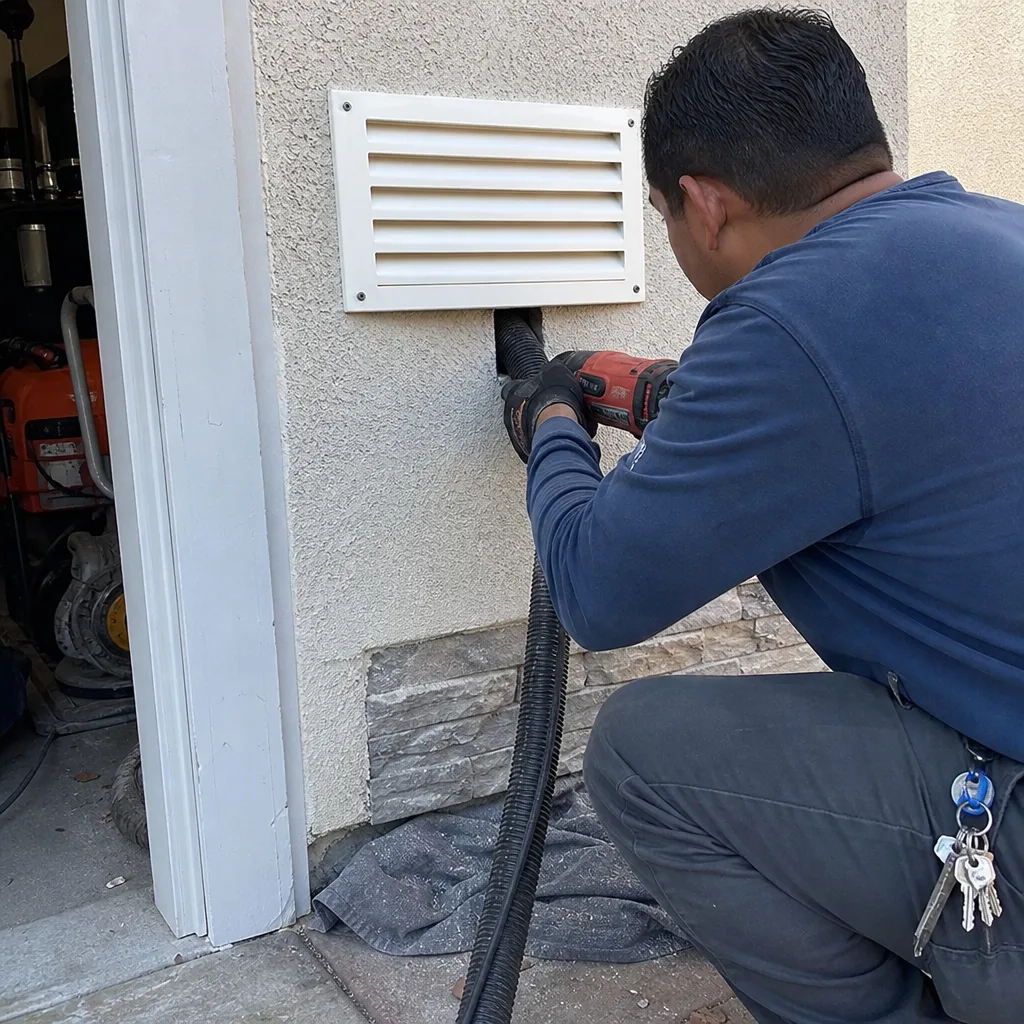
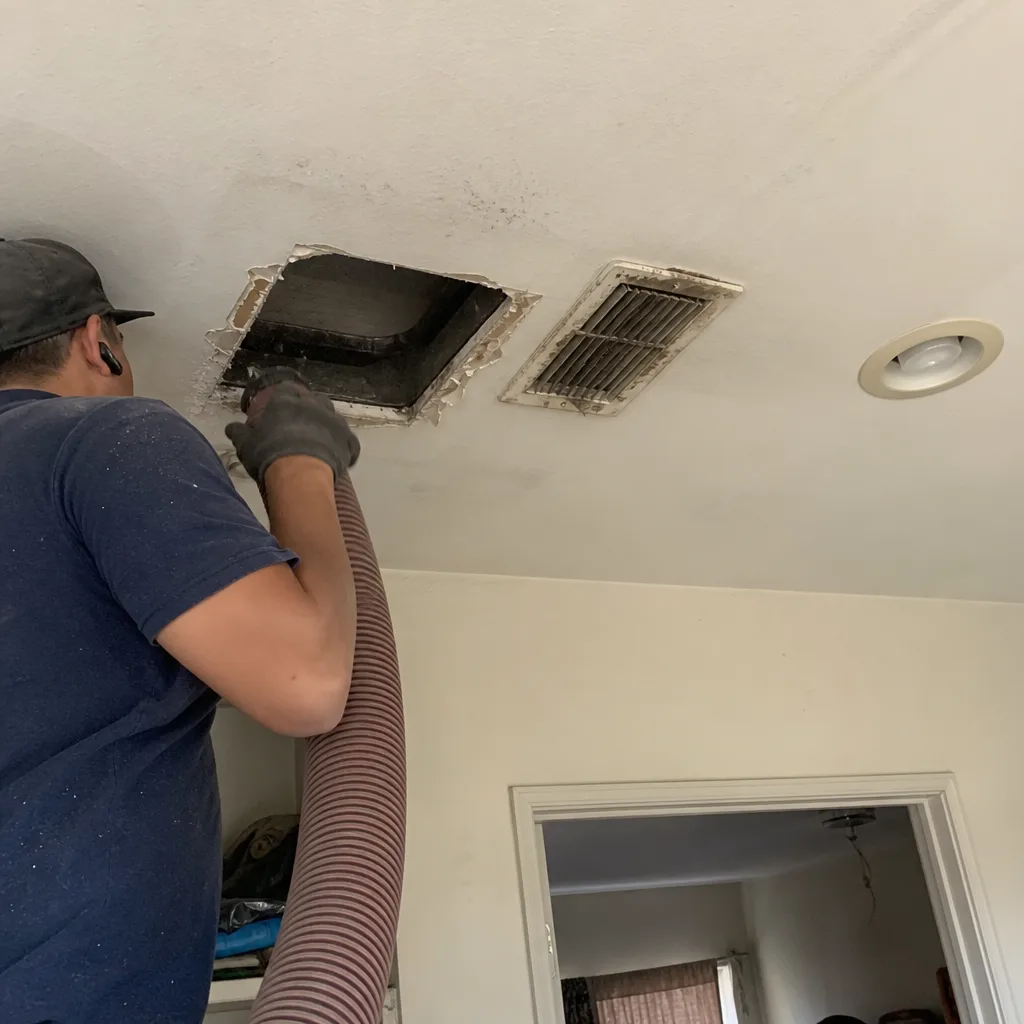
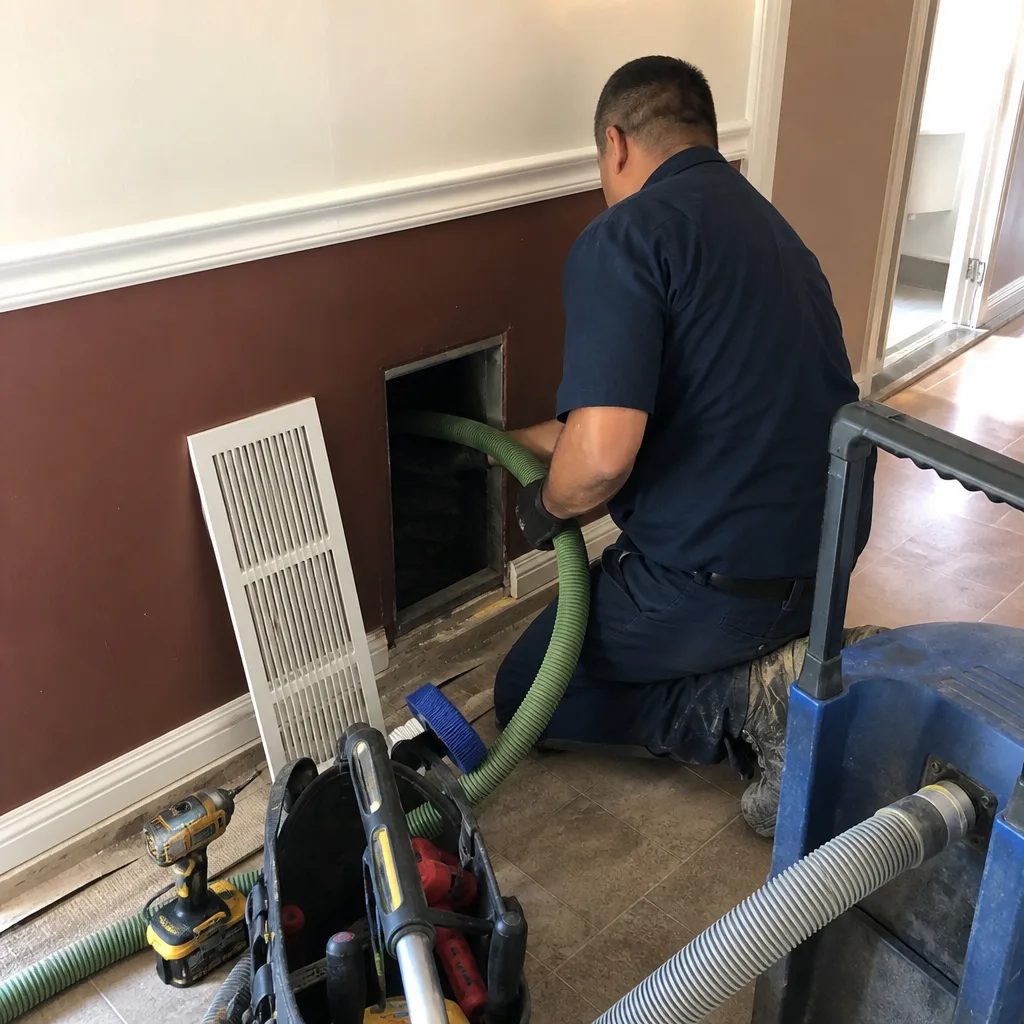
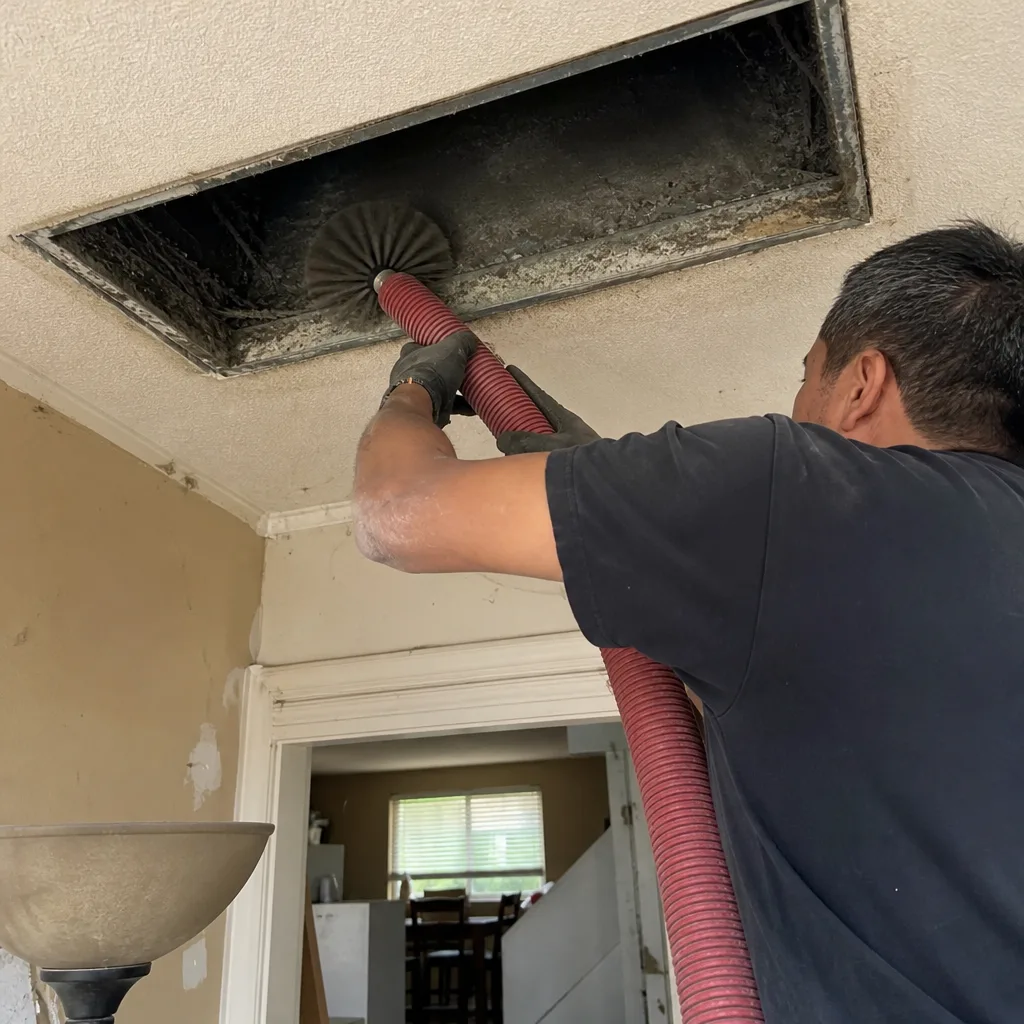
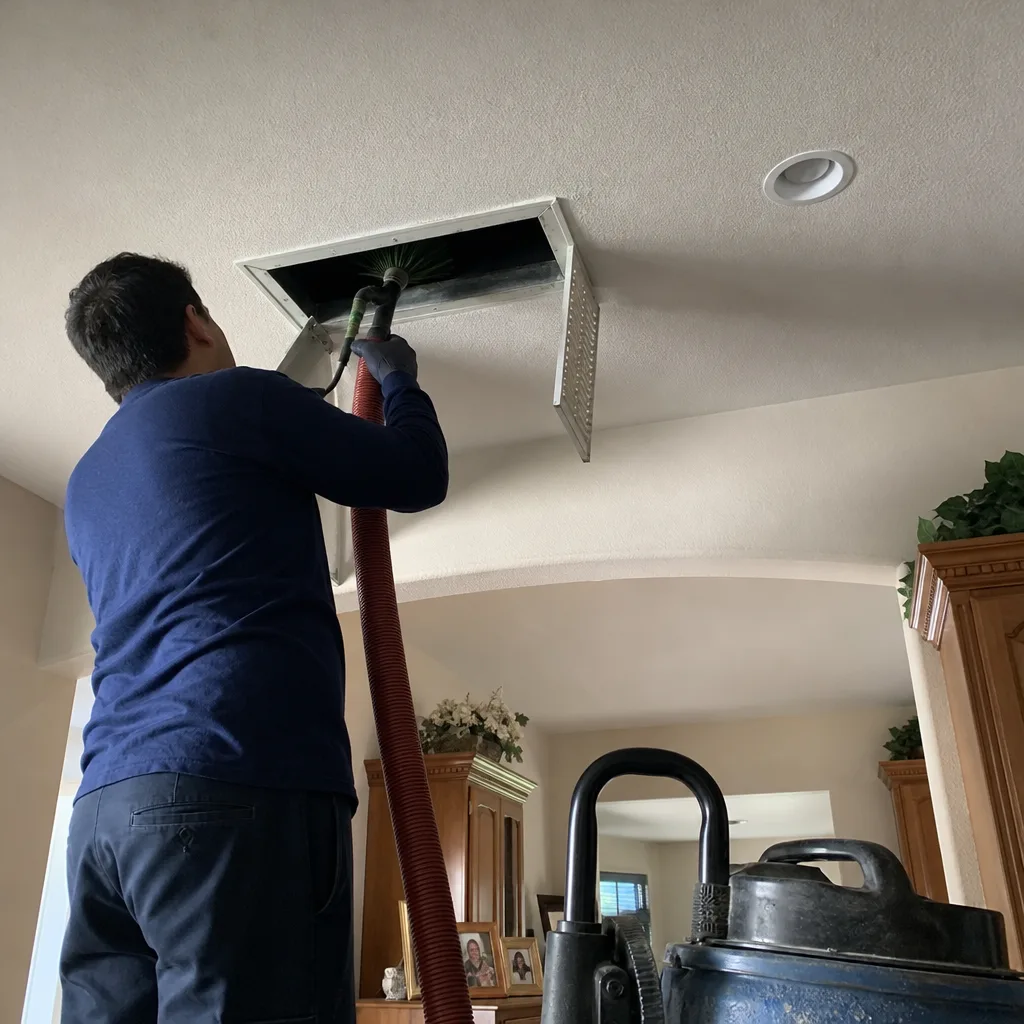
Whole-system duct and dryer vent check with before-and-after photos - you see exactly what came out of your vents
That "$99 whole-house special" is a bait ad - the real number appears once they are in your hallway, or the "clean" is a shop-vac at the register. We photograph the inside of your ducts before and after instead.
How to Hire an Air Duct Cleaning Contractor in Perris: A Step-by-Step Guide
California does not require a contractor’s license to clean air ducts. Let that land for a second. Anyone with a van, a rented vacuum, and a stack of flyers can legally show up at your door in Perris, call themselves a duct cleaning specialist, and start quoting you prices. We work in this industry every day, and we’ve seen what happens when homeowners don’t know what to ask. This guide gives you the exact conversation to have with any Air Duct Cleaning services contractor before you book, so you hire someone who actually cleans ducts, not someone who just moves dust around and hands you an invoice.
Quick Answer
To hire an air duct cleaning contractor in Perris, start by confirming they use professional-grade agitation and HEPA filtration equipment, not a shop vac. Ask for a walk-through before any quote, demand to know the CFM rating of their vacuum system, require before-and-after photo verification, and walk away from any whole-house price under $250, which in the Inland Empire almost always signals a bait-and-switch operation. A legitimate air duct cleaning in Perris job takes 3 to 6 hours on an average home, and the contractor should be able to explain exactly what they’re doing at each register before they start.
Styles & brands we work with
- Whole-home duct cleaning
- Dryer vent cleaning
- Camera inspection
- Sanitizing & deodorizing
Table of Contents
- Why California’s Lack of a Duct Cleaning License Changes Everything
- The Five Equipment Questions to Ask Before Booking
- How to Read a Duct Cleaning Quote Line by Line
- What a Legitimate Walk-Through Looks Like
- Red Flags Specific to the Inland Empire Market
- What NADCA Membership Actually Means (and Doesn’t Mean)
- How to Verify the Work Was Actually Done
- Common Mistakes to Avoid
- When to Call a Professional
- Frequently Asked Questions
Why California’s Lack of a Duct Cleaning License Changes Everything
In California, the Contractors State License Board regulates HVAC installation, electrical work, and plumbing. Duct cleaning is not on that list. There is no state exam for duct cleaners, no continuing education requirement, and no oversight board checking whether the person who shows up at your Perris home actually knows the difference between a supply duct and a return plenum.
This shifts the entire burden to you, the homeowner. You cannot assume that hiring a “professional” means hiring someone competent. You have to become the screener. Here’s what that looks like in practice:
- Equipment is the first filter. A contractor who arrives with a portable shop vac and some brushes is not doing the same job as one who runs a truck-mounted vacuum drawing 12,000 CFM or higher through a HEPA filtration system. The equipment question is the fastest way to separate real operators from weekend hustlers.
- Process matters more than price. Duct cleaning has no material cost in the traditional sense. You’re paying for labor time and equipment amortization. If someone quotes you $99 for a whole house, they are either planning to be there for 45 minutes or planning to upsell you hard once they’re inside. Neither is good.
- Verification is non-negotiable. Ducts are hidden infrastructure. You cannot see what was done without cameras. A contractor who refuses to show before-and-after photos is asking you to take their word for it, and in an unregulated industry, that’s not a bet you should make.
We work in Perris and throughout the Inland Empire, and the homes here share a few common threads: dust from the dry, windy climate, construction debris from the fast-growing subdivisions, and long cooling seasons that push HVAC systems hard from May through October. That combination means ducts in this region collect more than the national average, which makes the difference between a real cleaning and a cosmetic one especially visible.
The Five Equipment Questions to Ask Before Booking
You don’t need to be a technician to evaluate a duct cleaning contractor. You need to ask five specific questions. The answers, or the evasions, tell you everything.
1. What is the CFM rating of your vacuum system?
CFM stands for cubic feet per minute, and it measures how much air the vacuum moves. This is the single most important number in duct cleaning. A vacuum that moves 2,000 CFM can capture loose dust near the register. A vacuum that moves 12,000 CFM or more creates negative pressure throughout the entire duct system, pulling dislodged debris back to the collection point rather than letting it circulate through your living room.
Our equipment runs between 12,000 and 15,000 CFM depending on the system. Anything under 5,000 CFM is not a professional setup, regardless of what the marketing brochure says. Ask the question. If they don’t know the number, end the call.
2. Is your vacuum truck-mounted or portable?
Truck-mounted systems are typically more powerful because they draw power directly from the vehicle’s engine rather than a wall outlet. Portable systems can work, but only if they are commercial-grade, HEPA-rated units like the Nikro systems we run. The key is not just the location; it’s the filtration. A portable unit without HEPA filtration will capture larger debris but exhaust fine particulates right back into your home.
When you ask this question, listen for specifics. “We use professional equipment” is not an answer. “We run a Nikro HEPA portable system rated at 99.97% filtration at 0.3 microns” is an answer.
3. What contact tools do you use to agitate debris off the duct walls?
Vacuuming alone does not clean ducts. Dust, pollen, pet dander, and construction debris adhere to duct walls over time. You need mechanical agitation to break that bond. The two main methods are:
- Rotary brush systems like the Rotobrush units we use, which spin stiff nylon or polypropylene bristles against the duct walls while the vacuum extracts simultaneously.
- Compressed air whips and skipper balls that use high-pressure air to loosen debris in larger rectangular ducts.
If a contractor says they use “negative air only” with no contact tools, they are leaving a layer of adhered material behind. That’s the difference between cleaning ducts and vacuuming the first six inches of them.
4. Do you camera-inspect the ducts as part of the job?
A camera inspection before and after serves two purposes. First, it documents what’s actually in your ducts, including things you might not expect like construction debris, pest activity, or deteriorated sections. Second, it gives you proof the job was done. Any contractor who can’t show you video of your ducts before and after is asking for trust without verification.
In Perris homes built during the 2000s construction boom, we regularly find drywall dust, paint overspray, and even fast-food wrappers from the original construction crews. That’s not a story someone can verify without a camera. A contractor who skips this step is skipping the accountability step.
5. Is your filtration HEPA-rated, and what’s the standard?
HEPA filtration captures 99.97% of particles at 0.3 microns. That’s the gold standard. Without it, the vacuum is expelling the smallest particles, the ones that trigger allergies and respiratory issues, back into your home’s air. Ask for the specific filter class. If you get a blank stare, that’s your answer.
We run HEPA-rated extraction on every job, and we use Abatement Technologies containment gear to isolate the work area from the rest of your home. That’s the same standard used in professional remediation environments. It matters because the fine dust we’re removing is exactly what you don’t want settling on your furniture, your kitchen counters, or your children’s bedroom floors.
How to Read a Duct Cleaning Quote Line by Line
A legitimate duct cleaning quote in Perris should look like a scope of work, not a mystery number. For a detailed breakdown, see our Air Duct Cleaning Cost Breakdown: The Perris Homeowner’s Reference for 2026. Here’s what to look for, what’s suspiciously absent, and what upsells are legitimate versus pressure tactics.
Line Items That Should Always Appear
- Number of supply and return registers to be cleaned. If the quote doesn’t count registers, the contractor isn’t pricing your actual job. A 1,500-square-foot home in Perris typically has 8 to 12 supply registers and 1 to 3 returns.
- Access to the air handler or furnace cabinet. The blower compartment, evaporator coil, and return plenum are where the bulk of accumulated debris lives. A quote that only covers “ducts” and skips the air handler is doing half the job.
- Dryer vent cleaning as a separate line item. Most homes in Perris have an electric or gas dryer in a utility room or garage, and the vent run is often 10 to 20 feet. It should be priced separately, not buried or omitted. Dryer vent cleaning in Perris is a distinct service with its own process, and a contractor who folds it in for free is either not really doing it or overcharging you for the ducts to cover it.
- Duration estimate. An honest quote says “3 to 5 hours” or similar. If there’s no time estimate, the contractor is leaving room to rush.
- Total price with tax. Not “starting at.” Not “from.” The number you’ll pay.
What’s Suspiciously Absent
- No mention of access holes. Duct cleaning often requires cutting 1 to 3 access ports in the ductwork, especially on return lines. A quote that doesn’t address this either plans to skip necessary access or plans to surprise you with a patching fee later.
- No count of registers. Already said it, worth repeating. No register count means no real walk-through happened.
- No mention of the air handler. Skipping the blower and coil means skipping about 40% of the accumulated material in a typical system.
Upsells: Legitimate vs. Pressure Tactics
Legitimate: Sanitizing or deodorizing the ducts after cleaning. Antimicrobial fogging can be useful in homes with persistent odors or allergy issues, though it’s not a substitute for mechanical cleaning. We also view air duct repair in Perris as a legitimate offer when the camera inspection reveals damaged sections, disconnected joints, or crushed flex duct. You can’t clean what’s structurally broken.
Pressure tactics: “Your quote is only valid if you book today” is not a legitimate sales technique. Duct cleaning is not an emergency service. The condition of your ducts will not materially change between Tuesday and Friday. Any contractor who pushes a one-day-only price is selling urgency, not value. Walk away.
Whole-house pricing in the Perris market typically runs $300 to $600 for an average single-family home, depending on square footage, number of registers, and accessibility. If you’re being quoted under $250 for a whole house, the business model doesn’t work without heavy upsells, rushed work, or both. If you’re quoted over $800, ask what specifically justifies it. Sometimes it’s legitimate: a 4,000-square-foot home with 20 registers and two air handlers is a different job than a 1,200-square-foot rancher. The quote should explain why.
What a Legitimate Walk-Through Looks Like
Before anyone quotes you a number, they should walk your home. Not a drive-by glance from the front door. A real walk-through includes these steps:
- Counting every register. Supply grilles in the floor, ceiling, or walls. Return grilles. Every single one. If they don’t count, they’re guessing.
- Inspecting the air handler. They should open the blower cabinet, look at the filter, check the evaporator coil access, and assess the condition of the blower wheel. This is where the worst debris concentrates, and it’s where a contractor learns whether this is a routine cleaning or a neglected system that needs real work.
- Checking the return configuration. How many returns does the home have? Are they properly sized? Is there visible debris falling from the return grilles? In Perris homes that run AC nearly year-round, return-side buildup is common and concentrated.
- Asking about recent remodels. Did you recently renovate a kitchen, redo flooring, or have drywall work done? Construction dust gets pulled into the duct system and can coat the inside of ducts in a layer that won’t come out with vacuuming alone. A contractor who doesn’t ask about remodels isn’t thinking about what’s actually in your ducts.
- Walking the attic or crawlspace if ducts are accessible. They should at least ask to see the duct runs if they’re visible. Crushed flex duct, disconnected joints, or tears need to be identified before cleaning starts. We clean and repair ducts in Perris as a combined service because finding damage mid-cleaning is common, and having the capability to fix it same-visit saves homeowners a second contractor.
If a contractor quotes you over the phone without seeing the property, they’re quoting a script, not your house. The only exception is if they’re using a standardized per-register pricing model, which is legitimate, but they should still walk the property to confirm the register count before the work begins.
Red Flags Specific to the Inland Empire Market
Every region has its patterns, and Perris is no exception. We’ve watched the local duct cleaning market long enough to recognize the specific tactics that cluster here.
Door-to-Door Solicitation After Wind Events
The Santa Ana winds that sweep through Riverside County kick up dust, and we see a predictable pattern: within a week or two of a major wind event, crews start knocking on doors in Perris and Moreno Valley claiming that ducts are “full of windblown debris” and offering a special rate. Some of these crews are legitimate. Many are transient operations that move through the region, book as many jobs as possible over a few weeks, and then are gone before anyone realizes the work was substandard. A real local company has a physical presence, a local phone number, and a reputation you can check.
The “$99 Whole House” Bait
This is the single most recognizable pattern in Southern California duct cleaning. The flyer or ad promises a whole-house cleaning for $99, or $79, or $149. Once the crew is inside, the “surprises” begin: “Your ducts are worse than we thought, that’ll be another $400.” “You have mold, we need to add a sanitizing service.” “Your air handler is too dirty for the basic package.” The initial price was never the price. It’s the hook. We’ve had Perris homeowners call us after these jobs asking us to re-clean because they watched the crew work for 40 minutes and never once use a camera or show verification. The cheap price is the most expensive outcome.
No Physical Address or Local Presence
Check the company’s website. Does it list a physical address in Perris, Riverside, or a nearby Inland Empire city? Or is it a toll-free number with no location anywhere? Some cleaning operations use call centers in other states, book jobs in Perris, and dispatch subcontractors who have never been here before. There’s nothing inherently wrong with a company serving multiple cities, but a company that won’t tell you where it’s based is hiding something.
Pressure to Add On “Mold Remediation”
We’ll be direct here: duct cleaning companies are not mold remediation companies. If a contractor shines a flashlight in your duct, sees some dark staining, and starts talking about “toxic mold” and a $2,000 remediation package, stop the conversation. Real mold issues require testing to identify the specific organism and a remediation protocol that is well beyond the scope of duct cleaning. Some contractors blur this line deliberately to inflate invoices. A legitimate operator will tell you what they see, recommend testing if there’s genuine concern, and clean the ducts. That’s it.
What NADCA Membership Actually Means (and Doesn’t Mean)
NADCA, the National Air Duct Cleaners Association, is the closest thing this industry has to a professional standards body. Membership signals that a company has committed to following NADCA’s published standards for assessment, cleaning, and restoration of HVAC systems. That’s real and it’s meaningful.
But here’s what membership does not mean:
- It is not a license. NADCA is a trade association, not a government regulator. They cannot revoke anyone’s right to operate, only expel members who violate their standards.
- It does not guarantee quality. Companies pay membership fees and self-certify compliance. NADCA does conduct certification programs for individual technicians, which is meaningful, but the company-level membership alone doesn’t guarantee that every tech on every job follows the standard.
- It does not set prices. A NADCA member can still quote you a bait-and-switch price. Membership is a positive signal, not a get-out-of-questions-free card.
How to verify: ask for the company’s NADCA membership and the technician’s certification. You can check NADCA’s website for member listings. But even verified membership is one data point among many. The equipment questions, the walk-through requirements, and the quote analysis still apply. We follow NADCA standards in our work, and we tell homeowners to check us the same way we tell them to check any other contractor: ask the questions, demand the proof, and watch the process.
How to Verify the Work Was Actually Done
Ducts are hidden. You can’t see inside them without specialized equipment, which means the entire industry runs on a trust model that some contractors exploit. Here’s how to make sure you’re getting what you paid for:
1. Demand Before-and-After Photography
Any professional duct cleaning company should run a camera through the main trunk lines and several branch runs before the job starts, and again after it’s done. The before photos show you what’s actually in there. The after photos show you it’s gone. If a contractor can’t or won’t do this, do not book them. It’s that simple.
In our jobs, we show homeowners the camera feed live during the walk-through and provide before-and-after images as part of the service. Not as an upsell. Not as a “premium package.” As the baseline.
2. Watch the First 30 Minutes
You have every right to be present. Watch them set up. Are they sealing registers? Are they installing access ports if needed? Is the vacuum actually running with visible airflow? A crew that’s uncomfortable with you watching is a crew worth watching closely.
3. Ask What Came Out of Your Ducts
After a genuine cleaning, there should be a collection container or filter bag with visible debris. Ask to see it. In an average Perris home that hasn’t been cleaned in five years, we typically remove several pounds of material: dust, pet hair, drywall dust, insulation fragments, and sometimes unexpected items like toys or construction debris. If the crew says they “didn’t collect much,” ask how that’s possible in a home that hasn’t had duct work done in years.
4. Feel the Airflow After
A correctly cleaned system should move more air. Vent covers should show less visible dust accumulation in the weeks after. If you run your hand over a supply grille before the cleaning and after, and there’s no difference in airflow, ask questions. A clean duct system with an unobstructed blower moves air more efficiently. That’s measurable by feel in most homes.
Common Mistakes to Avoid
- Hiring on price alone. The $99 whole-house special will almost certainly cost more than the honest $450 quote by the time the upsells are done. You’re hiring someone to clean the air you breathe. Price should be fifth on the list, not first.
- Skipping the register count. If you don’t know how many registers you have, you can’t verify that the quote is for your actual house. Count them yourself before calling. It takes two minutes.
- Trusting a door knocker without checking them out. Door-to-door duct cleaning in Perris spikes after Santa Ana wind events. Some of these crews are legitimate; some are not. The burden of proof is on them, and “we’re in the neighborhood” is not proof.
- Accepting “we don’t need to access the air handler.” Yes, they do. The blower cabinet, evaporator coil, and return plenum are where the bulk of material collects in a run-heavy cooling climate like Perris. Skipping them is skipping the job.
- Not asking about the equipment. “We have professional equipment” is a sentence that means nothing. Ask for brand, CFM rating, and filtration spec. A real operator answers immediately because they know these numbers cold.
- Believing that ducts don’t need cleaning because the filter is changed regularly. A filter catches some particles, but the duct walls, return lines, and blower assembly still accumulate material over years of operation. Filters are a good habit; they are not a substitute for mechanical cleaning.
- Signing before the walk-through. Some companies want a signature and deposit before they’ve even seen your house. That’s backwards. The walk-through produces the quote. The quote produces the agreement. Anyone who reverses that order is not pricing your actual job.
When to Call a Professional
You should call a professional duct cleaning contractor if you can see dust accumulating rapidly on surfaces after replacing your filter, if allergy symptoms worsen when the system runs, if you’ve had a recent remodel, if you can smell musty or dusty odors from the vents when the blower kicks on, or if the home is new to you and you have no record of prior cleaning. For maintenance timing tips, read our Seasonal Air Duct Cleaning Care for Perris: Year-Round Homeowner’s Guide. Homes in Perris that have gone five or more years without duct service are almost certainly carrying material that a filter change won’t address.
If you’re in the Perris area and want a straight answer about what’s actually in your ducts, we’ll inspect them and show you the camera feed. No obligation, no pressure, and a quote that covers your specific house, not a generic script. Duct Cleaning Perris offers free estimates. Call (844) 728-0966.
Frequently Asked Questions
Expect to pay between $300 and $600 for a typical single-family home in Perris, depending on square footage, register count, system accessibility, and the level of buildup. Quotes below $250 are almost always bait-and-switch setups, and quotes above $800 should come with a specific explanation. Call (844) 728-0966 to get an exact quote for your home, not a range pulled from a script.
Cheap quotes typically come from operations using underpowered equipment, planning to skip the air handler, or building the real price through in-home upsells after you’ve committed. The math doesn’t work any other way. A crew that’s spending 3 to 5 hours on your home with professional equipment cannot profit at $99 per house. The low price is a customer acquisition strategy, not a real service price.
Demand before-and-after camera footage of the duct interior. A legitimate contractor will show you the camera feed live and provide stills after the job. If they can’t produce visual verification, they’re asking you to trust a process you can’t see, and in an unregulated industry, that’s a risk you don’t need to take.
Every 3 to 5 years for most homes in Perris, more frequently if you have pets that shed heavily, run the AC nearly year-round, live near construction activity, or have household members with respiratory conditions. The dry, dusty Inland Empire climate and the region’s rapid construction mean ducts here accumulate material faster than in coastal or cooler climates.
No. NADCA is a trade association that publishes standards and offers certifications, but it is not a government licensing body. California has no government license requirement for duct cleaners at all. NADCA membership is a positive signal but it’s one data point, not a substitute for asking about equipment, process, and verification.
Truck-mounted vacuums typically generate higher CFM because they run off the vehicle engine, but portability isn’t the deciding factor. Filtration is. A portable Nikro HEPA unit, like the ones we run, filters exhaust air to 99.97% at 0.3 microns while providing strong negative pressure at the point of cleaning. A truck-mounted system with weak filtration can recirculate fine particulates. Ask for the CFM number and the filtration spec, not just the mounting location. For more guides & resources, explore our blog, or call (844) 728-0966 and we’ll walk you through the specs on our setup.
The Bottom Line
Hiring a duct cleaning contractor in Perris comes down to asking the right questions before you ever schedule a service. Confirm the CFM rating, require HEPA filtration, insist on a walk-through, demand camera verification, and walk away from anyone quoting suspiciously low prices. The unregulated nature of this industry in California means that the burden of screening falls on you, and the homeowners who get the best results are the ones who treat the hiring process like an interview, not a transaction. Duct cleaning is an investment in the air you breathe and the efficiency of your HVAC system. It’s worth getting right, and in Perris, where the air is inherently dusty and the cooling season runs long, it’s an investment that pays back in lower filter changes, better airflow, and a cleaner home.
Written by the team at Duct Cleaning Perris, serving Perris since 2014.
See the difference
 Before
 After
 Before
 After
 Before
 After