
Last updated November 2, 2026
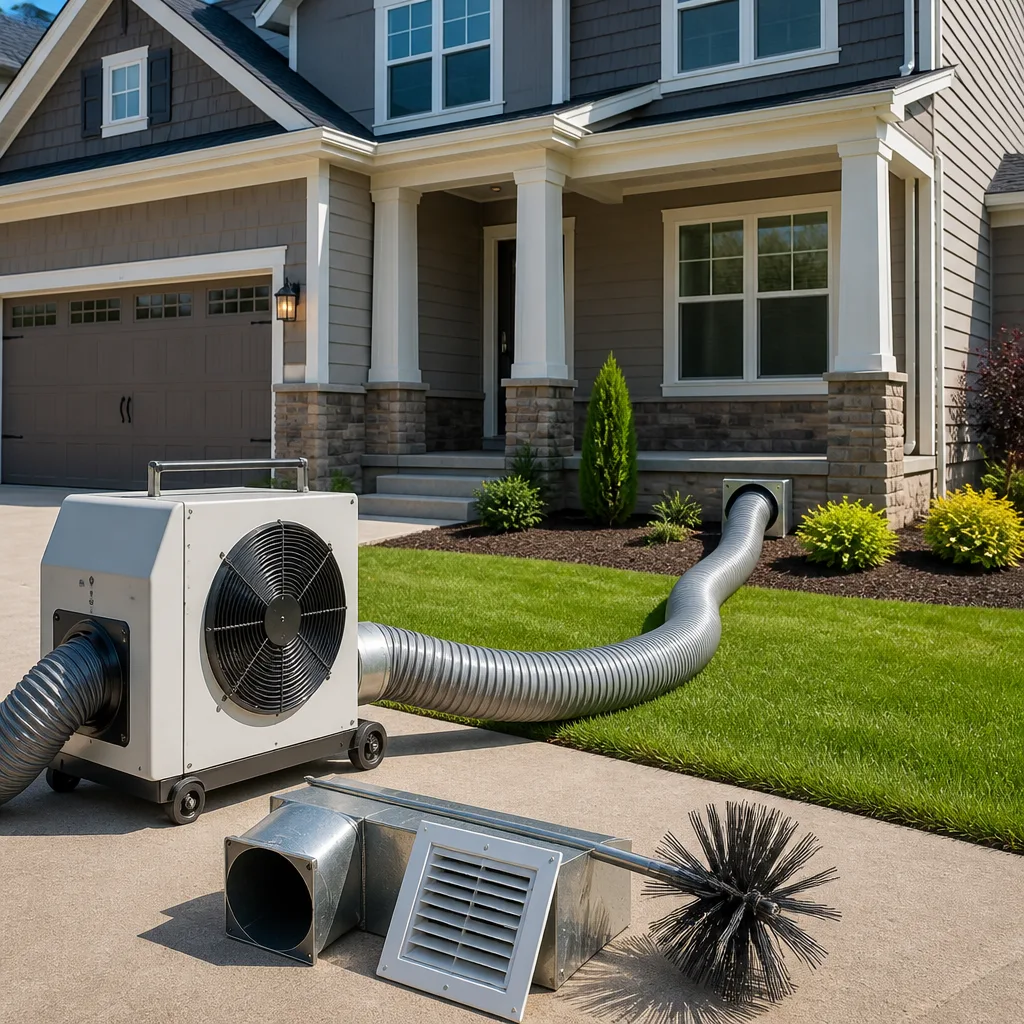 Whole-home duct cleaning
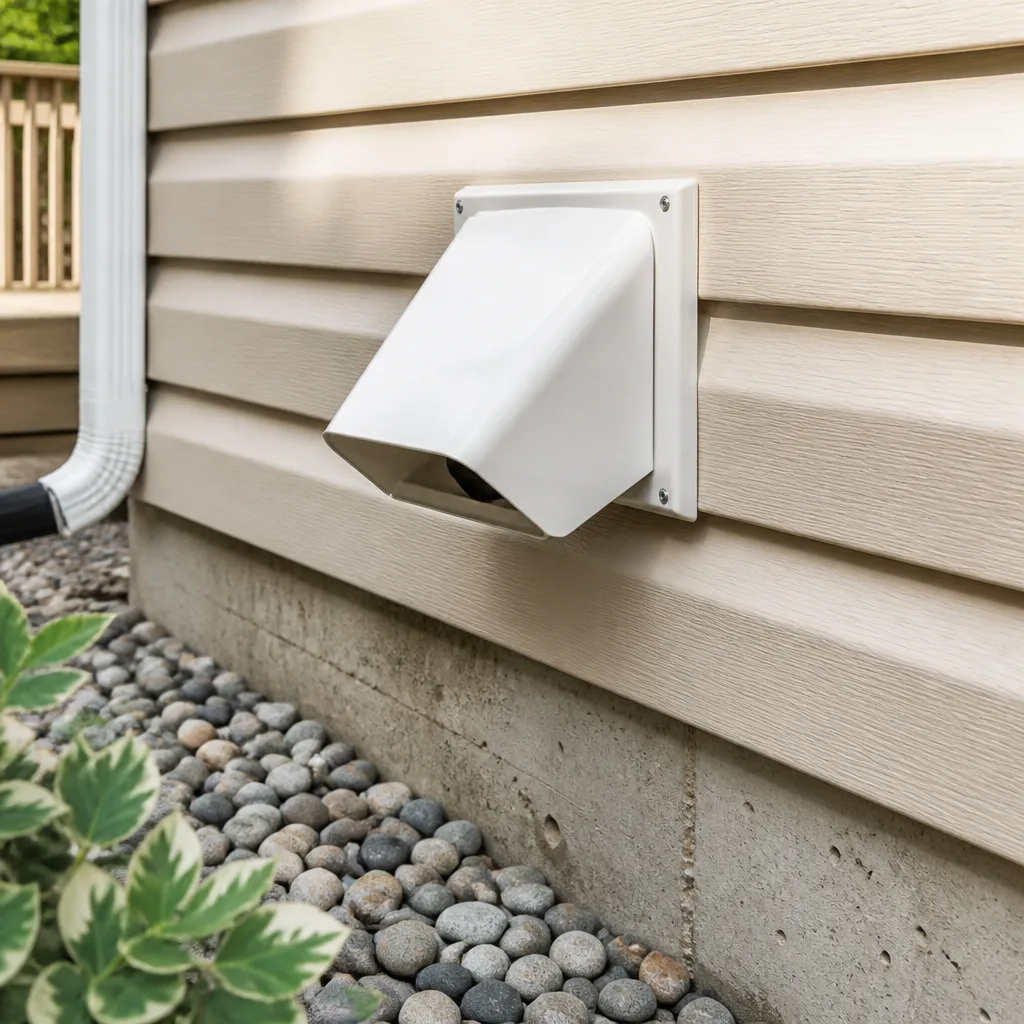 Dryer vent cleaning
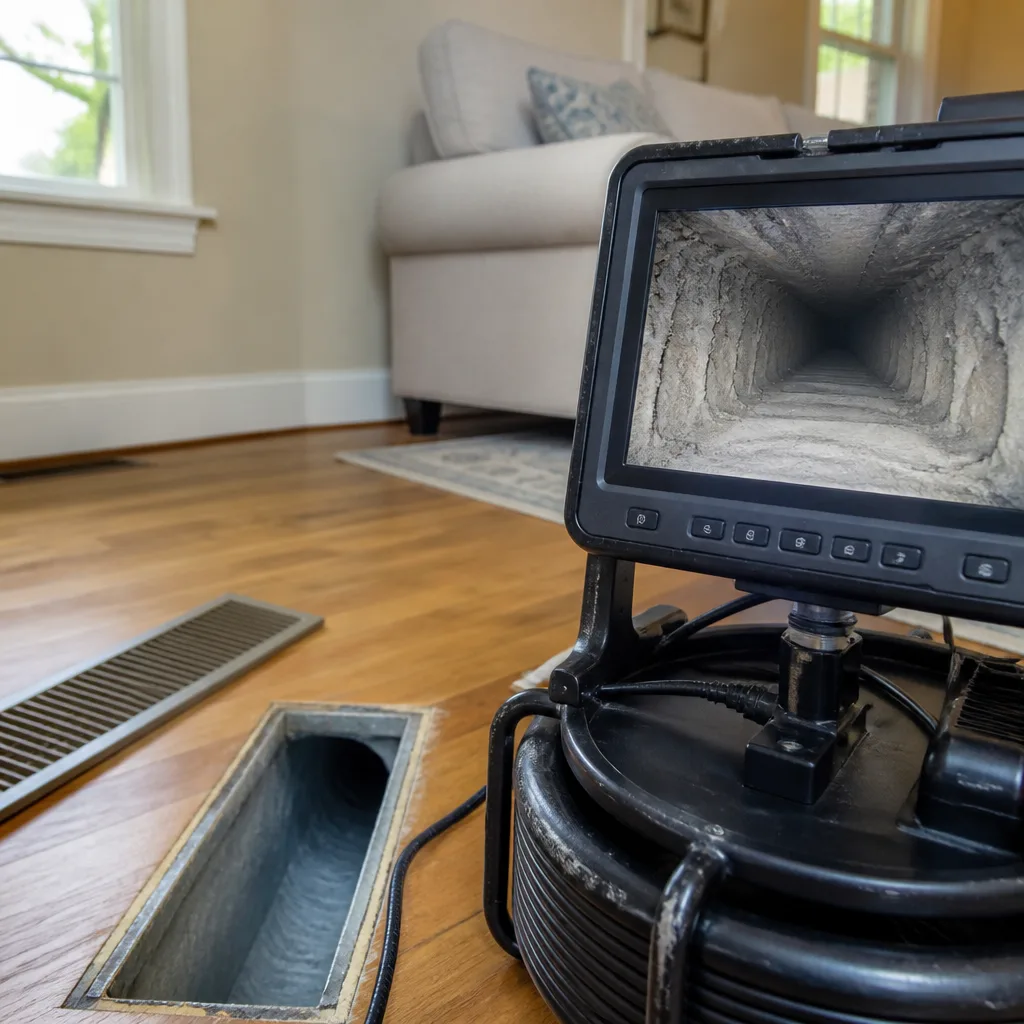 Camera inspection
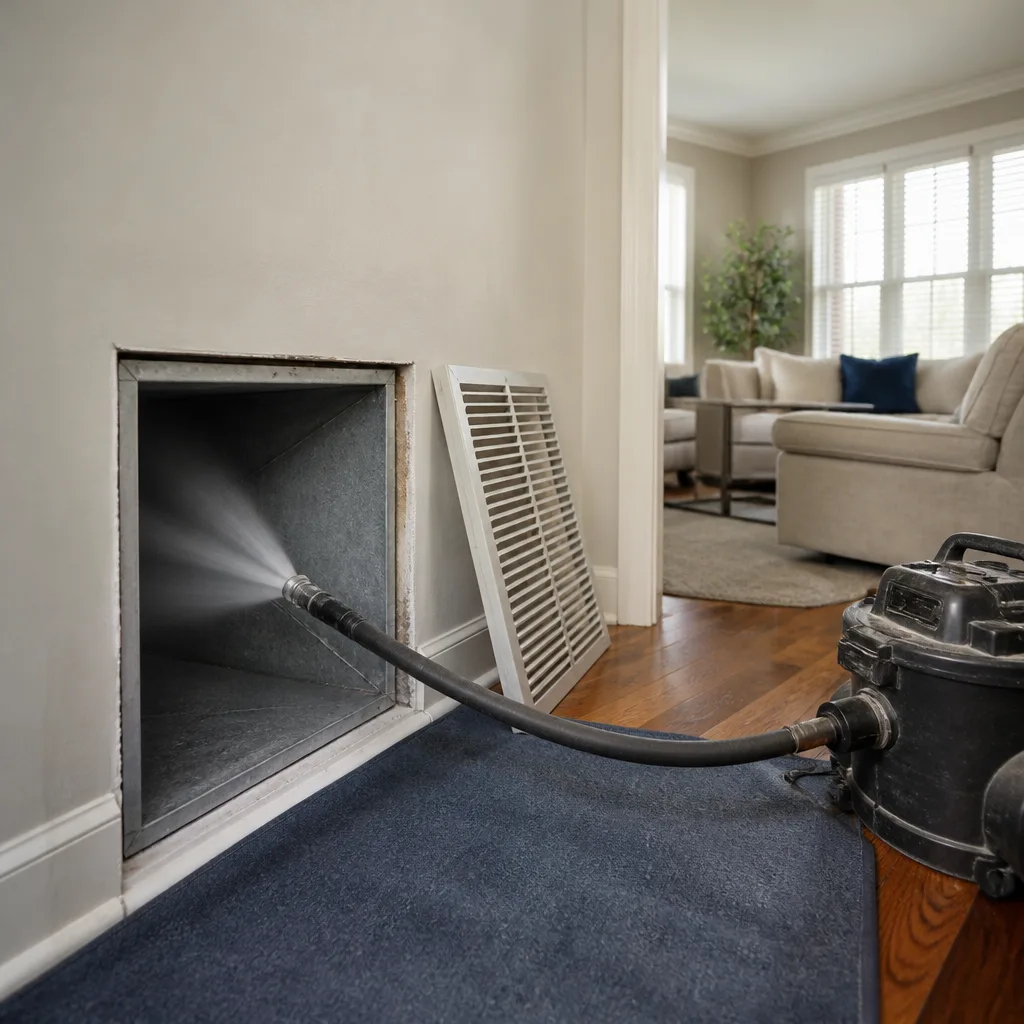 Sanitizing & deodorizing
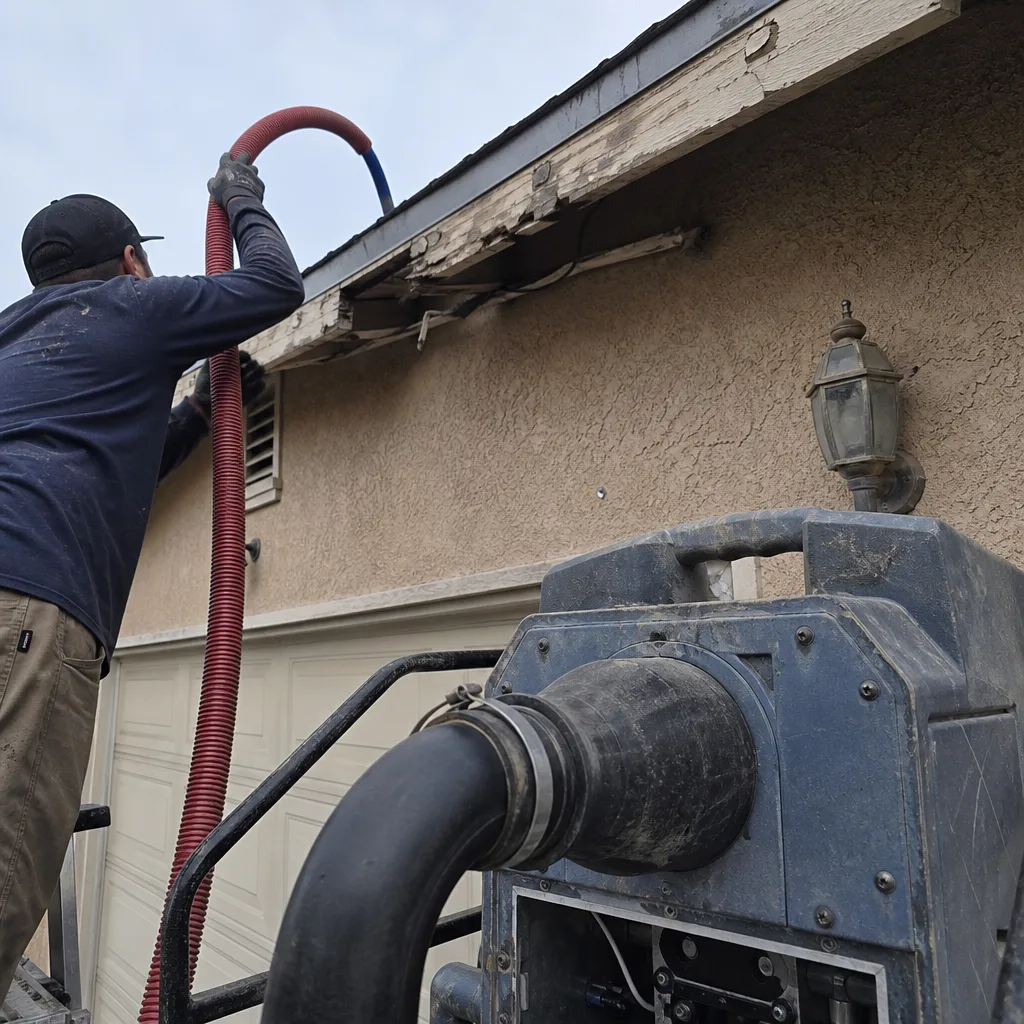
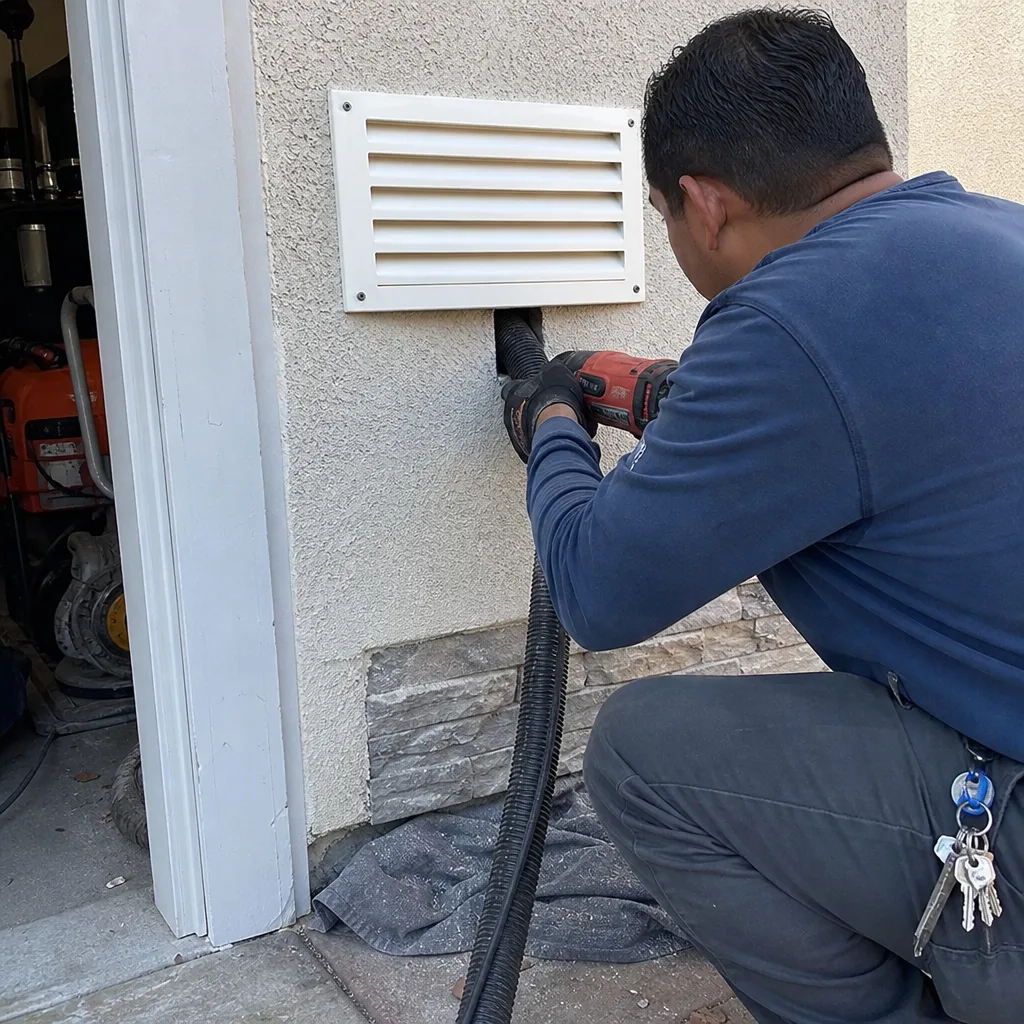
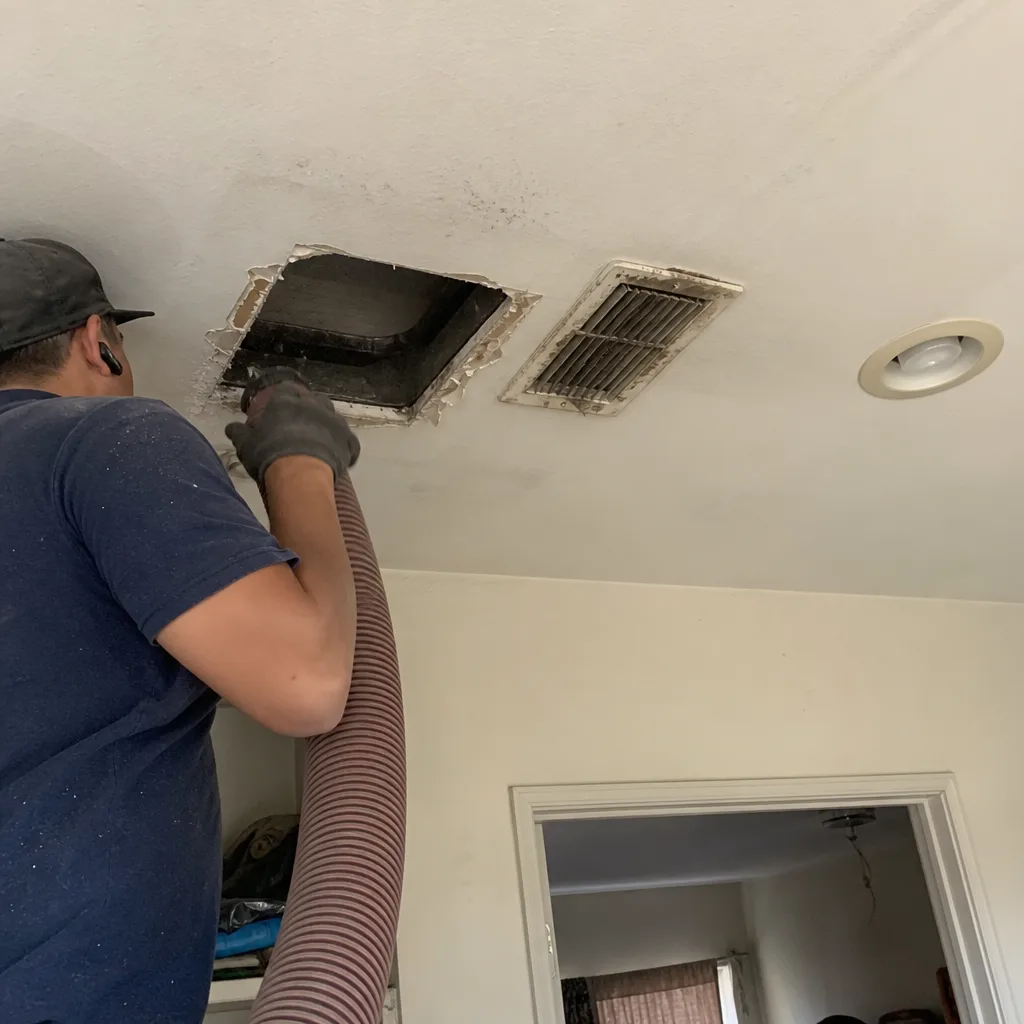
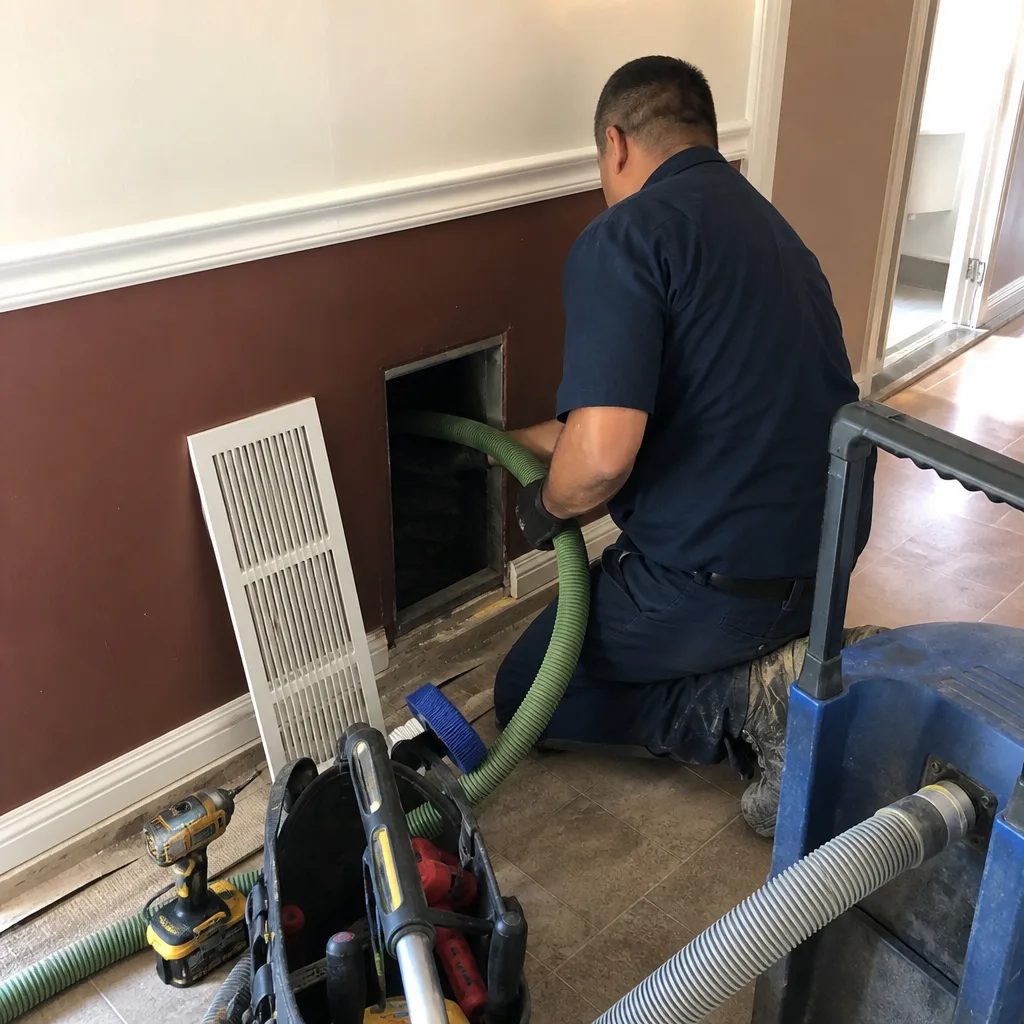
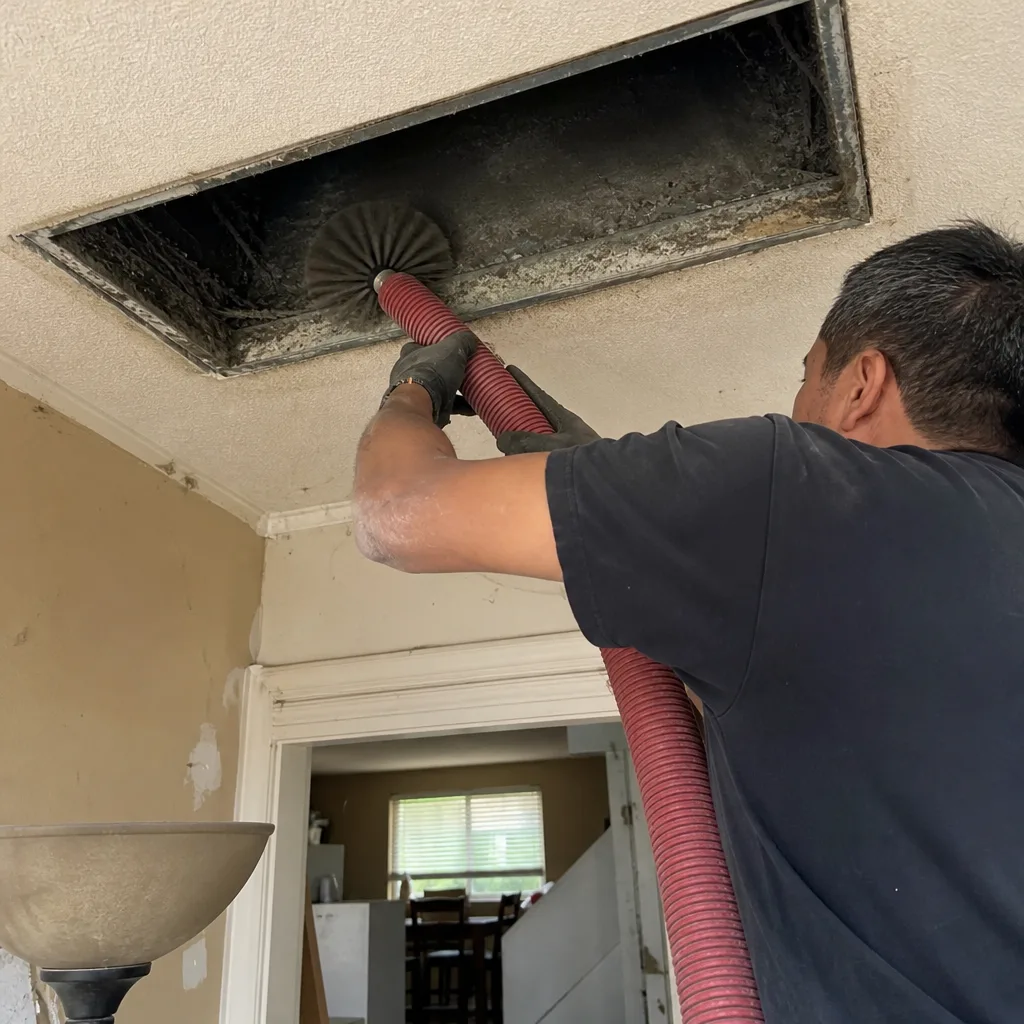
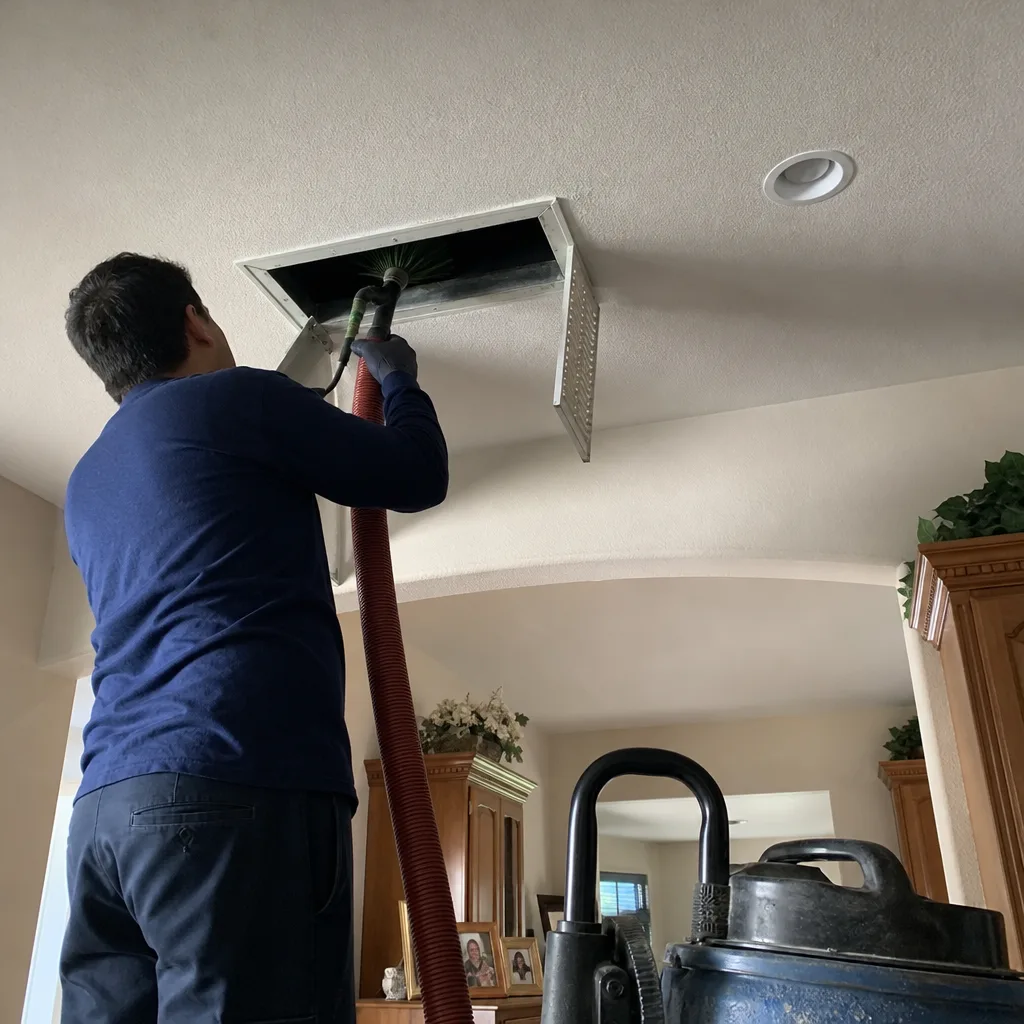
Whole-system duct and dryer vent check with before-and-after photos - you see exactly what came out of your vents
That "$99 whole-house special" is a bait ad - the real number appears once they are in your hallway, or the "clean" is a shop-vac at the register. We photograph the inside of your ducts before and after instead.
Air Duct Cleaning Troubleshooting: Common Problems and How to Fix Them
Here’s a pattern we see constantly in Perris homes: a homeowner pays for a duct cleaning, the crew leaves, and two weeks later the same musty smell creeps back into the hallway. The immediate assumption is that the cleaning was a scam or the equipment was inadequate. Sometimes that’s true. But more often, the cleaning did exactly what it was supposed to do, and the odor is coming from somewhere the cleaning was never designed to reach. A disconnected return duct pulling attic air. A wet insulation batt from a slow condensate leak. A drain pan that has been quietly rusting for a decade. This guide walks you through the symptoms, the likely causes, and when the fix is something you can verify yourself versus when you need air duct cleaning professionals with a camera probe and a pressure gauge. If you live in Perris, where summer temperatures push HVAC systems to run ten months a year, these problems surface faster here than almost anywhere else.
Styles & brands we work with
- Whole-home duct cleaning
- Dryer vent cleaning
- Camera inspection
- Sanitizing & deodorizing
Quick Answer
Most air duct problems fall into three categories: contamination (dust, debris, biological growth), airflow restriction (collapsed flex duct, closed dampers, clogged coils), and air loss (disconnected or leaking duct seams). For air duct cleaning warning signs specific to Perris homeowners, matching symptoms to the right category matters. The symptom you notice – musty odor, dusty smell, weak airflow in one room, dust returning within weeks of a cleaning – points to a different root cause, and fixing the wrong one won’t solve your problem. Start by mapping the symptom to the likely failure mode, then decide whether it’s a visual inspection you can do with a flashlight and a tissue, or whether it requires professional tools like a duct camera or pressure test.
Table of Contents
- The Symptom-to-Cause Map: What Your Ducts Are Telling You
- Musty Odor: Why It Is Almost Never “Just Dirty Ducts”
- Dusty Smell vs. Dirty Sock Syndrome: Two Different Failures
- Weak Airflow in One Room: The Collapsed Flex Duct Problem
- The Tissue Test: Separating Duct Leaks from Duct Contamination
- Dust Returns Within 30 Days: The Breach Nobody Found
- Chemical or Burning Smell: When to Shut the System Down
- Common Mistakes to Avoid
- When to Call a Professional
- Frequently Asked Questions
- The Bottom Line
The Symptom-to-Cause Map: What Your Ducts Are Telling You
Before you spend money on any service, you need to know what you’re actually chasing. In our experience working on air duct systems across Perris, the same symptom can point to three different failures, and the fix for each is completely different in scope and cost. Here’s the framework we use on every diagnostic call.
Step 1: Identify the smell or symptom precisely
Not all air quality complaints are the same. A musty, damp odor is a moisture problem. A dusty, chalky smell is a particulate problem. A chemical or acrid smell is often a mechanical or electrical problem. Write down exactly when you notice it: first thing in the morning, only when the AC kicks on, only in certain rooms, or constant regardless of whether the system is running. That timing alone rules out half the possible causes.
Step 2: Determine the scope
Is the problem in every room or one room? Every room points to the main trunk line, the return plenum, the coil, or the blower. One room points to the branch duct serving that room, or a damper, or a register that was never properly connected. In Perris, where single-story homes dominate, branch runs are long and often snake through hot attics, which makes them vulnerable to a specific set of failures we’ll cover below.
Step 3: Match the symptom to the failure mode
- Musty odor, constant or mostly constant: moisture intrusion, wet insulation, drain pan issue, or a disconnected return pulling humid attic air.
- Dusty smell when the blower runs: accumulated debris in the duct walls, a breached return duct pulling attic particulates, or a filter that is not seated properly.
- Weak airflow in one specific room: collapsed or kinked flex duct, a disconnected branch, or a closed damper.
- Dust accumulating rapidly after a recent cleaning: an unaddressed breach in the return side, or a cleaning that used inadequate extraction so dislodged debris resettled.
- Burning or chemical smell: overheating blower motor, failing capacitor, or volatile compounds from recent work in the home.
This map is the foundation. Everything below goes deeper into each failure mode.
Musty Odor: Why It Is Almost Never “Just Dirty Ducts”
A musty smell in your home means moisture is present somewhere it shouldn’t be. That’s true in Perris, where our dry climate makes persistent mustiness especially unusual. If you smell mildew or dampness, the ducts may be involved, but the source is almost always upstream of the ducts themselves.
Where musty odor actually comes from
Ducts are metal or flex tubing. They don’t generate moisture. They transport it. When we trace a musty odor in a Perris home, here’s what we typically find, in order of frequency:
- A disconnected return duct pulling attic air. The return side of your system is under negative pressure. If a flex duct has separated from the return plenum, the system literally vacuums air from the attic. Attic air in Perris summers is hot, dusty, and often carries the smell of whatever is up there: insulation, rodent activity, or general stagnation. This is the most common cause of persistent mustiness that returns quickly after a cleaning.
- A clogged or failing condensate drain pan. Your evaporator coil produces condensation. That water drains to a pan and then out through a drain line. If the line clogs, the pan fills with standing water. That water grows biological material, and the blower pushes that smell through the entire house. The fix is clearing the line and cleaning the pan, not cleaning the ducts.
- Wet fiberglass insulation inside or around the duct system. If a duct seam leaks cold air into a hot attic, condensation forms on the insulation. Over time, that insulation becomes waterlogged and grows mildew. The smell enters the duct through the same breach that caused the condensation. This is a duct repair issue, not a cleaning issue.
What you can check yourself
Go into the attic with a flashlight. Look at the return duct connections at the plenum. If you see duct tape peeling, or a visible gap between the flex duct and the metal collar, you’ve found the problem. Check the drain pan under the indoor unit. If you see standing water or a dark sludge, that’s your smell. Neither of these is fixed by a cleaning wand.
If the attic is inaccessible or you’re not comfortable climbing through a Perris attic in August (which we completely understand), this is a call for a professional with a camera. A duct camera shows you the inside of the return run in real time, and a disconnected return is unmistakable on screen.
Dusty Smell vs. Dirty Sock Syndrome: Two Different Failures
Homeowners often conflate these two, but they point to completely different problems. A dusty smell is particulate matter: dried dirt, insulation fibers, construction debris. Dirty sock syndrome is a biological growth on the evaporator coil that produces a specific sour, locker-room odor. Let’s separate them.
Dusty smell: what it means
A dusty or chalky smell when the blower kicks on usually means one of two things. Either the ducts genuinely have a heavy debris load from years of operation without filtration, or the system is actively pulling dust from somewhere it shouldn’t. In Perris, where the Santa Ana winds can drive fine particulate into attic spaces, the second cause is more common than homeowners realize.
The debris load in a duct system adheres to the walls. It doesn’t become airborne until something agitates it, like a cleaning brush or a pressure change. If your dusty smell existed before any cleaning, it’s likely accumulated buildup. If it started after a cleaning, the cleaning may have dislodged debris without adequate extraction, or the system has a breach. We’ll get to that in the dust-returns section below.
Dirty sock syndrome: a coil problem, not a duct problem
Dirty sock syndrome is the nickname for biological growth on the evaporator coil. HVAC technicians have used the term for decades because the smell is exactly that: a damp, sour, gym-bag odor. It is most noticeable when the system starts up after sitting idle, especially in spring when the AC first kicks on.
The growth lives on the coil surface, not in the ducts. Cleaning the ducts will not fix it. The coil needs to be cleaned with an antimicrobial coil cleaner, and the underlying moisture condition needs to be addressed so the growth doesn’t return. This is a good example of why the Duct Cleaning Perris home approach includes inspecting the entire air path, not just running a brush through the duct runs. If a company quotes you a duct cleaning without looking at the coil, they’re not diagnosing anything.
Weak Airflow in One Room: The Collapsed Flex Duct Problem
Here’s a scenario we see regularly in Perris and the surrounding Riverside County communities. A homeowner calls because one bedroom is always ten degrees warmer than the rest of the house. They’ve replaced the filter. They’ve closed the blinds. They’ve checked the register and the damper. Nothing helps. They assume the AC unit is undersized or the system needs more refrigerant.
In a significant number of those calls, the actual problem is a collapsed or kinked flex duct run in the attic. Flex duct is a wire coil wrapped in insulation and an outer jacket. It’s flexible by design, but that flexibility means it’s also fragile. Here’s what happens: someone goes into the attic for another reason – pest control, cable installation, storage, a new roof – and steps on or leans against a flex run. The wire coil crushes. The interior diameter shrinks from six or eight inches down to an inch or two. The air still blows, but at a fraction of the volume.
How to check for a collapsed flex run
- Compare airflow at the register in question to a register in a room that’s working properly. Hold your hand up to both. The difference should be obvious.
- Check if the problem room shares a supply plenum box with a working room. If the working room’s run comes off the same box, the branch line to the problem room is the likely culprit.
- If you can access the attic, visually inspect the flex run. A collapsed section looks pinched or flattened. A disconnected run is even more obvious: the flex duct has pulled completely off the metal collar.
This is a repair, not a cleaning. The flex run either needs to be re-supported and re-rounded, or replaced if the coil is crushed too severely to recover. We offer air duct repair in Perris for exactly this scenario, and it’s often a same-day fix once the run is located.
The Tissue Test: Separating Duct Leaks from Duct Contamination
Here’s a simple diagnostic you can do at home that most homeowners never think to try. It helps distinguish between a duct-sealing problem (air escaping through gaps and cracks) and a duct-cleaning problem (contamination inside the duct walls). The fix for each is entirely different, and spending money on the wrong one is wasted money.
How the tissue test works
- Turn your HVAC system fan to the “on” position so the blower runs continuously. You want constant airflow, not cycling.
- Remove the supply register cover from the vent in question. A screwdriver is usually all you need.
- Lay a single-ply tissue flat over the register opening. Watch what happens.
If the tissue lifts and flutters strongly, you have decent airflow at that register. That doesn’t mean the duct is clean, but it means the duct is likely intact and connected. If the tissue barely moves while the blower runs, and the same test shows strong movement at other registers, you have either a restriction (collapsed flex, closed damper, debris blockage) or a significant leak in that branch run.
Now remove the register entirely and look at the gap between the duct boot and the drywall or floor. In most Perris homes, this gap is never sealed. The register screws into the boot, but the boot itself is not sealed to the surrounding drywall. When the system runs, it pulls or pushes air through that gap. The fix is a few dollars of mastic sealant or foil tape, and it’s a ten-minute job per register.
What the tissue test does not tell you
The tissue test measures airflow, not air quality. You can have strong airflow and heavily contaminated ducts. But if your symptom is low airflow or uneven temperatures, this test narrows the problem considerably before you ever pick up the phone.
Dust Returns Within 30 Days: The Breach Nobody Found
This is the most common reason homeowners in Perris tell us they’ve lost trust in duct cleaning as a service. They paid for a cleaning. The house smelled better for a week or two. Then the dust came back, and they concluded the cleaning didn’t work. In some cases, they’re right that the cleaning was inadequate. In many more cases, the dust was never coming from inside the ducts in the first place.
The return-side breach problem
Your return ducts are the suction side of the system. They pull air from the living space back to the blower and coil. If a return duct has a crack, a separated joint, or a loose connection at the plenum, it’s pulling air from wherever that breach is located. In a Perris attic, that’s 130-degree air full of insulation fibers, dust, and whatever else has accumulated up there.
Here’s the sequence that leads to the “dust returned after cleaning” complaint:
- The return duct has a breach the homeowner doesn’t know about.
- A duct cleaning is performed. The supply and return runs are brushed and vacuumed. The air quality improves for a few days.
- The breach remains. Every time the system runs, it continues pulling attic dust into the return stream.
- Within two to four weeks, the visible dust in the home is back to pre-cleaning levels.
- The homeowner blames the cleaning. The actual culprit was the unaddressed breach.
Duct Cleaning Perris uses professional-grade extraction, including Nikro HEPA vacuum systems, which capture dislodged particulates rather than recirculating them. See our buyer’s guide for choosing the right air duct cleaning brand in Perris to understand why equipment quality matters. That equipment does its job in cleaning the duct walls. But no cleaning equipment can fix a tear in the return line. That requires access, repair tape or replacement, and someone who knows to look for it. This is why a proper cleaning should include a visual inspection of all accessible return runs before and after the work. If a company doesn’t go into the attic, they can’t claim they inspected the system.
Chemical or Burning Smell: When to Shut the System Down
Most air duct problems are quality-of-life issues: dust, odors, uneven temperatures. But some symptoms indicate a genuine safety hazard that requires immediate attention. A chemical or burning smell from your vents falls into that category.
What a burning smell usually means
If the smell is like hot metal, burning plastic, or electrical insulation, turn the system off at the thermostat and leave it off until a technician can inspect it. The likely culprits are:
- Overheating blower motor. The motor bearings wear out, the motor runs hotter, and the windings or insulation begin to break down. This smells like hot metal or burning varnish.
- Failing capacitor. A capacitor that’s leaking or overheating produces an acrid, electrical smell that is unmistakable once you’ve smelled it.
- Belt slipping on an older unit. If the system still uses a belt-driven blower (rare but not extinct in Perris, where some homes still run 1980s-era units), a slipping belt smells like burning rubber.
None of these are duct-cleaning problems. They’re mechanical failures in the blower assembly or electrical system. Running the system with any of these conditions can cause further damage or, in the worst case, a fire. Shut it down and call an HVAC technician.
Chemical smells from recent work
If you recently had painting, flooring, or cabinetry work done, the chemical smell may be off-gassing from volatile organic compounds being pulled through the return air and redistributed through the supply vents. This usually resolves within days to weeks and is aggravated by running the system continuously during the off-gassing period. Opening windows and running the bath fans helps, but if the smell persists beyond two weeks, it’s worth inspecting whether the system is pulling fumes from an attached garage or attic space that should not be connected to the living area.
Common Mistakes to Avoid
Here are the errors we see homeowners in Perris make most often when trying to troubleshoot duct problems on their own. Each one delays the real fix and costs money in the wrong places.
- Treating every air quality complaint as a cleaning problem. A musty odor from a wet drain pan will not respond to duct cleaning. Neither will a collapsed flex run. Diagnose before you pay for any service.
- Replacing the HVAC filter and assuming that addresses duct contamination. The filter protects the equipment, not the ducts. Duct walls downstream of the filter are never cleaned by filter changes. If the ducts are dirty, they stay dirty.
- Ignoring the return side entirely. Most homeowners focus on supply registers because that’s where air comes out. But the return side is under suction, and a breach there actively pulls contamination into the system. The return side is the more common failure point in Perris attics.
- Using a box-store duct cleaning kit with a drill attachment. These tools cannot reach more than a few feet into a duct run, they don’t agitate debris effectively, and they don’t contain what they dislodge. You end up pulling debris toward the register without removing it.
- Sealing every register closed in unused rooms to “save energy”. This raises static pressure in the system and can cause duct leaks at the weakest seams. It’s a short-term comfort fix that creates long-term duct damage.
- Waiting until the problem is severe before calling. A small breach in a return line is a quick repair when it’s caught early. A Musty odor that has soaked into insulation for a year is a much bigger job. In Perris, where attics reach 130 degrees in summer, problems compound faster than in milder climates.
When to Call a Professional
Some troubleshooting you can do yourself with a flashlight, a tissue, and patience. But several scenarios genuinely require professional equipment and training. If you can’t access your attic safely, if you suspect a breach but can’t locate it visually, or if the symptom persists after you’ve checked the obvious causes, it’s time for a camera inspection. A duct camera is a flexible probe with a light and lens that feeds live video from inside the duct. It shows collapsed sections, disconnected runs, and the actual condition of the duct walls. A pressure test measures whether your system is losing air through leaks and roughly how much. These are the tools a serious diagnosis requires. Duct Cleaning Perris offers free estimates in Perris – call (844) 728-0966 to schedule a diagnostic look at your system.
Frequently Asked Questions
You need duct cleaning if you see visible dust or debris on the supply register covers, if the system has operated for years without filtration, or if a renovation project has introduced construction dust into the system. In Perris, where fine dust from the surrounding hills works its way into homes, a visual inspection of the duct walls with a camera is the honest way to determine whether cleaning is warranted. A reputable company should show you before and after footage.
Air duct cleaning in Perris typically runs between $350 and $700 for a single system, depending on home size, number of returns, and accessibility of the attic runs. Be wary of any whole-house special priced below $100. That price point almost always means the company is using a consumer-grade vacuum, skipping the return side, or planning to upsell you once they’re in the door. Honest pricing should be a flat rate per system agreed before the work starts. Call (844) 728-0966 for an exact quote – estimates are free.
The equipment accounts for most of the difference. A company using a truck-mounted vacuum without brush agitation is basically running a big hose down your vent. A company using a Rotobrush rotary brush system with HEPA extraction is mechanically agitating the duct walls and capturing the debris. The second takes longer, requires more expensive equipment, and costs more. It also actually works. The cheaper quote isn’t cheaper if the job doesn’t get done.
Ask for before-and-after camera footage of the duct interiors. Any company doing real work will provide this without hesitation. Duct Cleaning Perris uses professional-grade imaging on every cleaning so you can see the duct walls before we start and after we finish. If a company refuses to show you the inside of your own ducts, that refusal is your answer.
There is no universal schedule. The National Air Duct Cleaners Association suggests every three to five years as a baseline, but the actual interval depends on your home’s conditions. Homes in Perris with pets, high foot traffic, nearby construction, or a prior fire in the region may need cleaning more frequently. Homes with high-quality filtration installed and in good condition of the return ducting may go longer. A camera inspection is the only honest way to know.
Yes. Dryer Vent Cleaning in Perris is a dedicated service, not an afterthought. Lint accumulation in the exhaust line is the leading cause of residential dryer fires, and a clogged vent also makes your dryer run longer and hotter, which shortens its lifespan and wastes energy. If your dryer takes two cycles to dry a load or the vent flap outside barely opens when the dryer runs, the vent line needs attention. Call (844) 728-0966 and we’ll check it while we’re inspecting the ducts.
The Bottom Line
Air duct problems are rarely what they first appear to be. The musty smell is a moisture problem. The dusty smell might be a breach, not a dirty duct. The hot bedroom is a collapsed flex run, not an undersized AC. The dust that returns after cleaning wasn’t beaten by a bad cleaning job; it was invited back by a hole nobody found. Troubleshooting means mapping the symptom to the specific failure mode, and that requires looking at the whole system – the return runs, the coil, the drain pan, the boot connections – not just the inside walls of the ducts. When the diagnosis is right, the fix is usually straightforward. When the diagnosis is wrong, no amount of cleaning will solve it. If you’re in the Perris area and want an answer, not a guess, call us and we’ll put a camera in the ducts and show you what’s actually going on. For more guides & resources on keeping your home’s air clean, visit our blog.
Written by the team at Duct Cleaning Perris, serving Perris since 2014.
See the difference
 Before
 After
 Before
 After
 Before
 After