
Last updated November 2, 2026
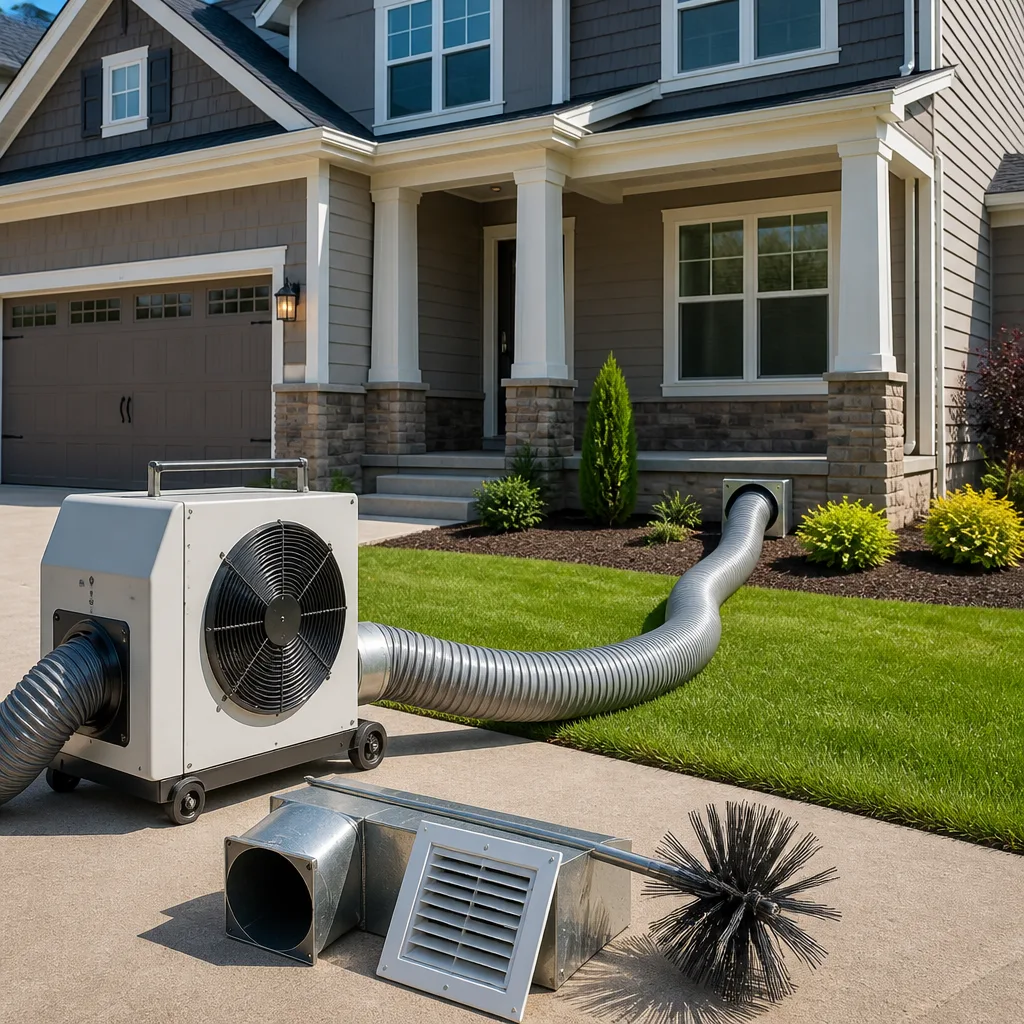 Whole-home duct cleaning
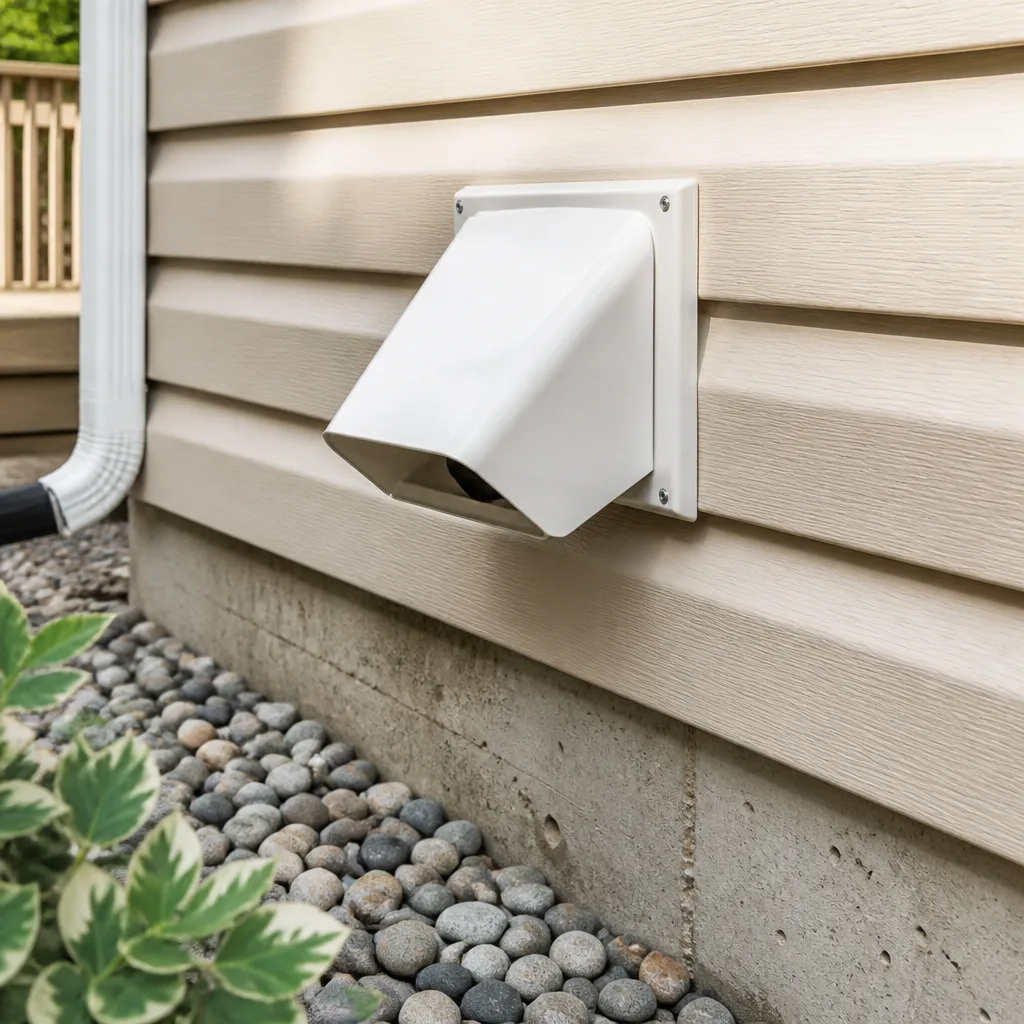 Dryer vent cleaning
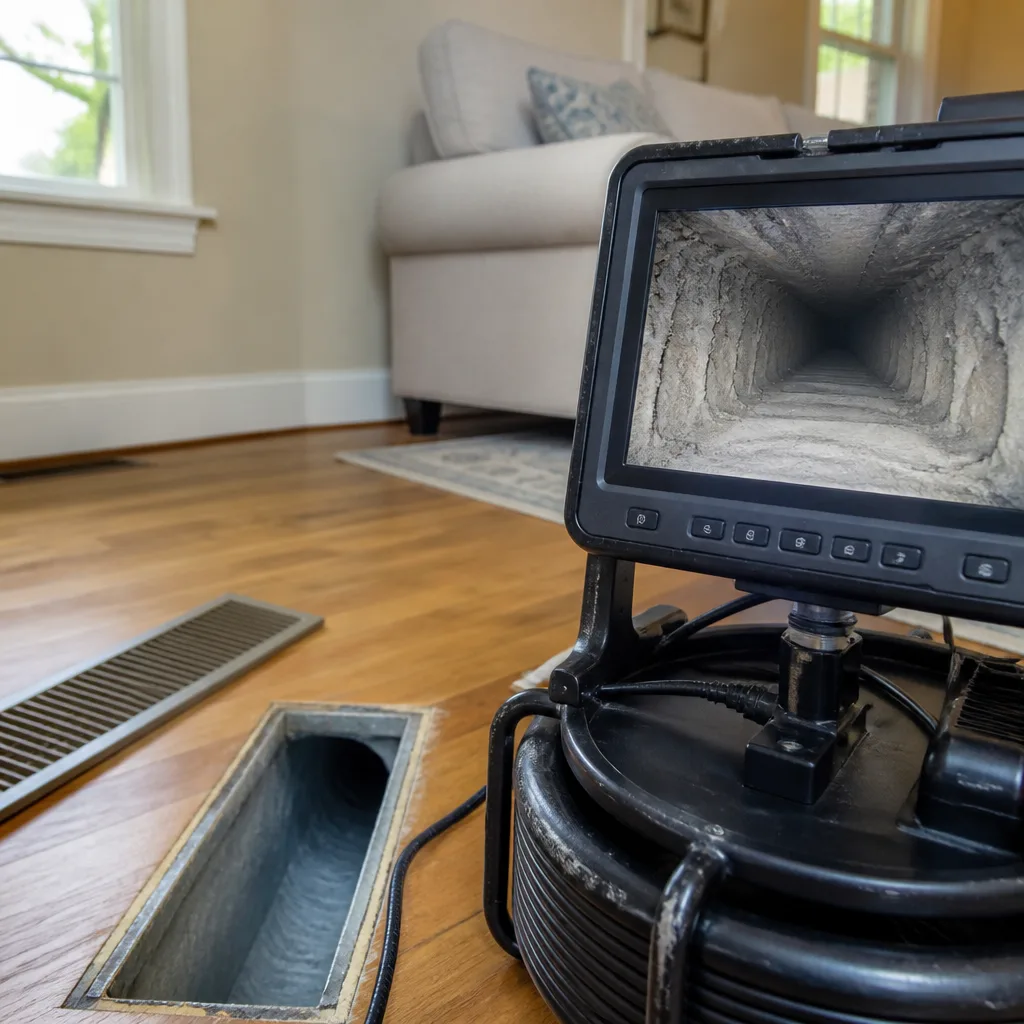 Camera inspection
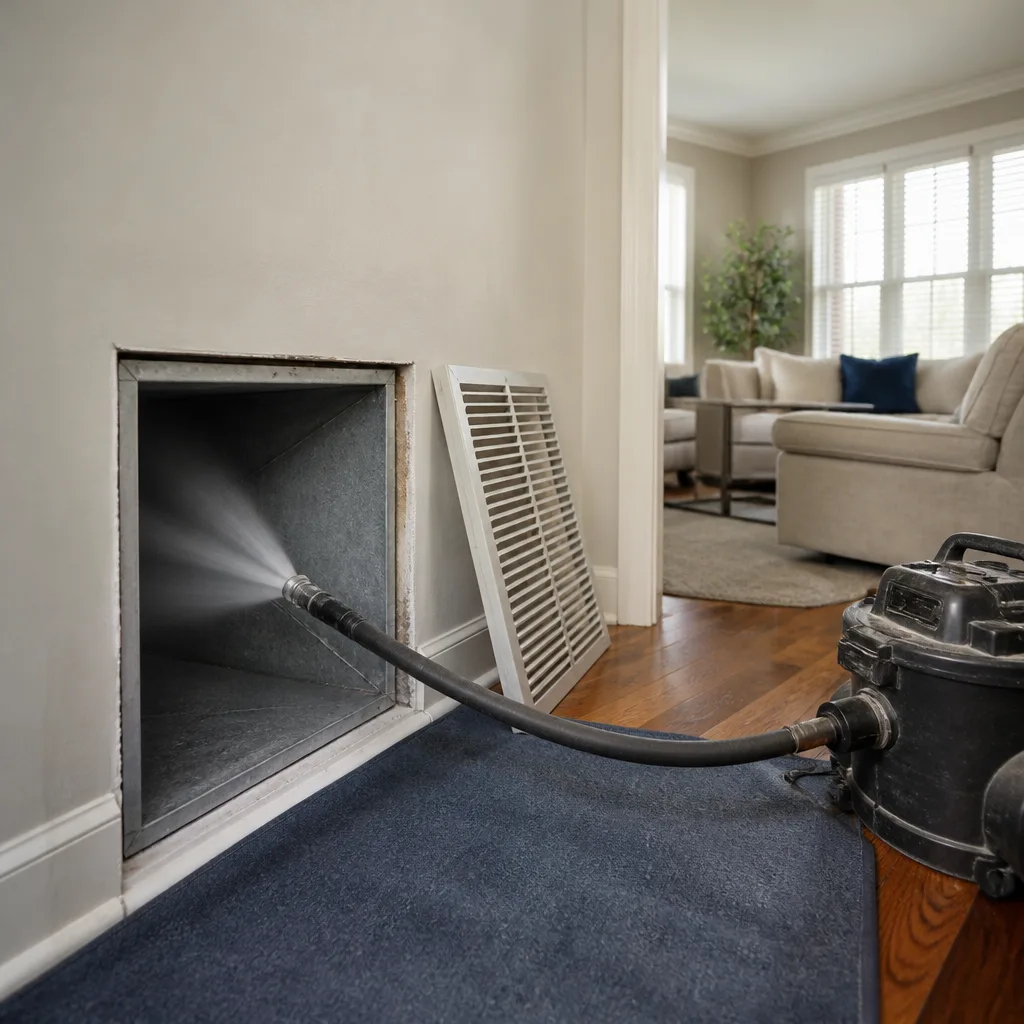 Sanitizing & deodorizing
Whole-system duct and dryer vent check with before-and-after photos - you see exactly what came out of your vents
That "$99 whole-house special" is a bait ad - the real number appears once they are in your hallway, or the "clean" is a shop-vac at the register. We photograph the inside of your ducts before and after instead.
Air Duct Cleaning Warning Signs: A Perris Homeowner’s Reference Guide
Here’s something most duct-cleaning articles won’t tell you: the dust blowing out of your registers might not mean your ducts are dirty at all. We’ve inspected homes across Perris where visible debris at the register was actually coming from a disconnected duct joint pulling attic insulation into the airstream. Cleaning that system without repairing the breach would have been a waste of money, and the dust would have returned within weeks. This guide and our The Complete Air Duct Cleaning Guide for Perris Homeowners explain the mechanism behind each warning sign, so you can tell whether you’re looking at a cleaning issue, a repair issue, or something else entirely before anyone steps foot in your home.
Quick Answer
The most reliable warning signs that your Air Duct Cleaning services may be needed in Perris are: visible dust or debris blowing from registers, musty or stale odors when the system runs, rooms that stay noticeably warmer or cooler than others, rising energy bills without a change in usage, and debris visible at the return grille. Some of these indicate cleaning is overdue; others point to duct damage requiring repair. A flashlight inspection at the register face can give you a preliminary read in under ten minutes.
Styles & brands we work with
- Whole-home duct cleaning
- Dryer vent cleaning
- Camera inspection
- Sanitizing & deodorizing
Table of Contents
- Dust at the Registers: When It’s Dirt and When It’s Damage
- Musty Odor from Vents: Tracking the Source
- Uneven Room Temperatures: Airflow Problems vs. Duct Leaks
- Rising Energy Bills: The Hidden Cost of Restricted Ducts
- Visible Debris at the Return: What You’re Actually Looking At
- The Flashlight-and-Phone Inspection: A Preliminary Read Without Disassembly
- Perris Construction Types: How Your Home’s Design Shapes Warning Signs
- Triage: Call Today vs. Schedule Within the Month
Dust at the Registers: When It’s Dirt and When It’s Damage
Dust accumulating around your supply registers is the most common warning sign homeowners in Perris notice, but it’s also the most frequently misread. The mechanism matters because it determines whether cleaning will solve the problem or simply mask it for a few months.
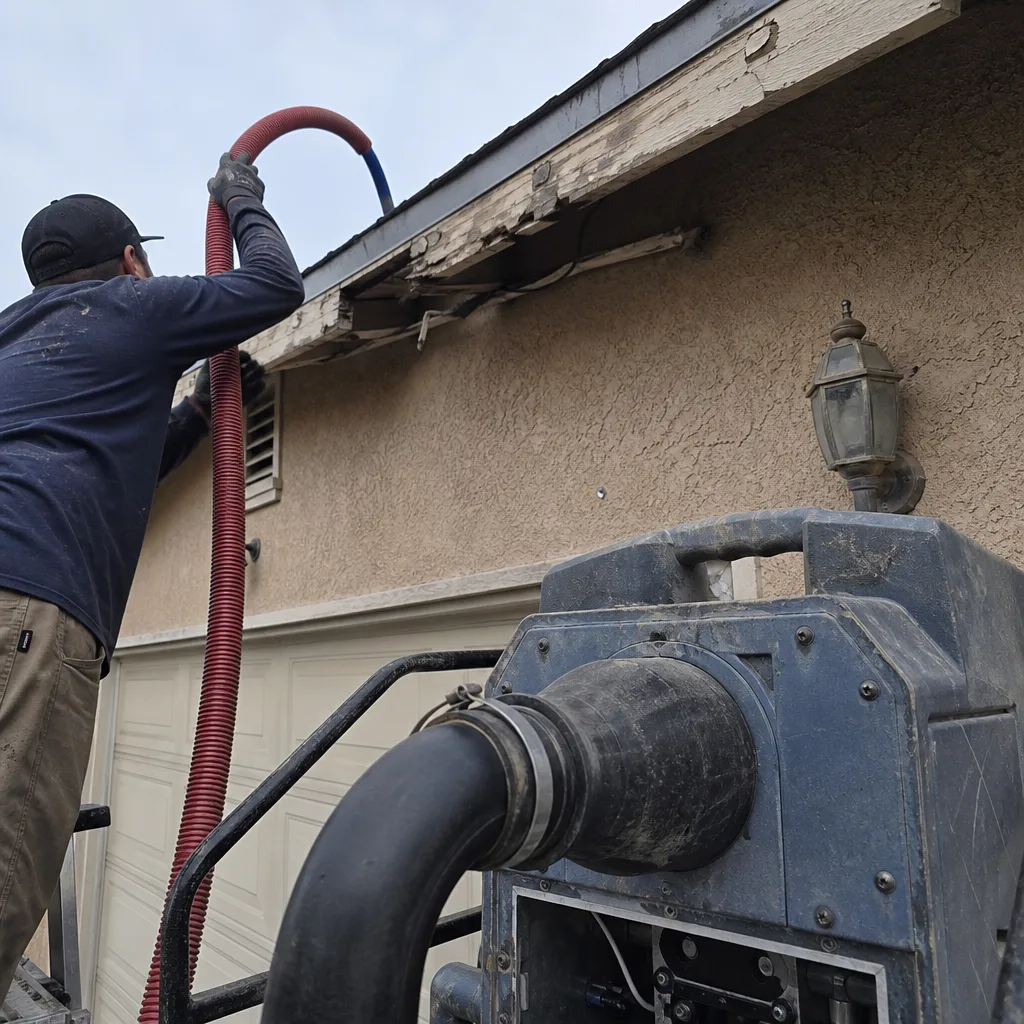
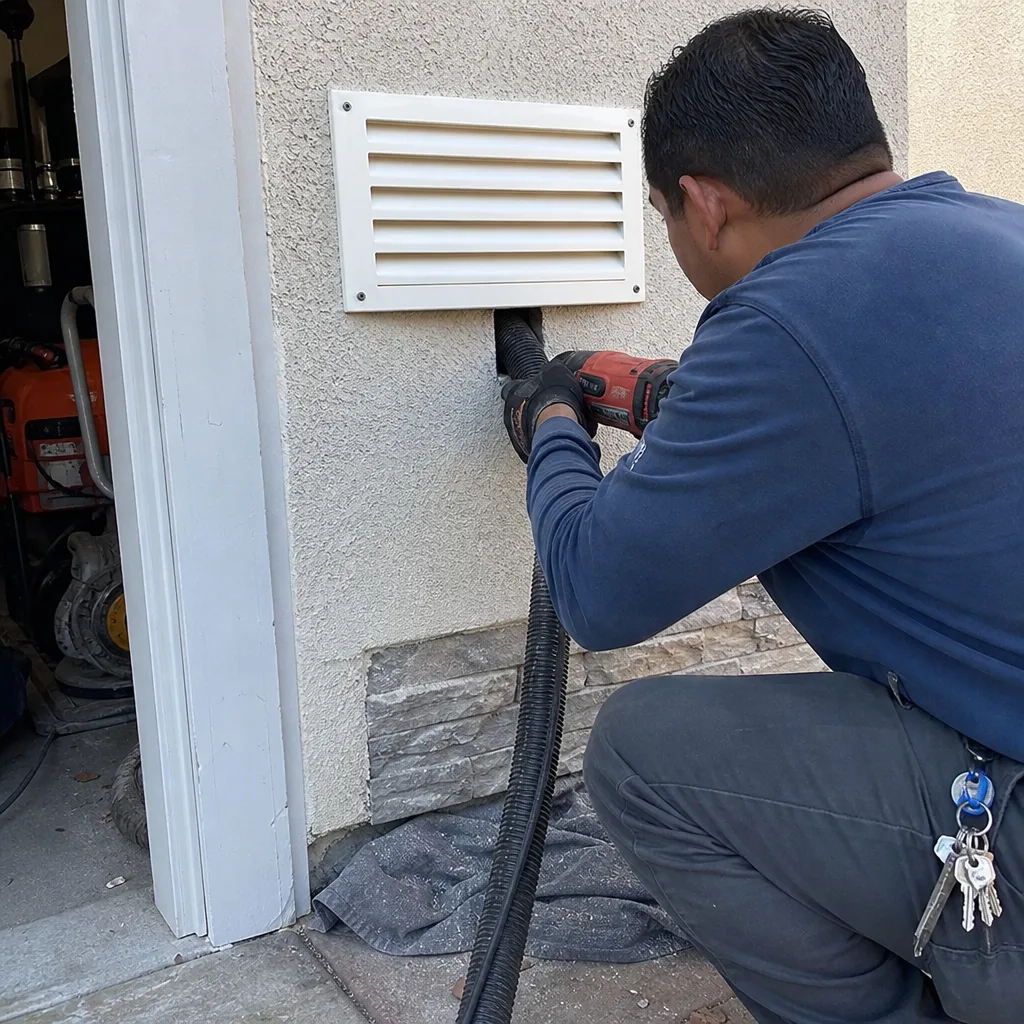
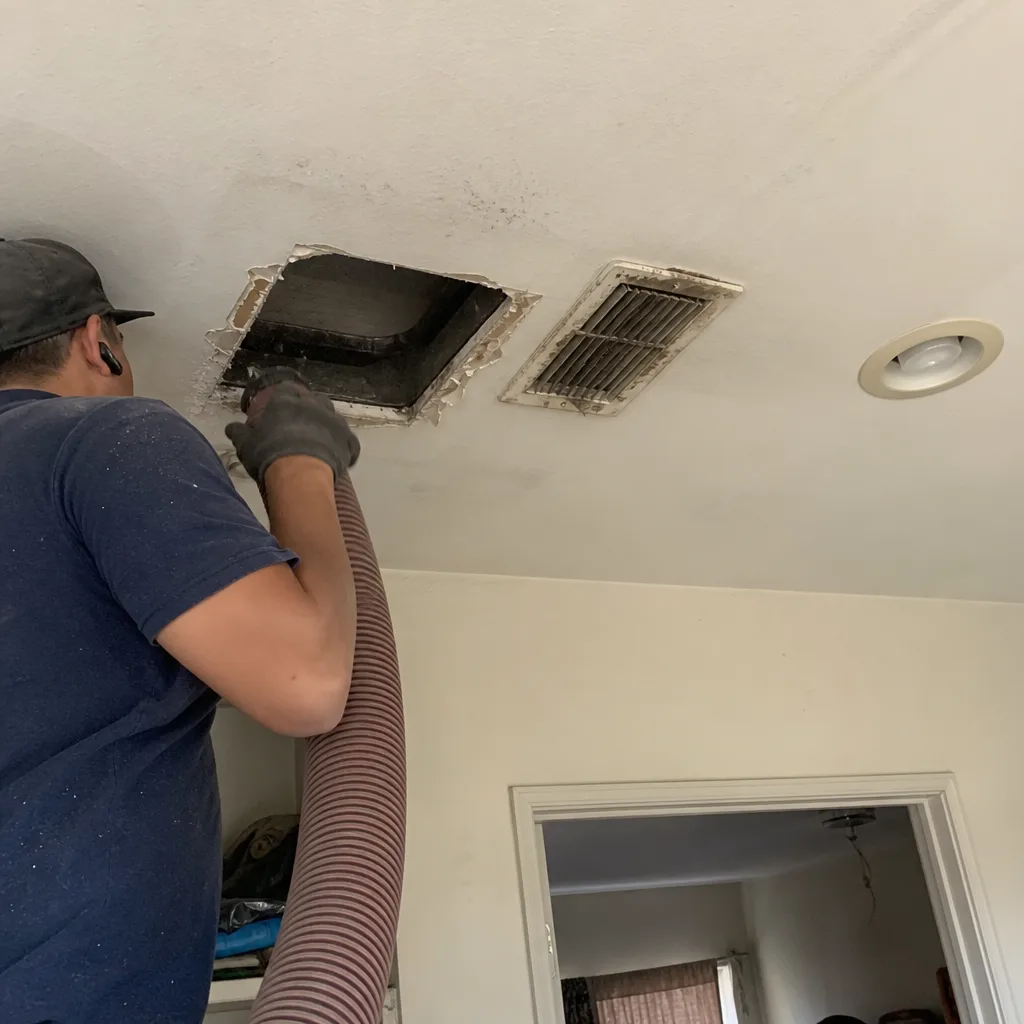
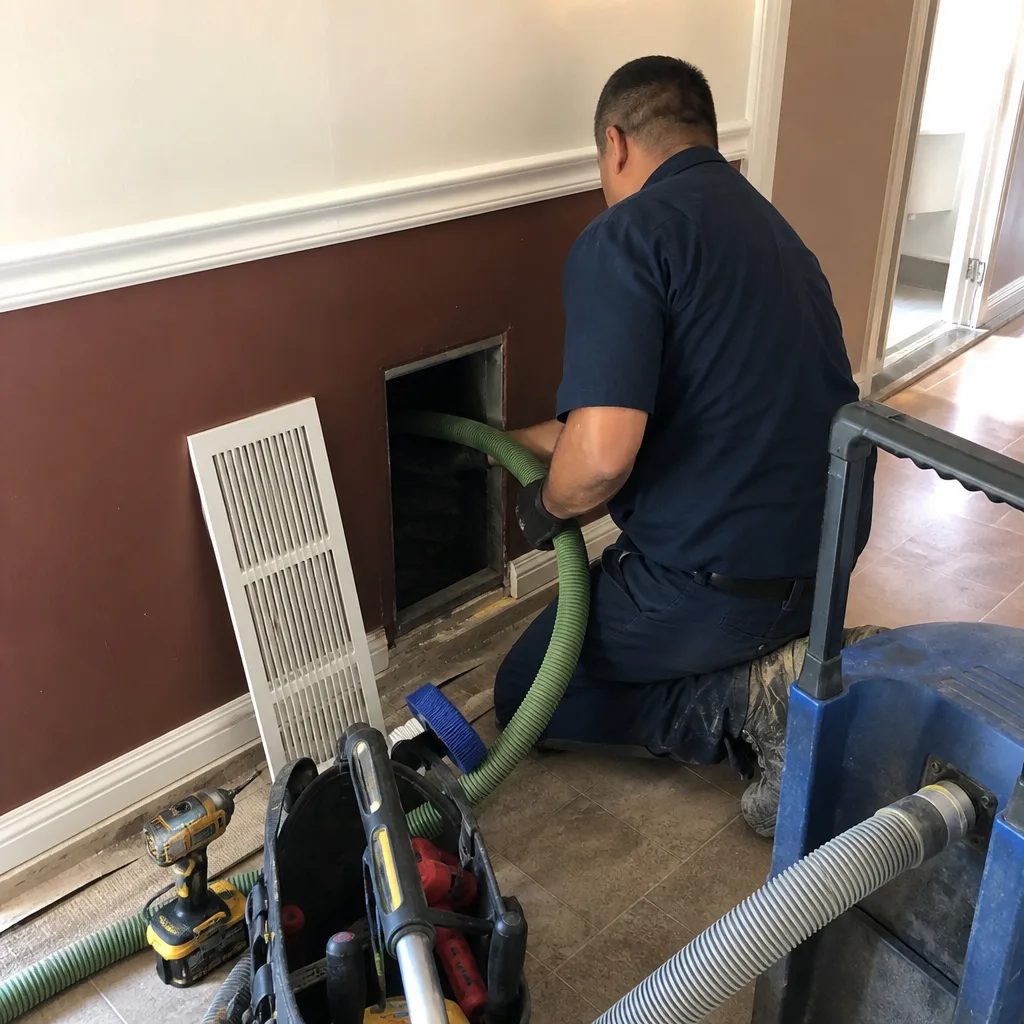
When dust is blowing out of the register while the system runs, you’re seeing particulates that have accumulated inside the ductwork being carried into your living space. This is classic buildup: fine particulate that settled on duct walls over years of operation is now being re-entrained by airflow. In this scenario, professional cleaning with mechanical agitation does exactly what it should. Our air duct cleaning in Perris uses a Rotobrush rotary brush system to physically dislodge this caked-on material, paired with Nikro HEPA extraction that captures the debris rather than recirculating it through your home.
But here’s the distinction most articles skip: if dust is accumulating around the register face even when the system isn’t running, or if the dust feels gritty and includes insulation fibers, you may be looking at a pressure imbalance pulling attic or crawlspace air into the living space around the register boot. This is a sealing issue, not a cleanliness issue. The fix involves sealing the boot-to-drywall gap and possibly repairing the duct connection. Cleaning alone won’t stop it.
Three root causes for register dust, and how to tell them apart:
- Dirty ducts: Dust blows out only when the system runs. The dust is fine and uniform. A flashlight at the register shows coating on the duct walls. Cleaning addresses this directly.
- Duct breach: Dust appears even briefly when the system cycles off, and often includes insulation fragments or attic debris. You’re pulling unconditioned air. This requires air duct repair in Perris, not just cleaning.
- Filter bypass: Dust is present throughout the home and worsens when the filter is clogged. A poorly-seated or undersized filter lets particulates around the media and into the coil and ducts. Fix the filter fit first, then assess whether duct cleaning is needed.
Musty Odor from Vents: Tracking the Source
A musty smell when your HVAC runs is one of the most unsettling warning signs a Perris homeowner can encounter. Perris summers push air conditioners hard, and condensation that forms on the evaporator coil creates moisture that can support microbial growth if it doesn’t drain properly. That said, the odor’s source dictates the fix, and a lot of duct-cleaning calls we see start with people assuming the worst when the actual problem is simpler.
Here’s how to trace it before calling anyone:
- Smell at the return vs. the supply. If the odor is strongest at the return grille where air enters the system, the source may be the filter, the coil, or the return plenum. If it’s strongest at the supply registers where air exits, the ductwork itself is more likely the source.
- Note when the smell appears. Odor present only during the first minutes of a cooling cycle often indicates microbial growth on the coil that dissipates once condensate begins flowing. Odor present constantly while the system runs points to duct interior contamination.
- Check the condensate drain. A clogged drain line lets water sit in the drain pan, creating a standing moisture source that smells stale. This is an HVAC service item, not a duct cleaning issue, though cleaning the coil and housing may be part of the fix.
- Look for rodent signs. Perris’s mix of slab-built older homes and newer two-story track developments means pest entry points differ. In slab homes, rodents sometimes enter ductwork through under-slab runs. In attic-ducted homes, they enter through gable vents or gaps at the roof line. Rodent debris in ducts has a distinct, acrid odor and requires cleaning with proper containment, not just a vacuum pass.
If the odor source is inside the ductwork, this is where equipment matters. Professional extraction with HEPA filtration is the difference between removing the contamination and aerosolizing it throughout your home. We use Abatement Technologies containment protocols during cleaning so what’s in the ducts stays out of your living space while we work. That’s a standard borrowed from professional remediation, and it’s one reason our Duct Cleaning Perris home service page emphasizes process over promises.
Uneven Room Temperatures: Airflow Problems vs. Duct Leaks
Perris sees summer temperatures regularly above 100°F, which means a fifteen-degree difference between rooms isn’t just uncomfortable, it’s a signal your duct system is failing somewhere. Uneven temperatures rank among the most common warning signs that prompt homeowners to call us, but the underlying cause splits into two very different service categories.
An airflow problem means the ducts are intact but something is restricting delivery. The most common culprit is a damper that’s been bumped or closed, often in a hallway or closet location homeowners rarely look. Another frequent cause is a crushed or kinked flexible duct run in the attic, which happens when boxes get stored on top of ductwork or when original installation runs were pulled too tight around framing. Airflow restrictions from debris buildup inside ducts also occur, particularly in homes where the system ran for years with missing or undersized filters.
A duct leak means conditioned air is escaping before it reaches the intended room. In Perris attics, where summer temperatures can exceed 140°F, a small leak compounds quickly. The room at the end of the longest duct run feels the shortfall first. Signs of a leak rather than a restriction include: rooms that never reach setpoint even when the system runs continuously, airflow that’s strong at some registers and weak at others on the same branch, and unconditioned attic air entering the system (which shows up as dust or temperature swings).
Here’s a simple diagnostic sequence:
- Check dampers on visible registers first. A closed damper looks like an equipment problem and costs nothing to fix.
- Compare airflow between registers with your hand. On the same system, branch registers should feel similar. A big difference suggests a leak or restriction on the weaker branch.
- Look for rooms that are farthest from the air handler. These are where leaks show up first because pressure drops along the run.
- If you suspect a leak, that’s a repair call. Duct repair in Perris involves locating the breach, often with a pressure test, and sealing it properly, not with tape that degrades in attic heat.
Rising Energy Bills: The Hidden Cost of Restricted Ducts
When a Perris homeowner’s electric bill climbs without a change in thermostat settings, the duct system is rarely the first thing they suspect. But here’s how the mechanism works: your HVAC system is sized for a specific airflow volume. When ducts are restricted, either by debris accumulation or by structural damage like collapsed flex runs, the system works longer to hit setpoint. Every extra hour of runtime is dollars on your bill.
Debris accumulation that’s thick enough to restrict airflow doesn’t happen overnight. In most Perris homes we inspect, the buildup represents years of operation with filters that were either the wrong size, improperly seated, or changed inconsistently. Each time the system runs with a bypassing filter, a fraction of the particulates deposit on duct walls, the coil, and the blower. Eventually, the internal diameter of the duct effectively shrinks. The blower motor pushes harder, runs longer, and your bill reflects the difference.
What that means practically:
- A duct system with significant debris restriction can reduce effective airflow by 20-30%, which translates directly into longer cooling cycles during Perris summers.
- Restricted airflow also shortens equipment life. The blower motor and compressor work harder than designed, and heat exchange becomes less efficient.
- If you’ve noticed your system running longer to reach the same temperature, combined with visible register dust, the two signs together strongly suggest a cleaning is overdue.
Energy bill spikes can also point to duct leaks, which is why the distinction between cleaning and repair matters. A leak means you’re conditioning air that never reaches you. A restriction means conditioned air that reaches you slowly. Both show up on your bill, but the fixes are different. If you suspect either, a professional inspection can tell you which problem you have before you spend money on the wrong solution.
Visible Debris at the Return: What You’re Actually Looking At
When you look at your return grille and see a gray mat of dust and fibers accumulated on it, you’re looking at the filter’s final moment before air enters your system. Return grilles collect what’s in your home’s air, and what’s there tells a story. In Perris, that story often includes fine desert dust that settles indoors during hot, dry stretches and gets pulled into the return whenever the system runs.
The accumulation at the return grille itself isn’t necessarily a duct problem. It means the air in your home carries particulate, and the grille is catching some of it. But it’s a signal to look deeper. Here’s what the material can tell you:
- Fine gray dust: Typical household dust and Perris-area particulates. If it’s heavy and the filter behind the grille is clogged, you may be dealing with filter bypass pushing this material into the duct system.
- Fibrous or pink insulation fragments: This is significant. It means insulation is entering the airstream somewhere, either from an attic duct breach or a return plenum gap. This is a repair issue, and the insulation itself should be removed from the ducts before it migrates further.
- Pet hair mixed with dust: Normal in homes with pets, but a sign that the filter media is insufficient for the pet load. The excess bypasses and deposits in ducts and on the coil.
- Gray-black speckling or oily residue: Could indicate soot or cooking residue being recirculated. If the system has never been cleaned and the home has a history of candle use or cooking without a range hood, this material accumulates over years.
If you hold a flashlight at the return and see visible dust coating the inside of the return boot or plenum, that’s material that has already entered the system. It’s the clearest sign that whatever the filter is doing, it isn’t doing enough, and the duct interior is accumulating the difference. That’s when a cleaning is no longer preventive, it’s corrective.
The Flashlight-and-Phone Inspection: A Preliminary Read Without Disassembly
You don’t need to open your ductwork to get useful information about what’s inside. A flashlight and your phone camera, used correctly, can tell you more than most people expect. We recommend this inspection to Perris homeowners because it helps them understand what they’re seeing before they call anyone, which leads to better questions and better outcomes.
Here’s the process, in order:
- Turn the system off. You want still air so debris isn’t moving while you inspect.
- Remove one supply register. Most are held by two screws or simply friction-fit. A flathead screwdriver handles most Perris homes’ registers.
- Angle the flashlight into the register opening and take a photo with your phone. Use the flash. The camera sees further than your eye, especially in dark duct runs.
- Look at the photo, not just the opening. You’re looking for: dust coating on duct walls, debris piles at low points, insulation fragments, pest droppings, or water staining.
- Repeat at two or three registers in different parts of the home. If buildup is consistent everywhere, it’s systemic. If it’s isolated to one branch, the issue may be localized.
- Do the same at the return grille. Look into the return plenum and the filter condition. A filter that’s bowed, torn, or visibly bypassing tells its own story.
What the photos tell you:
- Thin, even dust coating (less than 1/8 inch): Normal accumulation for an operating system. Cleaning is recommended on a maintenance schedule, not an emergency.
- Visible piles or deeply caked walls: Significant buildup. This has been accumulating for years and is affecting airflow and indoor air quality. Schedule a professional cleaning.
- Insulation, wood fragments, or rodent droppings: This is contamination from outside the duct system. It requires cleaning plus repair of the entry point. Cleaning alone won’t stop recurrence.
- Water staining or standing moisture: This changes the urgency. Moisture in ducts means microbial growth becomes likely. Call today.
Perris Construction Types: How Your Home’s Design Shapes Warning Signs
Perris has grown in waves, and the warning signs your ducts show depend on when your home was built and how it’s constructed. We’ve walked duct systems in nearly every era of Perris housing, and the patterns are consistent enough to be useful.
Older slab-built homes, common in central Perris neighborhoods developed decades ago, often have duct runs embedded in or beneath the concrete slab. These systems are notorious for specific issues: pest intrusion through under-slab duct channels (rodents can enter through gaps and travel the duct network), moisture intrusion when soil shifts create cracks, and accumulated debris that’s been there since before current owners purchased the property. In slab systems, a pest odor that’s strongest when the system first starts often indicates under-slab activity. This requires professional cleaning with proper containment and follow-up repair to close entry points.
Newer two-story track homes, which dominate the subdivisions around Perris’s perimeter, typically run ducts through attic spaces above the second floor and through floor joists between levels. The key vulnerability here is attic-side: flexible duct runs that sag, separate at joints, or get compressed by stored items. When breaching occurs, these systems pull 140°F attic air in summer, which explains rooms that never cool and dust that smells like the attic. We’ve seen breaches in these homes where the gap was large enough to stick a hand through.
What this means for your warning signs:
- In slab-built homes, pest-related odors and musty smells are more urgent signals because of the enclosed, hard-to-access nature of under-slab ducts.
- In attic-ducted homes, insulation fragments at registers and unexplained temperature differences between upstairs and downstairs are the most common first indicators of a breach.
- Both construction types in Perris face significant fine-dust loading from the surrounding environment during dry, windy periods. The dust itself is normal; the amount that enters your ducts depends on filter quality and fit.
Triage: Call Today vs. Schedule Within the Month
Not every warning sign demands immediate action, and honest assessment saves you money. Here’s the triage we use when Perris homeowners call describing what they’re seeing. It separates genuine urgency from scheduled maintenance.
Call today if:
- You see visible mold growth or smell a strong musty odor that’s clearly coming from the duct system, especially after you’ve ruled out the coil and drain pan.
- You find rodent droppings in or around registers, or hear animal activity in ductwork. This is a health and sanitation issue that worsens daily.
- Water is visible inside ducts or at register openings. Moisture plus the organic material in dust creates conditions for growth within days.
- You see smoke or smell burning when the system runs. This is an electrical or mechanical issue and should be treated as urgent.
Schedule within the month if:
- You see consistent dust at registers with visible buildup in your flashlight inspection. This developed over years and a few more weeks won’t change the outcome materially.
- Your energy bills have crept up with no other explanation, and you’ve confirmed filter fit is good. Restricted airflow is costing you money but isn’t an immediate safety hazard.
- Some rooms are noticeably warmer than others but the system still conditions the house. This suggests restriction or minor leakage that needs professional assessment.
- You’ve lived in the home more than three years and don’t know when ducts were last cleaned. At minimum, schedule an inspection.
Here’s the point of triage: same-day panic pricing benefits the contractor, not you. A legitimate duct cleaning company in Perris can explain the difference between what’s urgent and what’s routine. If the company you call pressures you into immediate service without understanding what you’re seeing, that’s a signal to call someone else.
Common Mistakes to Avoid
- Assuming all register dust means dirty ducts. As covered above, dust can indicate a breach, a filter problem, or even normal operation with a high-dust environment. Diagnose before you pay for cleaning.
- Treating a repair issue with cleaning. If insulation fragments are in your ducts, cleaning removes them but doesn’t fix the breach. They’ll return. A full-service company that does both cleaning and repair, which is what we built Duct Cleaning Perris to do, handles the whole problem in one visit.
- Ignoring duct issues because you’re selling the home. Perris home inspectors increasingly flag visibly contaminated ducts, and buyers request cleaning credits. An unaddressed duct problem costs more in the transaction than the service itself would have.
- Using a shop vac to “clean” registers from the face. This removes what’s immediately visible but dislodges material deeper in the duct that re-enters the airstream later. It also can’t address duct-wall adhesion. Professional equipment agitates and extracts simultaneously, which is the only way to remove what’s actually attached to the duct interior.
- Changing filters more often as a substitute for cleaning. A new filter catches what enters the system going forward. It does nothing for what’s already deposited on duct walls and coil surfaces. If your flashlight inspection shows buildup, the buildup is there regardless of your current filter habits.
- Waiting until you can smell a problem. By the time odor is strong enough to notice throughout the home, contamination is significant. The visual signs covered in this guide appear earlier. Catch them then.
See the difference
 Before
 After
 Before
 After
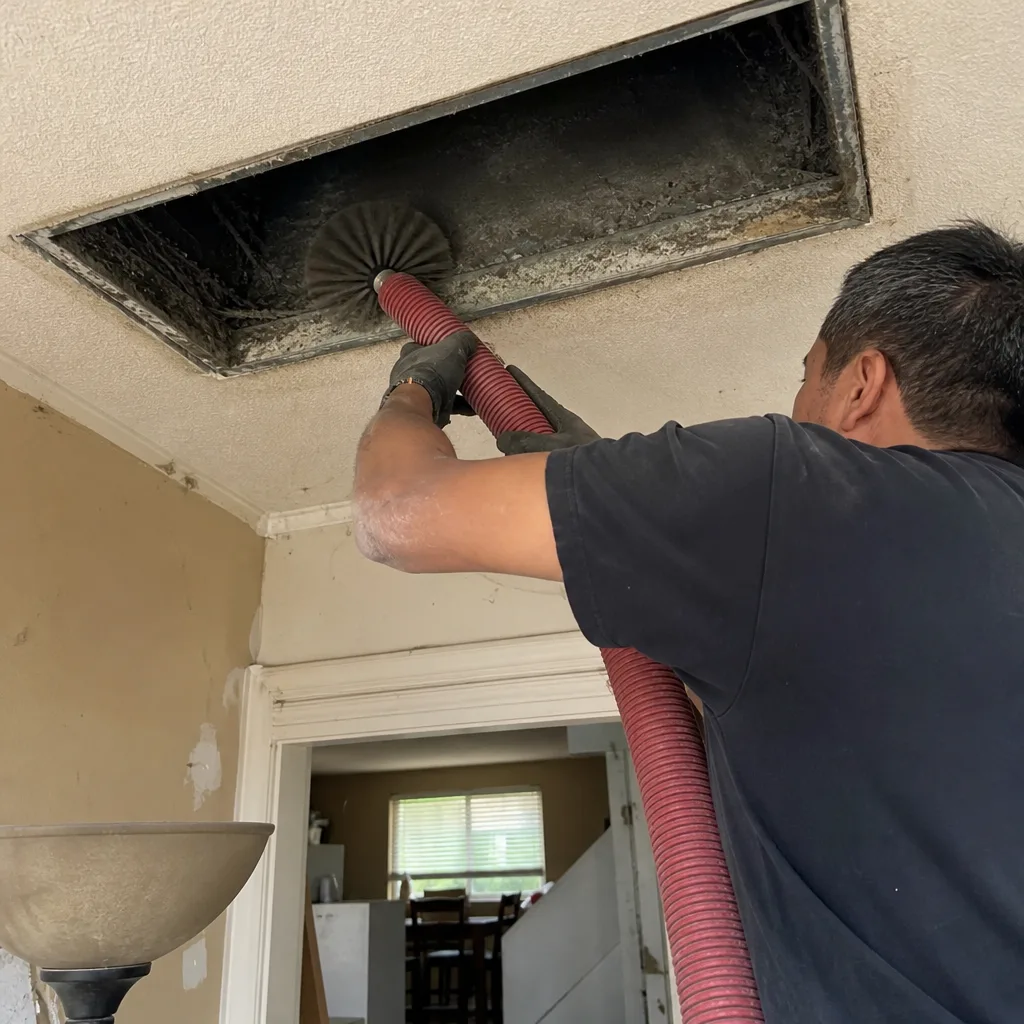 Before
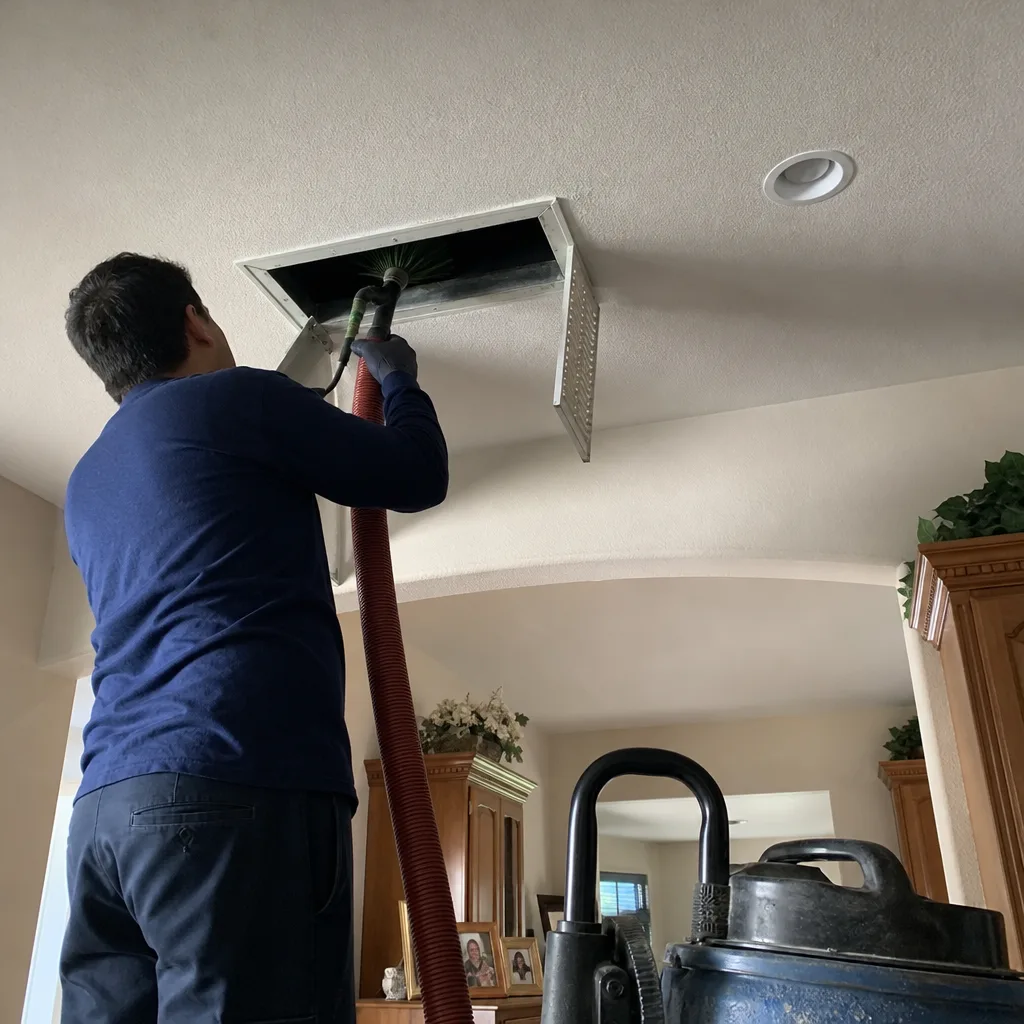 After
When to Call a Professional
Call a professional when your flashlight inspection reveals more than a thin dust coating, when you have rooms that refuse to reach setpoint, when you see insulation or pest signs at registers, or when your energy bills climb without explanation. These all indicate the problem is beyond what a filter change or a register vacuuming can address. The evaluation should be honest about whether you need cleaning, repair, or both. Duct Cleaning Perris offers free estimates in Perris, covers cleaning and repair under one roof, and uses professional-grade Rotobrush and Nikro equipment with HEPA extraction so the work is done thoroughly and verifiably. For Choosing the Right Air Duct Cleaning Brand: A Buyer’s Guide for Perris, see our detailed comparison. Call (844) 728-0966 to schedule an inspection.
Frequently Asked Questions
Visible dust blowing from registers when the system runs, a flashlight inspection showing significant buildup on duct walls, or a musty odor that’s strongest at the supply registers are the clearest indicators. Perris’s dry climate means fine dust loading is normal, but visible accumulation beyond a thin coating means cleaning is overdue. For an exact assessment, call (844) 728-0966 for a free estimate.
Duct cleaning removes accumulated contaminants from the duct interior using mechanical agitation and HEPA extraction. Duct repair addresses structural problems like breaches, disconnected joints, crushed flex runs, and under-slab pest entry points. In our Perris work, we often find both issues together: a breach lets contamination in, and cleaning is needed after the repair to remove what entered. A company that does both can handle it in one visit.
Uneven temperatures usually point to restricted airflow or a duct leak. Restrictions come from closed dampers, crushed flex runs, or debris buildup. Leaks vent conditioned air into unconditioned spaces like Perris attics, which can exceed 140°F in summer. The fix depends on which problem you have, and a professional inspection can distinguish between them.
Most Perris homes benefit from professional cleaning every 3 to 5 years, but homes with pets, smokers, recent construction, or pest issues may need it more frequently. The best signal isn’t a calendar but a flashlight inspection: when you see visible buildup beyond a thin dust layer, it’s time. Call (844) 728-0966 if you’d like a professional assessment of what you’re seeing.
Yes. Ducts that harbor accumulated dust, pollen, pet dander, and pest debris recirculate those particulates every time the system runs. For Perris residents with allergy symptoms that worsen indoors or when the AC kicks on, duct contamination is a common contributing factor. Professional cleaning with HEPA equipment removes the reservoir rather than just the symptom.
Whole-system duct cleaning in Perris typically runs several hundred dollars for an average home, with the exact figure depending on system size, accessibility, and contamination level. Be wary of quotes that seem dramatically lower than local averages; the equipment required to clean ducts properly, including professional-grade agitation and HEPA extraction, has real costs. Call (844) 728-0966 for an exact quote on your system.
The Bottom Line
Warning signs in your duct system are signals, not verdicts. Dust at registers can mean cleaning is overdue or a breach is present. Musty odors can point to ducts, coils, or drains. Uneven temperatures can be airflow or leakage. The flashlight-and-phone inspection described above gives you a preliminary read before anyone quotes you a price, and our blog has more guides & resources to help. And when you do call a professional, ask about their equipment: professional-grade agitation with HEPA extraction is what separates real cleaning from a visual pass. In Perris, where summer heat pushes systems hard and fine dust is a constant, your ducts deserve better than a guess.
Written by the team at Duct Cleaning Perris, serving Perris since 2014.