
Last updated November 2, 2026
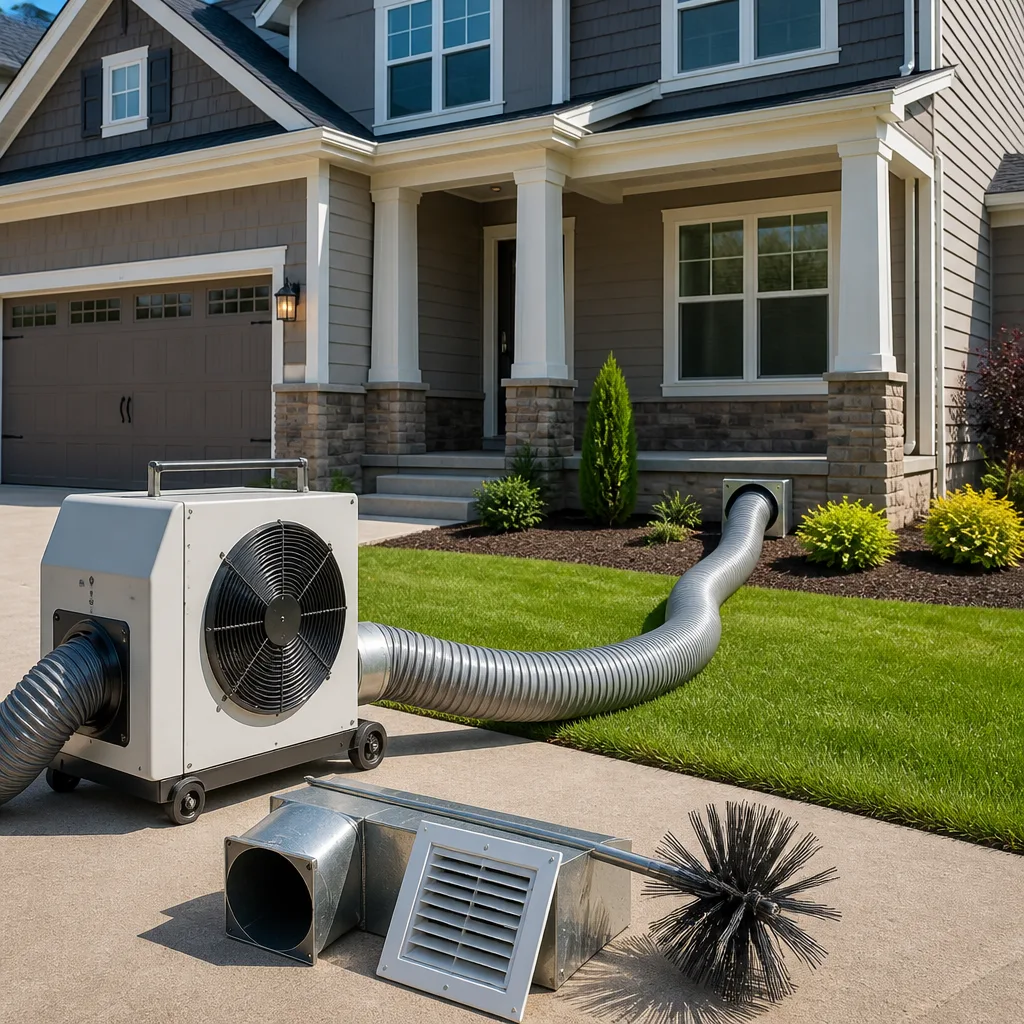 Whole-home duct cleaning
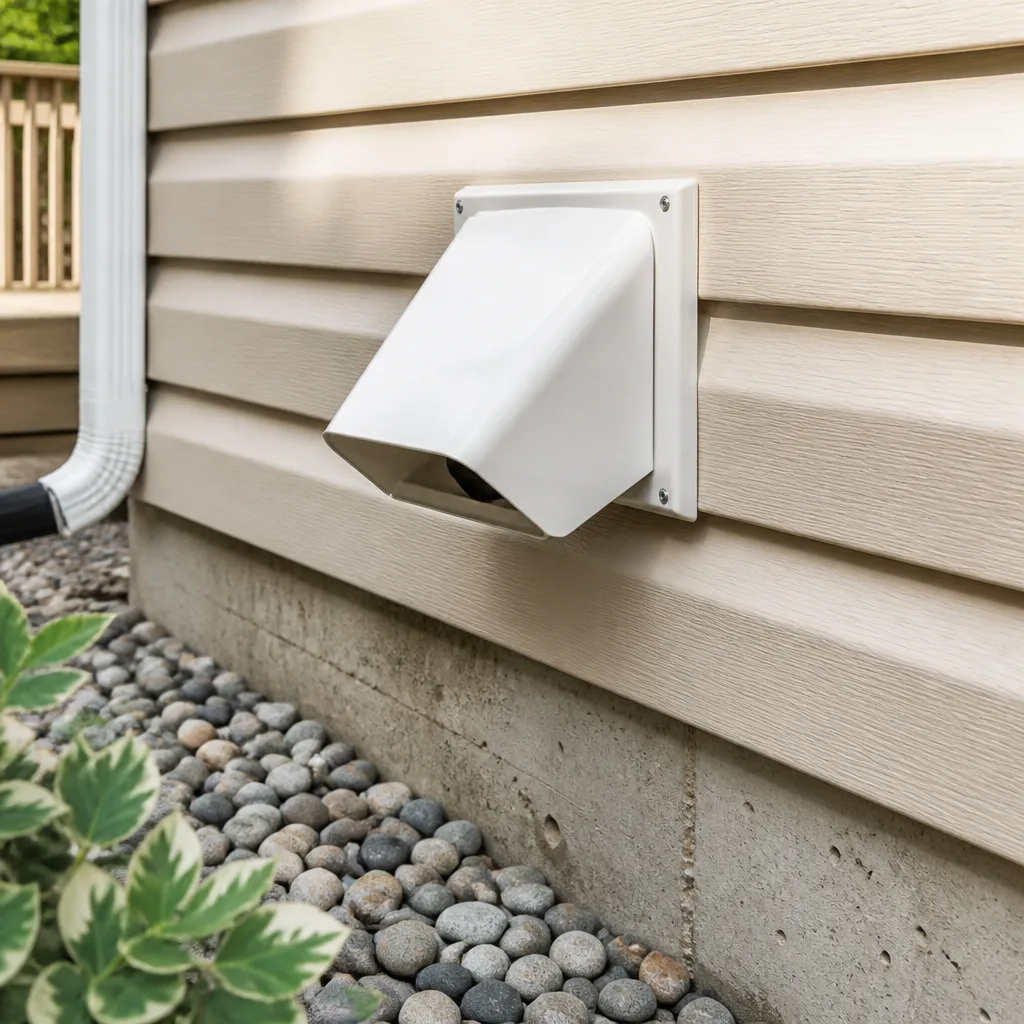 Dryer vent cleaning
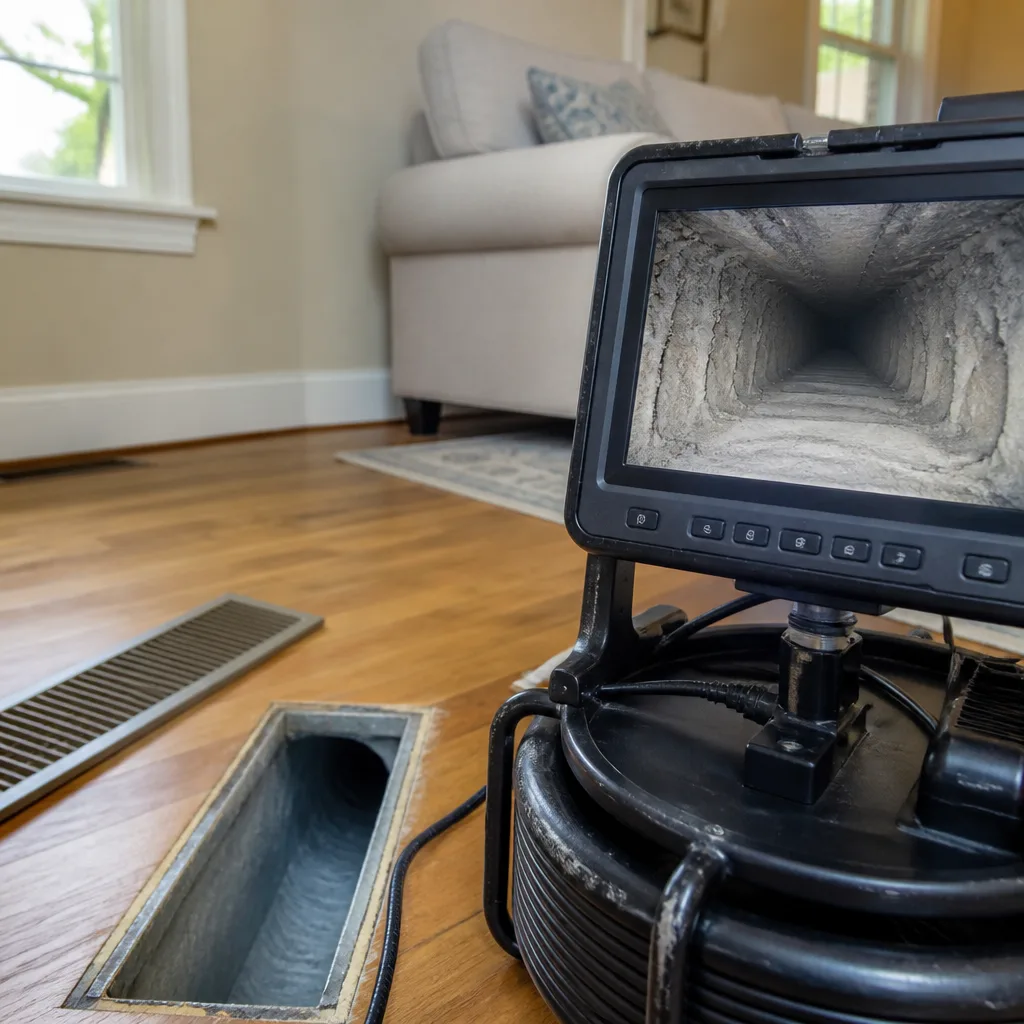 Camera inspection
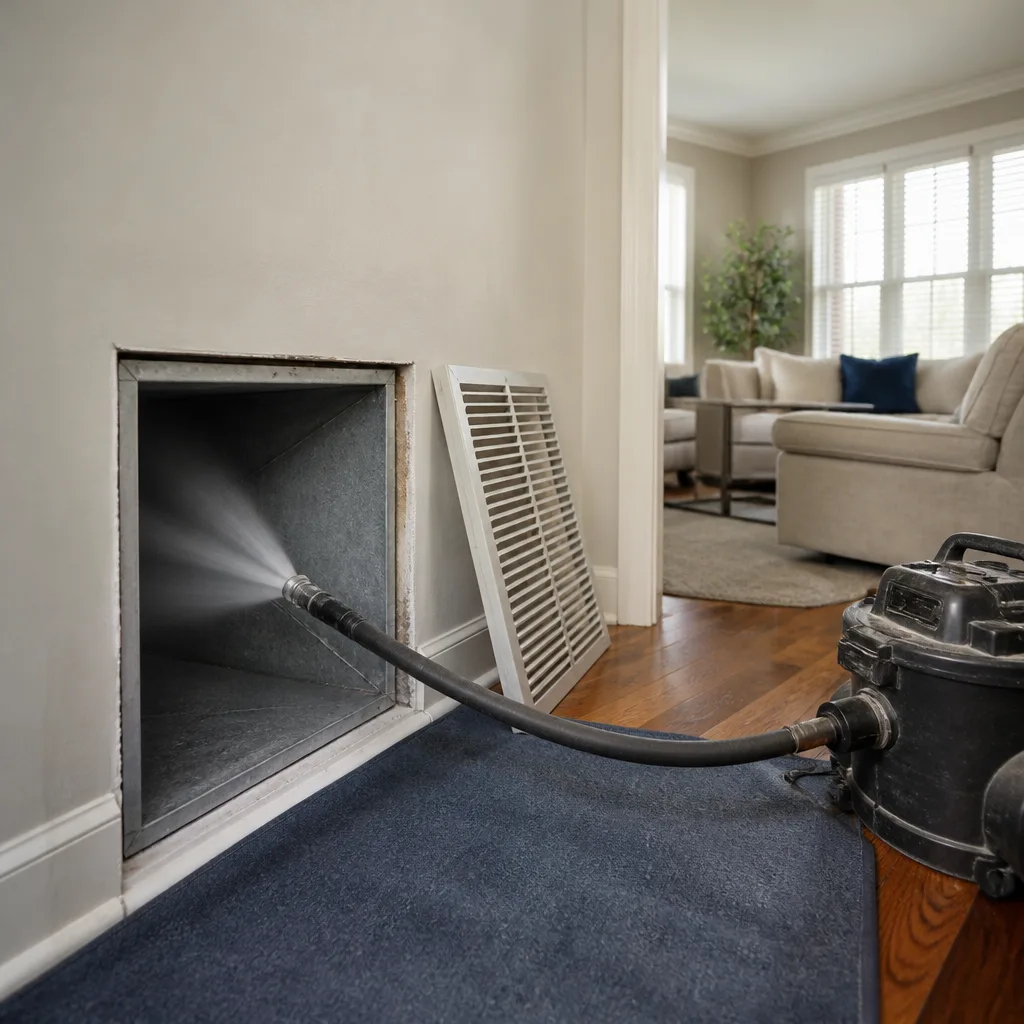 Sanitizing & deodorizing
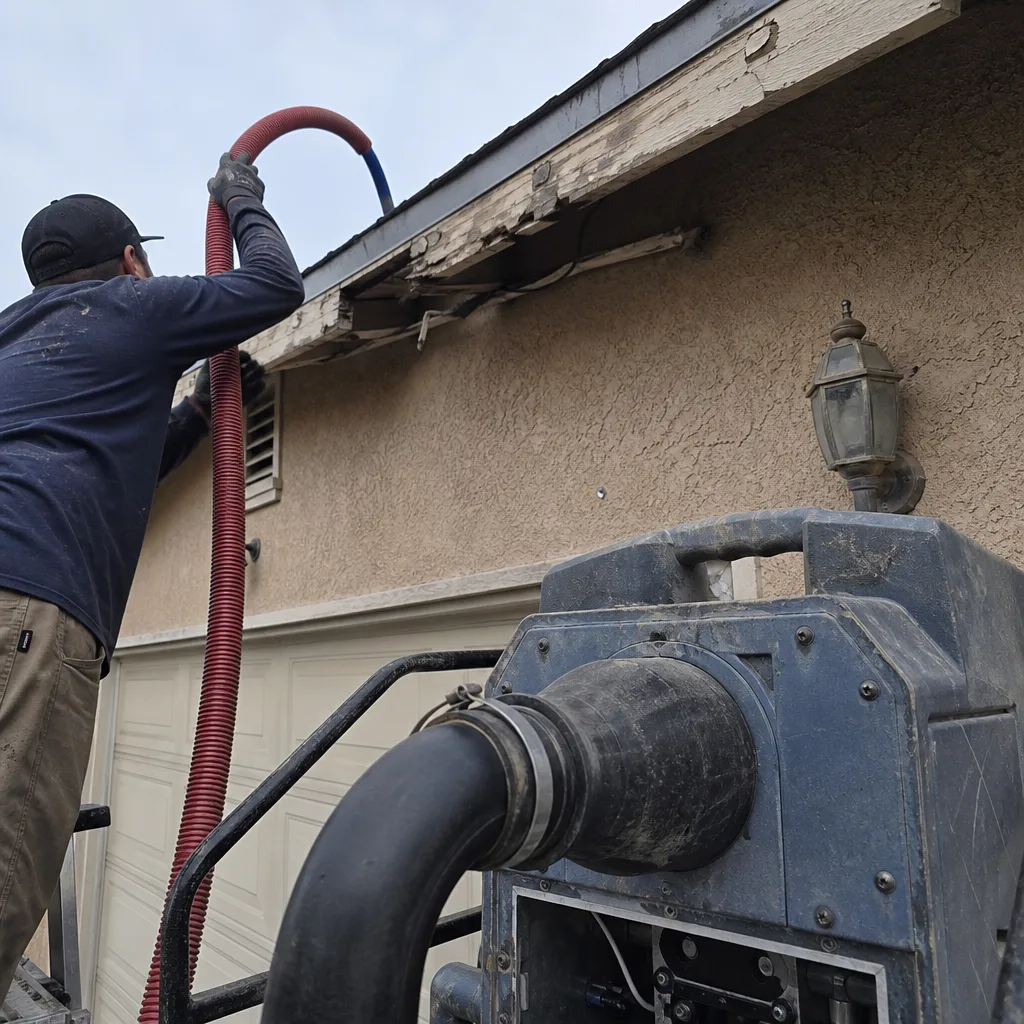
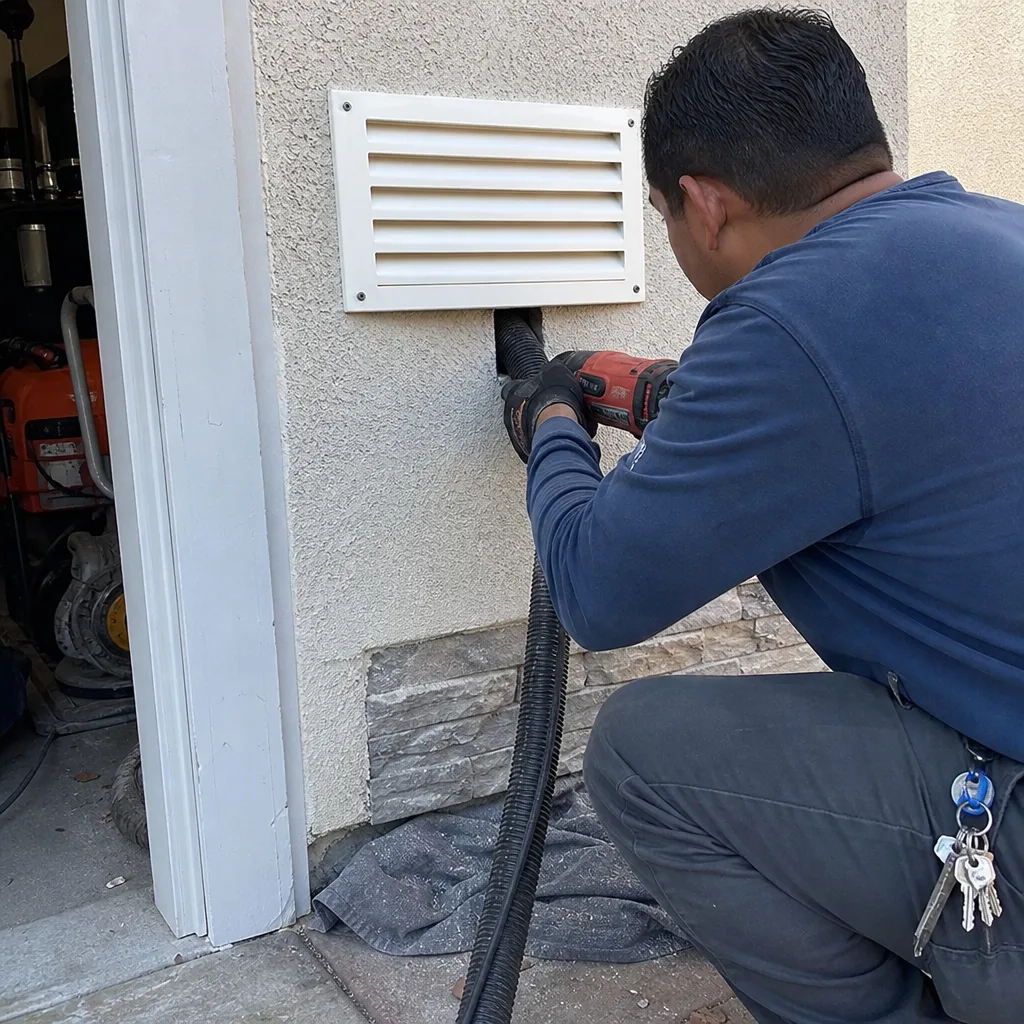
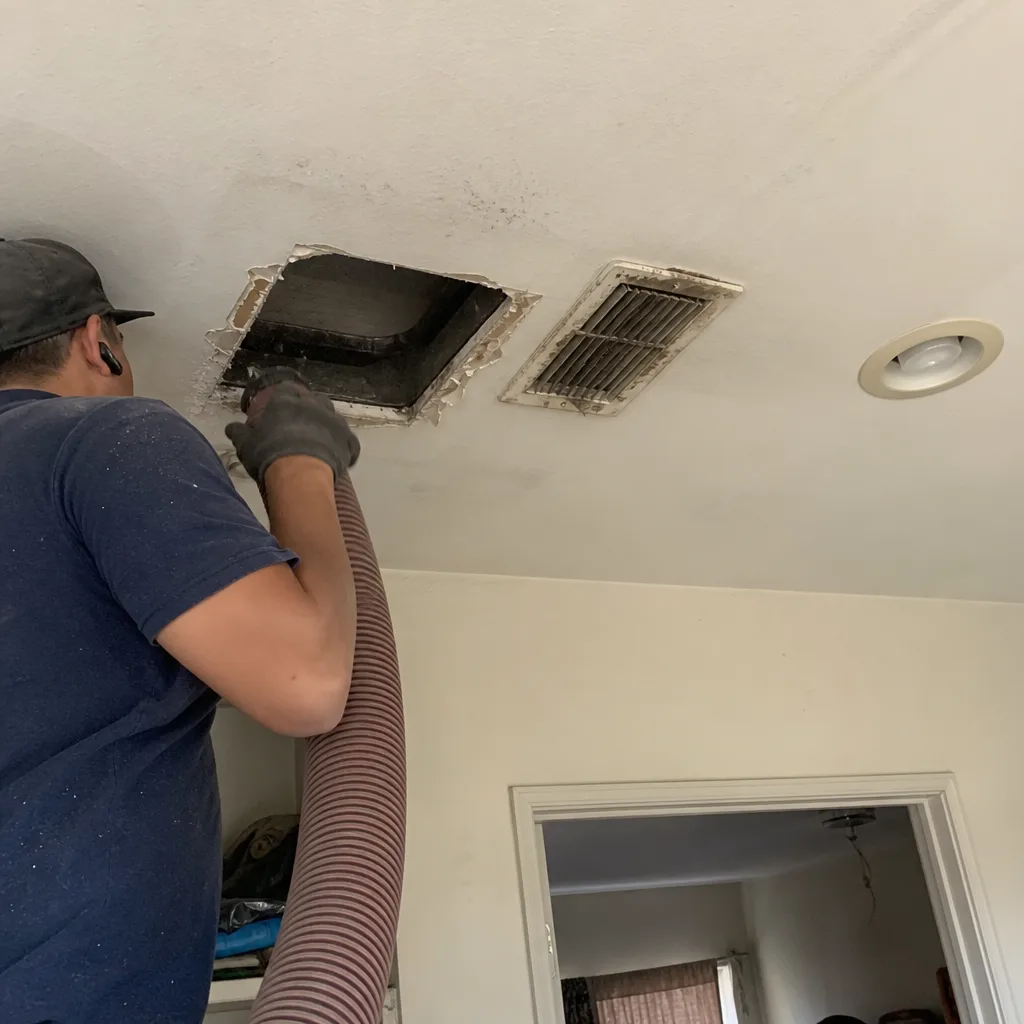
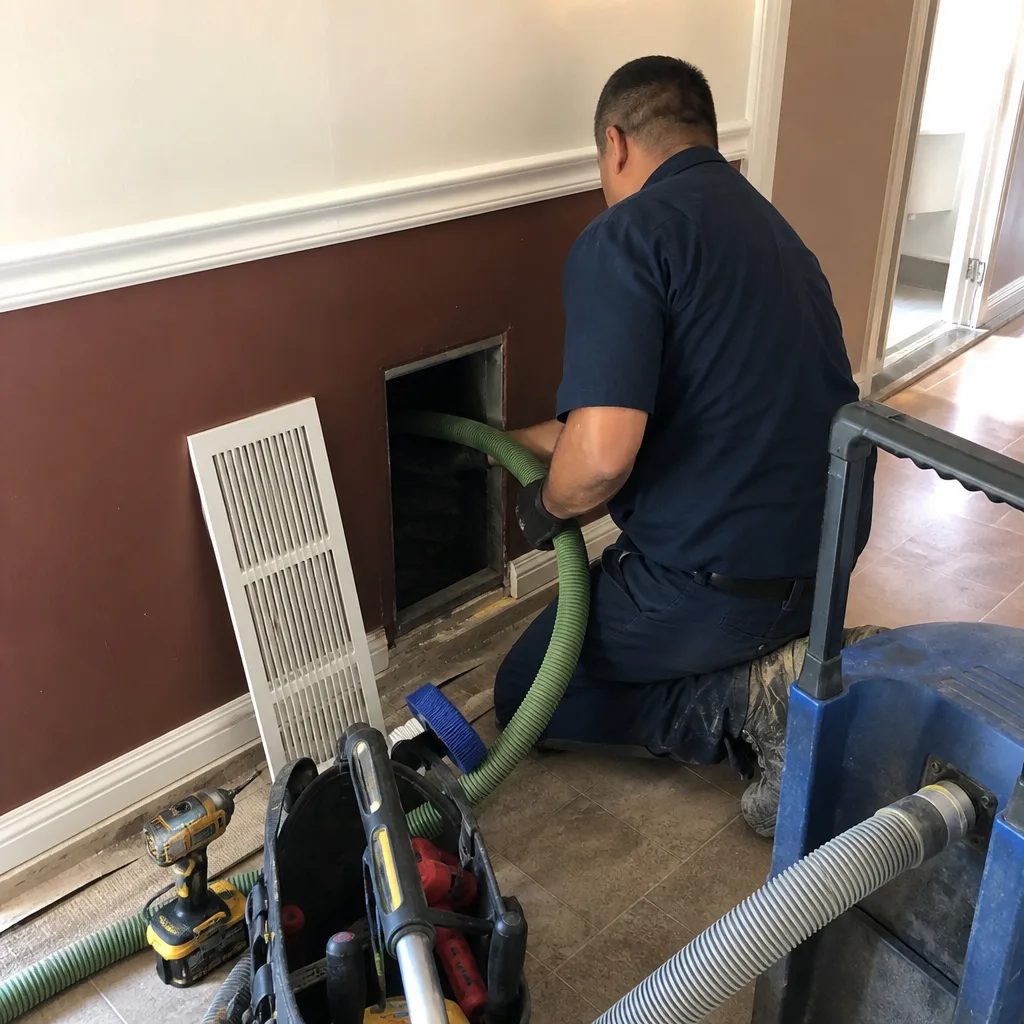
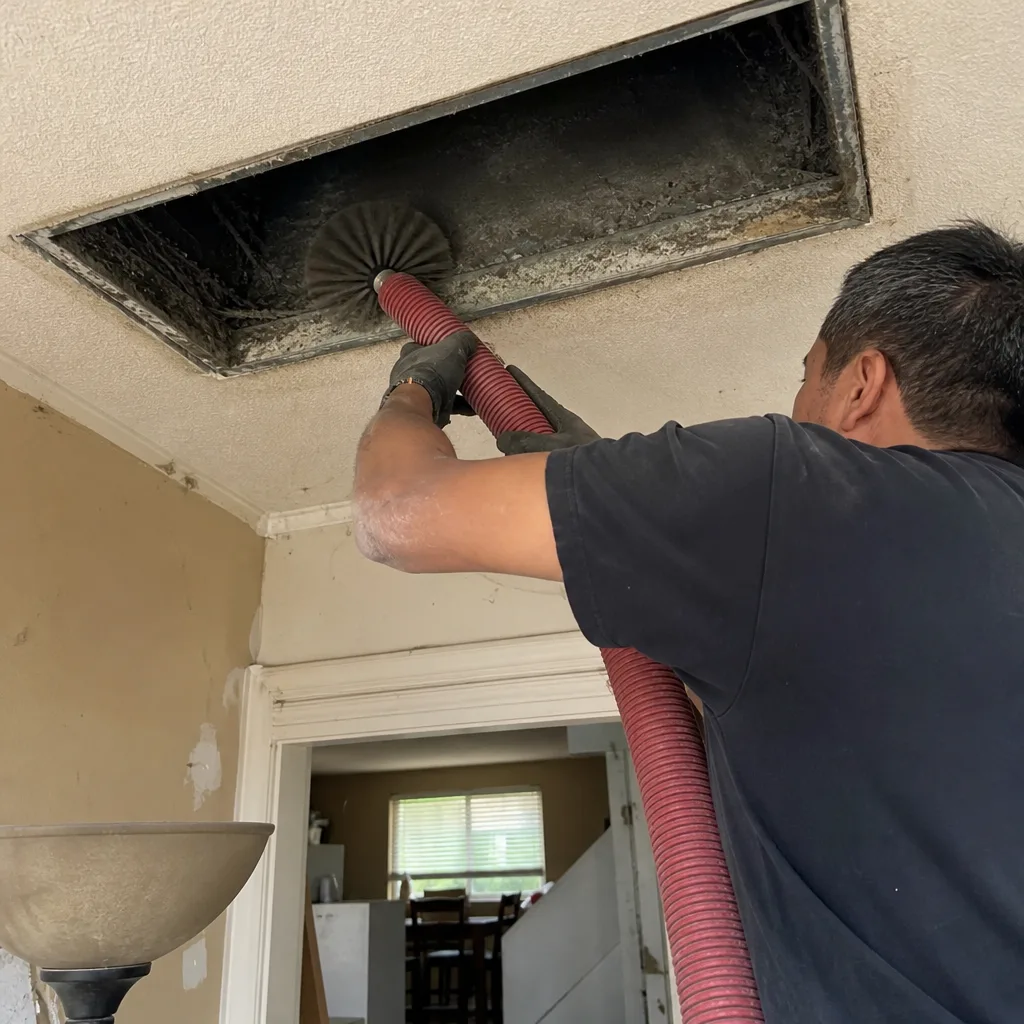
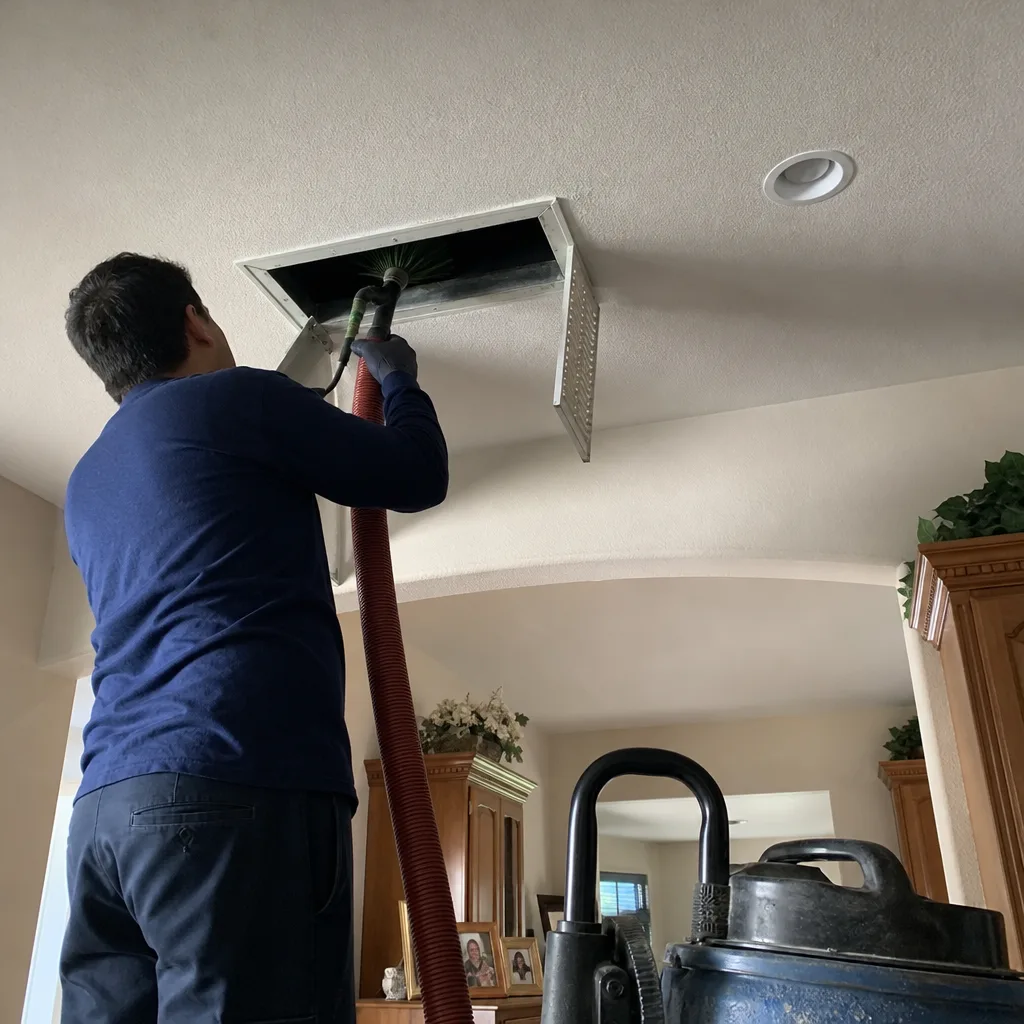
Whole-system duct and dryer vent check with before-and-after photos - you see exactly what came out of your vents
That "$99 whole-house special" is a bait ad - the real number appears once they are in your hallway, or the "clean" is a shop-vac at the register. We photograph the inside of your ducts before and after instead.
Air Duct Cleaning Permits, Codes & Inspections in CA: What You Need to Know
Here’s a counterintuitive fact we encounter regularly in Perris: the air duct cleaning itself, the actual removal of dust and debris from your ductwork, requires no permit anywhere in California. But tighten a loose duct connection with the wrong material, replace a crushed section of flex duct, or cut a new register opening, and you’ve just crossed into regulated territory. Most homeowners don’t discover this until a home inspector flags non-permitted mechanical work during escrow. This guide breaks down exactly where that line sits, what Title 24 requires, and how to protect yourself when the cleaning scope shifts into repair territory.
Quick Answer
Routine air duct cleaning is permit-exempt in California, including Perris and all of Riverside County. A mechanical permit is generally required when ductwork is modified, replaced, or newly installed – not when it’s cleaned. The moment a cleaning job turns into a repair that alters duct configuration or touches conditioned-space leakage, local mechanical codes and Title 24 energy standards apply, and unpermitted work can surface later as a home-sale disclosure problem.
Styles & brands we work with
- Whole-home duct cleaning
- Dryer vent cleaning
- Camera inspection
- Sanitizing & deodorizing
Table of Contents
- What Air Duct Work Is Permit-Exempt in California
- What Triggers a Mechanical Permit in Riverside County
- California Title 24 and Duct Sealing Requirements
- What a HERS Duct Leakage Test Is and When It’s Required
- How Unpermitted Duct Work Affects a Home Sale
- Questions to Ask Any Duct Contractor Before Work Begins
- Perris-Specific Climate and Code Considerations
- Common Mistakes to Avoid
- When to Call a Professional
- Frequently Asked Questions
What Air Duct Work Is Permit-Exempt in California
Under the California Mechanical Code and the Riverside County building regulations that govern Perris, a mechanical permit is not required for work that doesn’t alter the duct system’s physical structure or performance characteristics. Routine cleaning falls squarely in this category. Here’s what that means in practice:
When a technician connects a rotary brush system to your supply and return plenums and agitates the interior walls of your ductwork, no modification is happening. The ducts remain exactly as they were built. The same applies to HEPA extraction – a high-powered vacuum is creating negative pressure, but nothing is being cut, replaced, reconfigured, or sealed. The system’s air-distribution profile stays unchanged.
Minor sealing of accessible duct joints also typically remains permit-exempt, with an important caveat. If the sealing material is applied to a small, accessible section of duct – a leaky joint in a garage attic, a loose connection behind a return grille – and the work doesn’t require opening walls or replacing duct segments, most Riverside County inspectors consider it maintenance. The operative word is minor. Once sealing becomes systematic enough to change the system’s leakage rate, Title 24 considerations kick in, which we’ll address below.
In our experience cleaning ducts throughout the Perris area, the vast majority of service calls never leave this permit-exempt zone. Homeowners in neighborhoods from May Ranch to Monument Park call for cleaning, dust removal, and deodorizing – and that’s exactly what gets done, no permit involved. The confusion starts when inspection reveals something that needs actual repair.
What Triggers a Mechanical Permit in Riverside County
Here’s where the line gets clear. Riverside County requires a mechanical permit for any of the following duct-system activities, and Perris enforces these county-level rules:
- Replacing a duct section. If a technician removes a crushed or torn flex duct run and installs new ducting, that’s replacement. The new duct must meet current code, and the work requires a permit.
- Cutting a new register opening. Adding a supply or return vent to an existing trunk line alters the system’s airflow balance and requires a permit and inspection.
- Modifying duct configuration. Rerouting a duct run, resizing a plenum, or changing the number of branch lines all constitute mechanical modifications.
- Installing new ductwork as part of a room addition or remodel. This falls under the broader building permit for the project, but the mechanical portion gets separately inspected.
- Replacing or relocating the air handler or furnace. While not duct work per se, equipment changes trigger mechanical review of the connected duct system.
A simple test we suggest to Perris homeowners: ask whether the proposed work changes the physical material, size, or location of your duct system. If the answer is yes, ask about permits. If the contractor says no permit is needed for replacing a duct section in Riverside County, that’s incorrect, and it’s a red flag.
The enforcement reality in Perris is that most duct cleaning companies simply don’t perform repair work – they clean and leave. That’s why a damaged duct section often goes unrepaired for years, slowly leaking conditioned air into the attic. The Air Duct Repair in Perris service we offer exists precisely because homeowners need someone to address damage discovered during cleaning, and that repair work needs to be code-aware from the first cut.
California Title 24 and Duct Sealing Requirements
California’s Title 24 energy code doesn’t care whether your ducts are dusty. It cares intensely whether they leak. And once any repair or modification touches duct segments in conditioned or unconditioned space, Title 24’s duct-leakage standards apply, with no exception for Perris or any other Riverside County city.
The relevant requirement: when duct systems are altered or installed new, they must meet specific leakage-rate thresholds verified by a HERS tester. The code doesn’t distinguish between “minor repair” and “major work” once the system’s sealing integrity is part of the project. A small duct replacement that reconnects poorly can fail a Title 24 compliance check as thoroughly as a full system install.
What does this mean for a homeowner? If you have a collapsed duct replaced, the new connection points need to be sealed with mastic or approved tape – not duct tape – and the system’s overall leakage must stay within code limits. We use professional-grade sealing materials specifically because they’re designed to meet these California standards, not just to hold for a season. The approach of our Air Duct Cleaning in Perris service always includes an assessment of existing seal integrity, because the cleaning process will expose failed seals quickly.
For Perris specifically, the climate strain matters. Summer attic temperatures routinely exceed 140 degrees. Duct sealant that survives a Los Angeles coastal summer may fail in a May Ranch attic by August. Title 24 doesn’t waive its leakage standards because the desert is hot – if anything, the energy stakes in Riverside County are higher, which is why inspectors here take duct sealing seriously.
What a HERS Duct Leakage Test Is and When It’s Required
A HERS duct leakage test measures exactly how much air escapes your duct system under pressure. The Home Energy Rating System tester seals all registers, attaches a calibrated fan, pressurizes the ductwork, and measures airflow (in CFM, cubic feet per minute) required to maintain that pressure. The result is compared against the conditioned floor area of your home, producing a leakage percentage.
California’s Title 24 requires this test when a home is built new, when duct systems are substantially altered, and when certain equipment change-outs occur. The maximum allowed leakage varies by project type and climate zone (Perris falls in Climate Zone 10, a hot-dry inland zone), but the typical new-construction threshold is 6% or less of total system airflow. Alteration projects generally need to meet the same standard or demonstrate improvement from the pre-existing condition.
Here’s the practical sequence when repair work happens on a Perris home:
- The duct repair is completed, with all new connections sealed using code-approved materials.
- The contractor schedules a HERS rater to perform duct-leakage testing.
- The HERS rater pressurizes the system and measures leakage.
- If leakage exceeds the allowable threshold, sealing continues until the test passes.
- The passing HERS certificate becomes part of the permit file, and the permit can be finalized.
What surprises most homeowners is that this test applies even when replacing a single duct run. The rationale: one poorly sealed connection can negate the sealing work done elsewhere. It’s a system-level test, not a component-level test. In our experience with Dryer Vent Cleaning in Perris, the logic parallels nicely – a single clogged section downstream affects the entire vent’s performance. Code treats duct leakage the same way.
How Unpermitted Duct Work Affects a Home Sale
This is the section that matters most to Perris homeowners who haven’t bought or sold a home in the last decade. California’s residential disclosure requirements have become substantially more rigorous, and home inspectors are trained to spot non-permitted mechanical work. Here’s what a typical discovery sequence looks like:
A home inspector examines the attic or crawlspace and notices a duct run that’s newer than the surrounding materials. Perhaps the flex duct is a different brand, the hanging straps are newer, or the connections show mastic that’s inconsistently applied. The inspector checks the county’s permit records online, finds no mechanical permit on file, and writes a report line that reads something like: “Evidence of duct replacement without corresponding permit. Recommend verification with seller.”
That single line triggers a chain of events. The buyer’s agent asks for the permit history. The seller confirms no permit was pulled, often because a contractor told them none was needed. The buyer then has leverage: demand the work be permitted retroactively, demand a price reduction, or in a competitive market, simply move to the next house. In Riverside County’s current market, with inventory still tight, many sellers end up paying for retroactive permits and HERS testing at escrow-stage pricing, which is never favorable.
California law requires sellers to disclose all material facts about a property. Non-permitted duct work is a material fact when it affects system performance or code compliance. The failure to disclose it – even unknowingly – doesn’t protect a seller from post-sale claims. The bottom line for Perris homeowners: if duct repair work was done without a permit, you should address it before listing, not during escrow.
Questions to Ask Any Duct Contractor Before Work Begins
The way a contractor answers permitting questions tells you almost everything you need to know about their code awareness and their operational seriousness. Before any duct work starts on your Perris property, ask these questions in this order:
- “What specific work are you proposing?” Get the scope in writing. Cleaning, sealing, replacing, reconfiguring – each has a different permit profile.
- “Does any of this work require a permit in Riverside County?” The correct answer is nuanced: cleaning doesn’t, replacement does, sealing depends on scope. Any contractor who says “we never need permits for anything” is either uninformed or unwilling to pull them.
- “If a permit is needed, will you pull it, or will I?” A legitimate contractor pulls their own permits. Requiring the homeowner to do it is a classic mechanism for skirting responsibility.
- “Will the work need a HERS test?” If duct replacement or sealing is involved, the answer should be “yes” or “possibly, depending on scope.” A flat “HERS is only for new construction” is incorrect.
- “When the work is done, what documentation will I receive?” For permit-exempt cleaning, expect before-and-after photos and a service record. For permitted work, expect a permit card, inspection sign-off, and HERS certificate if applicable.
These questions don’t just protect you from permit problems. They reveal whether the contractor understands the regulatory landscape they’re operating in. A technician who can explain the difference between permit-exempt cleaning and permit-required replacement is a technician who understands how duct systems work. That’s the level of knowledge you want on your property.
Perris-Specific Climate and Code Considerations
Perris sits in Riverside County’s hot-dry inland valley, where summer temperatures routinely exceed 100 degrees from June through September. That climate reality shapes duct-system behavior in ways that directly influence the permit and code conversation.
First, the heat accelerates sealant failure. The temperature cycling in a Perris attic – from 140-plus degrees at 3 p.m. to maybe 60 degrees on a winter night – stresses every duct connection. Sealant that remains flexible in coastal California may crack and separate after three or four inland summers. This means duct sealing work in Perris is more frequently necessary, and it means the Title 24 leakage standards are functionally harder to meet after systems age. Code compliance isn’t a one-time achievement here; it’s a condition to maintain.
Second, the prevalent duct type in Perris residential construction is flex duct in unconditioned attics. Flex duct is durable when installed correctly but easily damaged by improper hanging, rodent activity, or simply age. A cleaning process that uses aggressive agitation on brittle, aged flex duct can cause damage – which is why professional equipment matters. We use Rotobrush rotary brush systems calibrated for the duct type being cleaned, not a fixed setting applied blindly. When that same Rotobrush agitation reveals a duct section that’s already deteriorated, the permit conversation begins.
Third, Riverside County’s enforcement posture. The county’s building department is active in permitting and inspection, and retrofit verification audits – where inspectors check whether reported work matches field conditions – are not uncommon. Perris homeowners should assume that permitted work will actually be inspected, and that the passed inspection becomes part of the permanent property record. That’s good news for the seller who permitted work properly, and a liability for the one who didn’t.
Common Mistakes to Avoid
- Assuming all duct work is the same. Cleaning, sealing, replacing, and modifying are four different activities with four different permit profiles. Treating them identically is how homeowners end up with unpermitted work on their record.
- Accepting “permits are never needed” as reassurance. This phrase usually means the contractor doesn’t want to pull permits, doesn’t know how, or is pricing work to undercut competitors who do. None of those reasons benefit you.
- Using duct tape for sealing. Despite the name, duct tape is not an approved sealing material under California mechanical code. The proper materials are mastic or UL-listed foil tapes. Our Air Duct Repair in Perris team sees duct tape failures constantly, including in newer homes.
- Skipping the HERS test on replaced ductwork. Some contractors complete replacement work and tell the homeowner “everything is fine.” Without a passing HERS test, the work isn’t code-complete, and the permit can’t be finalized.
- Waiting until escrow to deal with disclosure. Once a buyer’s inspector flags unpermitted work, the seller’s negotiating position collapses. Addressing permitting before listing is consistently less expensive and less stressful.
- Ignoring duct leakage as a performance issue. Many Perris homeowners tolerate weak airflow in back bedrooms for years, not realizing the duct system is leaking 20 percent of its conditioned air into the attic. That’s not just an energy problem – it’s evidence of a system that needs repair, and that repair triggers the code conversation.
- Hiring on price alone for repair work. The cheapest quote often excludes permit costs, HERS testing, and inspection scheduling. The “expensive” quote may simply include the legal cost of doing the work correctly.
When to Call a Professional
Permit questions aside, there are clear signals that your duct system needs professional attention. Reduced airflow from registers, rooms that never reach the thermostat setpoint, visible dust accumulation around register openings, or musty air when the system runs – all point to duct conditions worth investigating. If you see flex duct hanging loose in your attic or notice crushed duct sections near access points, the system has already sustained damage. And if you’ve owned your Perris home for five-plus years without any duct inspection, you’re due. Duct Cleaning Perris offers free estimates in Perris – call (844) 728-0966 to schedule a system assessment, and we’ll tell you honestly whether your situation calls for cleaning, sealing, repair, or some combination thereof.
Frequently Asked Questions
No. Routine air duct cleaning is permit-exempt throughout California, including Perris and Riverside County, because it doesn’t alter the duct system’s structure, configuration, or performance characteristics. A permit becomes necessary only when the work crosses into replacement, modification, or new installation of duct components.
Any repair that replaces duct material, changes duct configuration, adds a new register, or involves sealing work extensive enough to alter system leakage triggers a mechanical permit in Riverside County. The simple test is whether the system’s physical material, size, or layout changes – if yes, permits apply. Call (844) 728-0966 if you want a specific assessment of your proposed scope.
A home inspector may identify the non-permitted work, which then becomes a disclosure obligation under California law. Buyers can demand retroactive permits, price reductions, or withdraw entirely. The practical outcome is usually that the seller pays to correct the permitting during escrow, at higher cost and with more time pressure than if addressed earlier.
Yes, in most cases where duct replacement or substantial sealing occurs. The HERS duct leakage test verifies that the repaired system meets Title 24 leakage thresholds, and a passing test is required before the permit can be finalized. This applies in Perris just as it does throughout California.
Duct cleaning removes debris from existing ductwork and is permit-exempt. Duct repair changes something about the duct system itself – replacing a section, resealing connections, modifying configuration – and generally requires a permit. Our Duct Cleaning Perris home page outlines the full scope of both services.
Given the heat and dust conditions in the Perris valley, an inspection every 2-3 years is reasonable for most homes. Homes with pets, recent construction or renovation, or residents with allergy concerns may benefit from annual checks. The inspection itself is typically quick and reveals whether cleaning or repair work is actually necessary. For more on what to expect, see our Air Duct Cleaning in Perris page.
The Bottom Line
Air duct cleaning in Perris and throughout California requires no permit – but the line between cleaning and repair is where homeowners get into trouble. Replacing duct sections, modifying configuration, or sealing beyond minor maintenance all trigger Riverside County mechanical permits, and Title 24 leakage standards apply once that work begins. HERS testing verifies compliance, and unpermitted work creates real disclosure problems during home sales. The solution is straightforward: know exactly what work is being proposed, ask the permitting questions upfront, and work with a contractor who understands the California regulatory landscape. Duct Cleaning Perris offers free estimates in Perris – call (844) 728-0966 to discuss your duct system.
Written by the team at Duct Cleaning Perris, serving Perris since 2014.
See the difference
 Before
 After
 Before
 After
 Before
 After